
By Yvonne Deng
International Sales Director, Apex Quartz Stone | 12+ Years in Engineered Stone Manufacturing
linkedin.com/in/yvonne-deng-5b35b543/
Carrara quartz slab offers the timeless beauty of classic Italian marble with the practical benefits of engineered stone. This guide covers everything homeowners and designers need to know about selecting, installing, and maintaining Carrara quartz countertops for modern kitchens.
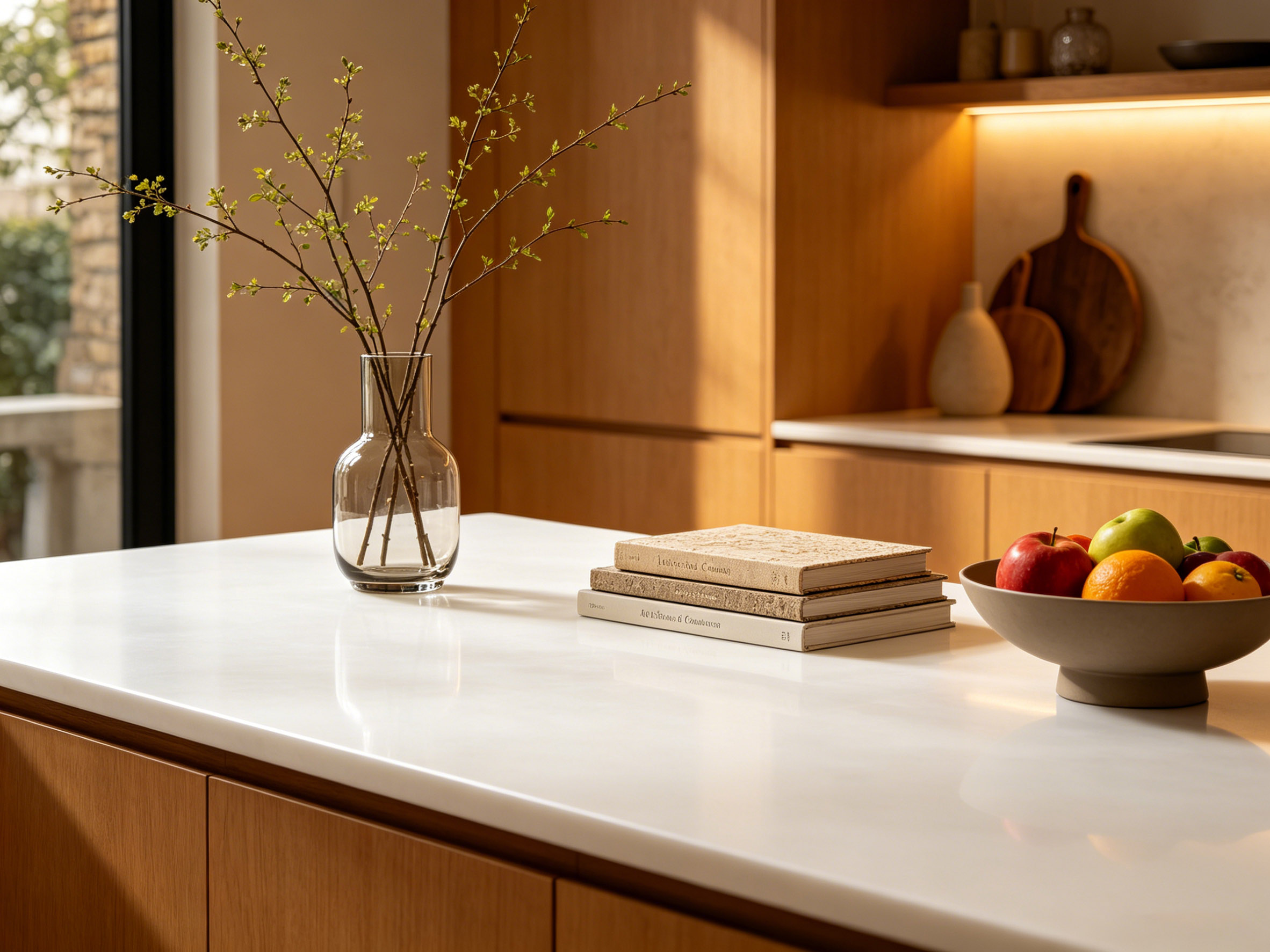
Pure White Quartz Slab: if anything Is It?
A pure white quartz slab is an artificial stone surface made of about 93% natural quartz crystals bonded together with white mineral pigments and polymer resins. Pure white quartz, in contrast to genuine white marble or granite, produces a homogeneous tint throughout the slab without the veining or natural variance present in stone that has been mined. Minimalist designers specifically aim for this consistency.
Titanium dioxide and other brightening chemicals are mixed with the whitest quartz crystals that are available during the manufacturing process. The mixture is cured at regulated temperatures to guarantee color stability and vacuum-compressed at high pressure to remove air pockets. The end product is a dazzling white, solid, non-porous surface that doesn’t change from year to year or from slab to slab.
Standard slab measurements are 3200 x 1600 mm, and there are three thickness options: 12 mm, 20 mm, and 30 mm. Leathered, polished, and honed are examples of surface finishes. From the gentle warmth of honed surfaces to the mirror-like reflection of polished surfaces, each finish produces a distinct visual impression.
Why Pure White Quartz Dominates Minimalist Design
Minimalist design principles emphasize simplicity, clean lines, and a reduction to essential elements. Pure white quartz aligns perfectly with these principles. Its uniform surface removes visual clutter while its bright appearance maximizes the perception of space and light.
In small kitchens or bathrooms, pure white quartz countertops reflect available light, making rooms appear larger and more open. This is especially valuable in urban apartments and compact commercial spaces where every square meter counts.
Beyond aesthetics, pure white quartz supports the minimalist lifestyle through its low maintenance requirements. A countertop that requires no sealing, no special cleaning products, and withstands daily use without visible wear aligns perfectly with the minimalist philosophy.
Pure White vs. Super White Quartz: Key Differences
Pure White Quartz. This material achieves a bright, clean white with minimal to no veining. It offers the most uniform appearance, making it the top choice for strictly minimalist aesthetics. Pure white quartz works best in contemporary, Scandinavian, and Japanese-inspired interiors.
Super White Quartz. Super white quartz is slightly brighter with an ultra-white base that contains higher concentrations of titanium dioxide pigments. Some varieties include subtle, almost invisible grain patterns that add texture without compromising the minimalist look.
Which to Choose. For pure minimalist spaces, standard pure white quartz delivers the cleanest look. For projects where maximum brightness is critical, super white quartz provides the whitest possible surface. Both options are available from Apex Quartz Stone.
Applications Beyond Countertops
Pure white quartz slab extends far beyond kitchen countertops. Designers increasingly specify the material for full-wall cladding, shower surrounds, backsplashes, and custom furniture pieces. The seamless appearance of large-format slabs makes them ideal for creating continuous surfaces that embody minimalist principles.
Bathroom applications showcase pure white quartz particularly well. Vanity tops, shower walls, and flooring in white quartz create spa-like environments that feel clean and serene. The non-porous surface resists moisture absorption and bacterial growth, making it exceptionally suitable for wet environments.
Commercial spaces benefit from pure white quartz in reception desks, retail display surfaces, and hospitality environments. Hotels use it in lobbies and guest bathrooms to project cleanliness and luxury. Medical offices and beauty salons choose white quartz for its hygienic, sterile appearance.
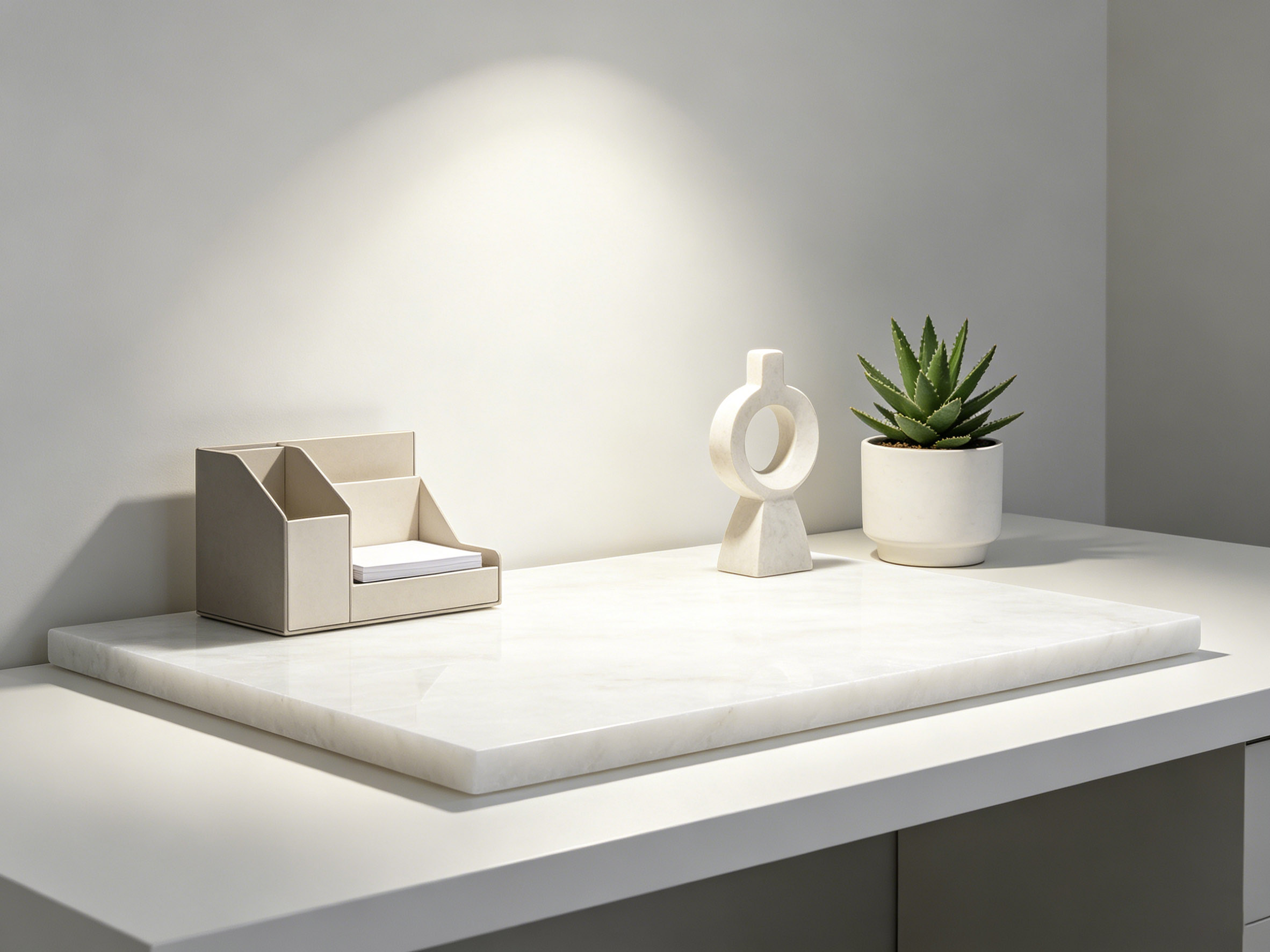
Durability and Performance Characteristics
Pure white quartz slab delivers Mohs hardness of 6-7, making it highly resistant to scratching from everyday use. Water absorption is below 0.03%, preventing liquid penetration and bacterial growth. The material withstands temperatures up to 150 degrees Celsius without damage, though trivets remain recommended for hot cookware.
Stain resistance. White surfaces raise understandable concerns about staining. Pure white quartz resists staining from wine, coffee, tea, and food coloring compounds. The non-porous structure prevents liquids from penetrating below the surface. Most stains wipe away with mild soap and water.
UV stability. Quality pure white quartz includes UV-stable pigments that resist yellowing from sunlight exposure. However, prolonged direct sunlight may cause slight color shift over many years. This is rarely an issue for indoor applications.
Design Considerations for Minimalist Spaces
Achieving a true minimalist look with pure white quartz requires attention to several design details. Edge profiles should be clean and simple. Square eased edges or waterfall edges reinforce minimalist lines. Cove or ogee edges introduce visual complexity that contradicts the minimalist approach.
Seam placement requires careful planning. While pure white quartz offers consistent color, seams remain visible upon close inspection. Design larger slabs to minimize seams. Where seams are unavoidable, place them along natural visual breaks such as sink cutouts or cabinet transitions.
Grout color selection for backsplashes and adjacent installations should match or closely complement the white quartz. Bright white grout maintains continuity.
Maintenance for White Quartz Surfaces
Maintaining pure white quartz is straightforward. Daily cleaning with warm water and mild dish soap preserves the surface. Avoid abrasive cleaners, bleach-based products, and scouring pads that may dull the finish over time. pH-neutral stone cleaners work well for periodic deep cleaning.
For stubborn residue, a mixture of isopropyl alcohol and water works effectively without damaging the surface. Avoid acetone and nail polish remover, which can break down the resin binders. Use cutting boards for food preparation and coasters under beverages to minimize potential marking.
One concern with white surfaces is the accumulation of oils and residues from hands and food. Regular cleaning prevents buildup. Polished finishes show fingerprints less than honed finishes but may reveal water spots more readily.
Cost Considerations
Pure white quartz typically costs $50-$75 per square foot for material. Super white quartz commands a premium of approximately 10-15% due to higher pigment content. Compared to natural white marble, which costs $70-$200 per square foot and requires ongoing maintenance, pure white quartz offers excellent value for minimalist projects.
Conclusion
Pure white quartz slab has earned its position as the signature material of minimalist interior design. Its consistent color, exceptional durability, and low maintenance requirements make it the practical choice for homeowners and designers who value clean, uncluttered spaces. Contact Apex Quartz Stone for product specifications, color samples, and pricing for your next minimalist project.
Post time: Jun-09-2026