
By Yvonne Deng
International Sales Director, Apex Quartz Stone | 12+ Years in Engineered Stone Manufacturing
linkedin.com/in/yvonne-deng-5b35b543/
Is Quartz Stone Environmentally Sustainable
The sustainability of engineered quartz is more complex than a simple yes or no answer. Because quartz slabs are composed of 90-93% natural quartz aggregates, a by-product of mining operations, they use abundant natural materials efficiently. The remaining 7-10% consists of polymer resins, which are petroleum-derived. The environmental impact depends heavily on individual factory practices in energy use, water management, waste reduction, and emissions control.
Compared to natural stone, quartz manufacturing avoids the quarry waste that plagues marble and granite extraction, where up to 40% of quarried material becomes unusable scrap. Compared to solid surface materials, quartz uses significantly less petroleum-based resin. The key question for buyers is not whether quartz is sustainable in absolute terms, but whether a specific quartz stone manufacturer operates with responsible environmental practices.
Key Environmental Impact Areas in Quartz Production
Energy Consumption. Quartz slab manufacturing is energy-intensive, particularly during the compression and curing stages. Vacuum presses operate at high pressures for extended periods. Curing ovens maintain temperatures of 80-100 degrees Celsius for 30-60 minutes per batch. Premium manufacturers invest in energy-efficient curing ovens and heat recovery systems that capture waste heat for reuse in other production stages. A factory that has not upgraded its curing technology in the past decade may consume 30-40% more energy per slab than a modern facility.
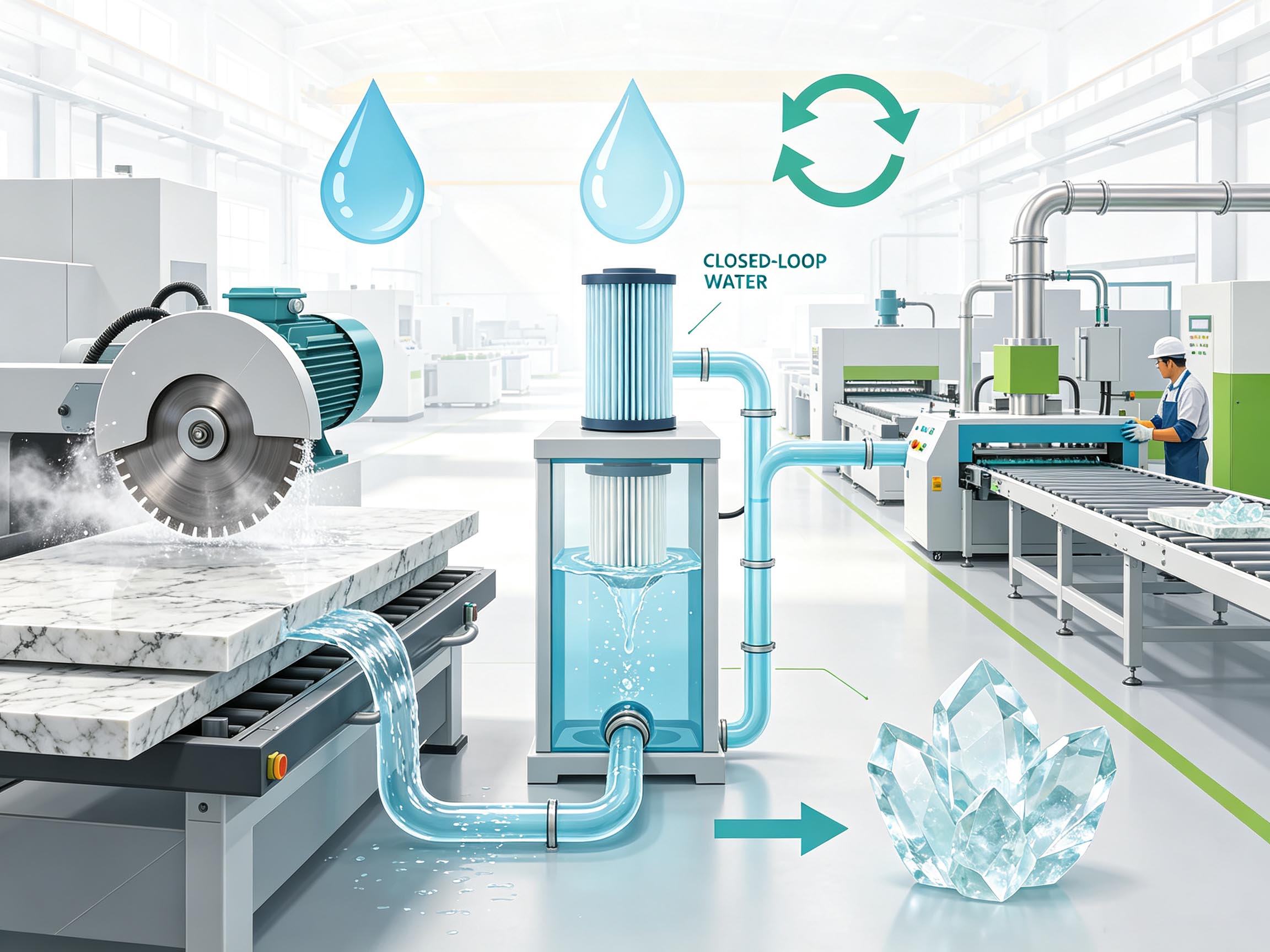
Water Usage. Water is essential for cooling cutting blades, suppressing silica dust, and cleaning equipment during production. Factories without water recycling systems consume large volumes of fresh water daily. Responsible manufacturers install closed-loop water treatment systems that capture, filter, and reuse process water. Effective systems achieve up to 80% water reuse rates, dramatically reducing freshwater consumption and wastewater discharge.
Raw Material Sourcing. Quartz aggregates are mined from natural deposits. Factories that source locally reduce transportation-related carbon emissions. The distance between quartz mine and factory can vary from 50 kilometers for optimally located factories to over 1,000 kilometers for those dependent on distant quarries. Responsible manufacturers also incorporate recycled quartz content from production waste into new slabs, reducing raw material demand.
Waste Generation. Quartz manufacturing generates solid waste from rejected slabs, cutting trimmings, and polishing residues. The waste disposal method determines environmental impact. Some factories send all waste to landfill. More sustainable operations crush rejected slabs for use as aggregate in construction materials or reprocess trimmings into smaller quartz products. Apex’s quartz slab collection is produced with waste minimization practices throughout the manufacturing process.
Green Certifications for Quartz Countertops
Several third-party certification programs verify the environmental and health performance of quartz surfaces. Understanding these certifications helps buyers evaluate competing products on sustainability grounds.
| Certification | What It Verifies | Why It Matters |
|---|---|---|
| NSF/ANSI 51 | Food contact safety for commercial food equipment | Required for restaurant and food service installations |
| Greenguard Gold | Low chemical emissions for indoor air quality | Critical for schools, healthcare, and residential projects |
| ISO 14001 | Environmental management system in place | Demonstrates systematic environmental compliance |
| LEED v5 | Contributes to green building certification points | Specifiers seek materials with LEED contribution |
| NSF/ANSI 342 | Environmental performance of wall and counter materials | Comprehensive sustainability assessment standard |
| CE Marking | EU regulatory compliance for construction products | Required for European market entry |
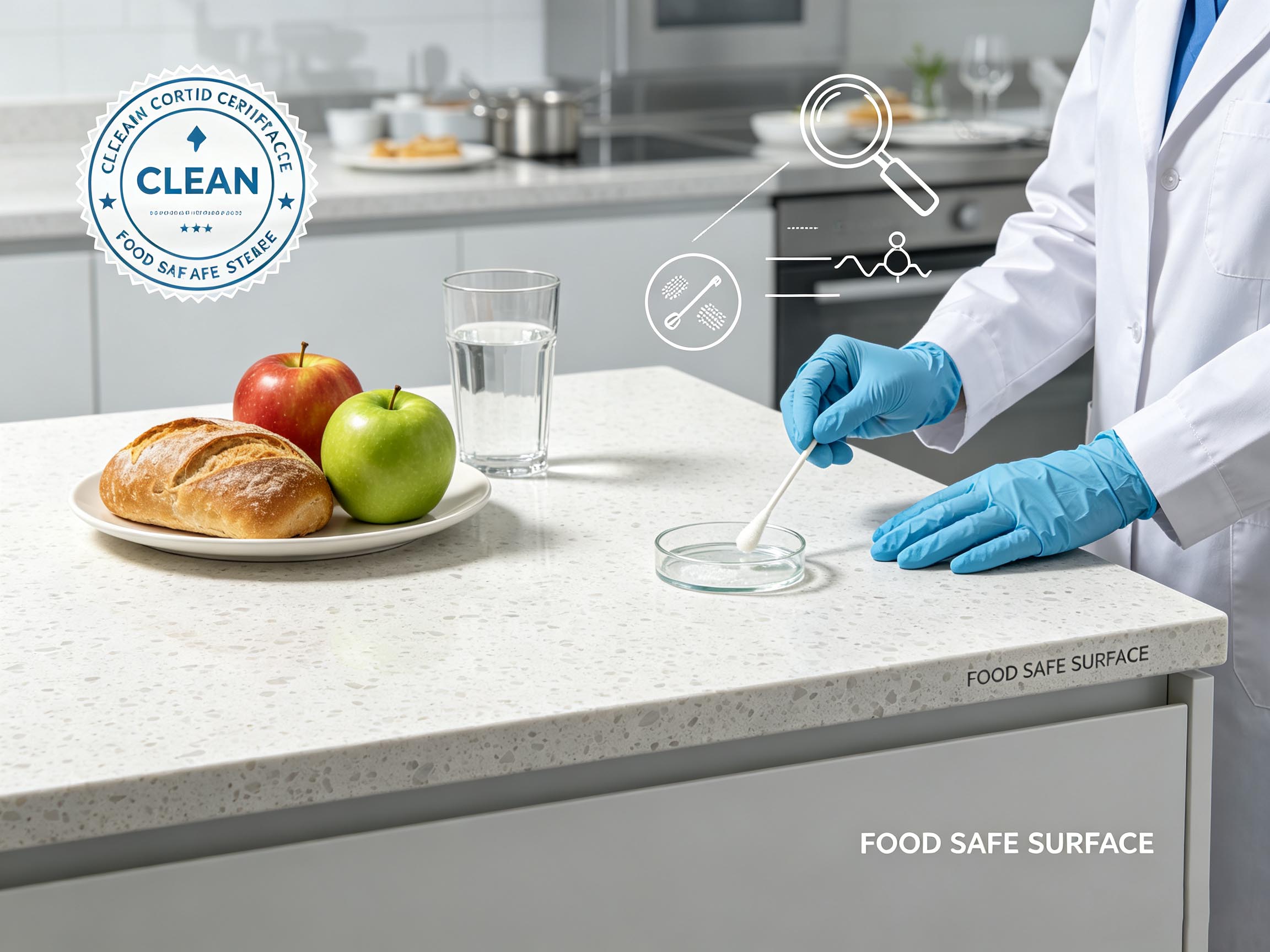
NSF/ANSI 51. This certification verifies that quartz surfaces are safe for food contact. It is essential for commercial kitchens, restaurants, and food processing facilities. The certification involves testing for chemical migration, staining, and cleanability. Quartz manufacturers who hold NSF/ANSI 51 certification demonstrate that their products meet rigorous health and safety standards.
Greenguard Gold. This certification from UL Environment measures VOC emissions from building materials. Quartz surfaces are generally low-emitting, but factory processes and resin formulations affect emissions. Greenguard Gold certification indicates the product is safe for sensitive environments like schools and healthcare facilities. It is increasingly specified by architects for projects requiring indoor air quality compliance.
ISO 14001. Environmental management system certification ensures the factory has documented procedures for managing environmental impact. It covers compliance monitoring, waste management, energy efficiency, and continuous improvement processes. ISO 14001 does not guarantee specific environmental performance, but it indicates a manufacturer committed to environmental accountability.
Sustainable Manufacturing Practices in Leading Factories
Forward-thinking quartz manufacturers implement multiple sustainability measures that reduce environmental impact while maintaining product quality. These practices are increasingly visible in factories serving international export markets.
Solar Power Integration. Several major Chinese quartz factories have installed rooftop solar systems that supply a portion of their electricity needs. Photovoltaic arrays on factory roofs covering 10,000 to 30,000 square meters can generate 1-3 megawatts of clean energy. This reduces reliance on coal-fired grid power and lowers the carbon footprint of each slab produced.
Dust Collection Systems. Silica dust generated during quartz processing poses health risks to workers and environmental concerns for surrounding communities. High-efficiency particulate air filtration systems capture airborne particles before they enter the factory environment or outside air. These systems achieve capture rates above 99% when properly maintained.
Recycling Production Waste. Quality-focused factories collect rejected slabs, polishing residues, and cutting waste for reprocessing. Crushed quartz waste serves as aggregate for new slabs at replacement rates of 5-15%. This reduces raw material consumption and diverts waste from landfills. Some manufacturers offer specific product lines with certified recycled content.
Water Recycling Systems. Closed-loop water treatment systems filter and reuse process water. These systems use sedimentation tanks, filtration media, and pH adjustment to restore water quality for reuse. Water recycling not only reduces consumption but also prevents contaminated water from entering local water systems. To learn more about sustainable sourcing from experienced quartz manufacturers, speak directly with our production team.
Comparing Quartz Sustainability to Other Countertop Materials
When assessing sustainability, buyers should compare quartz against alternative countertop materials across the full lifecycle.
| Material | Material Source | Manufacturing Energy | Longevity | End of Life |
|---|---|---|---|---|
| Engineered Quartz | Natural quartz + resin (7-10%) | Moderate-high | 15-25 years | Partially recyclable |
| Natural Granite | Quarried stone | Low (cutting only) | Lifetime | Reusable as crushed stone |
| Solid Surface | Acrylic/polyester + fillers | Moderate | 10-20 years | Not recyclable |
| Sintered Stone | Natural minerals + heat | Very high (1200+ degrees C) | 20+ years | Not recyclable |
| Recycled Glass | Post-consumer glass + binder | Moderate | 15-20 years | Partially recyclable |
Quartz occupies a middle ground in sustainability. It outperforms solid surface and sintered stone on raw material efficiency. It lags behind natural granite on manufacturing energy but avoids the quarry waste that granite generates. Buyers should evaluate sustainability in the context of their specific project requirements and the manufacturing practices of individual suppliers.
How to Verify a Supplier’s Environmental Claims
Greenwashing is a real issue in the building materials industry. Importers should verify environmental claims through specific, verifiable evidence rather than accepting generic marketing statements.
Ask for certification copies with current validity dates. Verify certification holders on the issuer’s official database. NS International maintains a searchable database of NSF certified products. UL’s Greenguard database lists all certified products. Request utility bills or third-party audit reports that document energy and water consumption. A manufacturer with genuine sustainability practices can provide these documents.
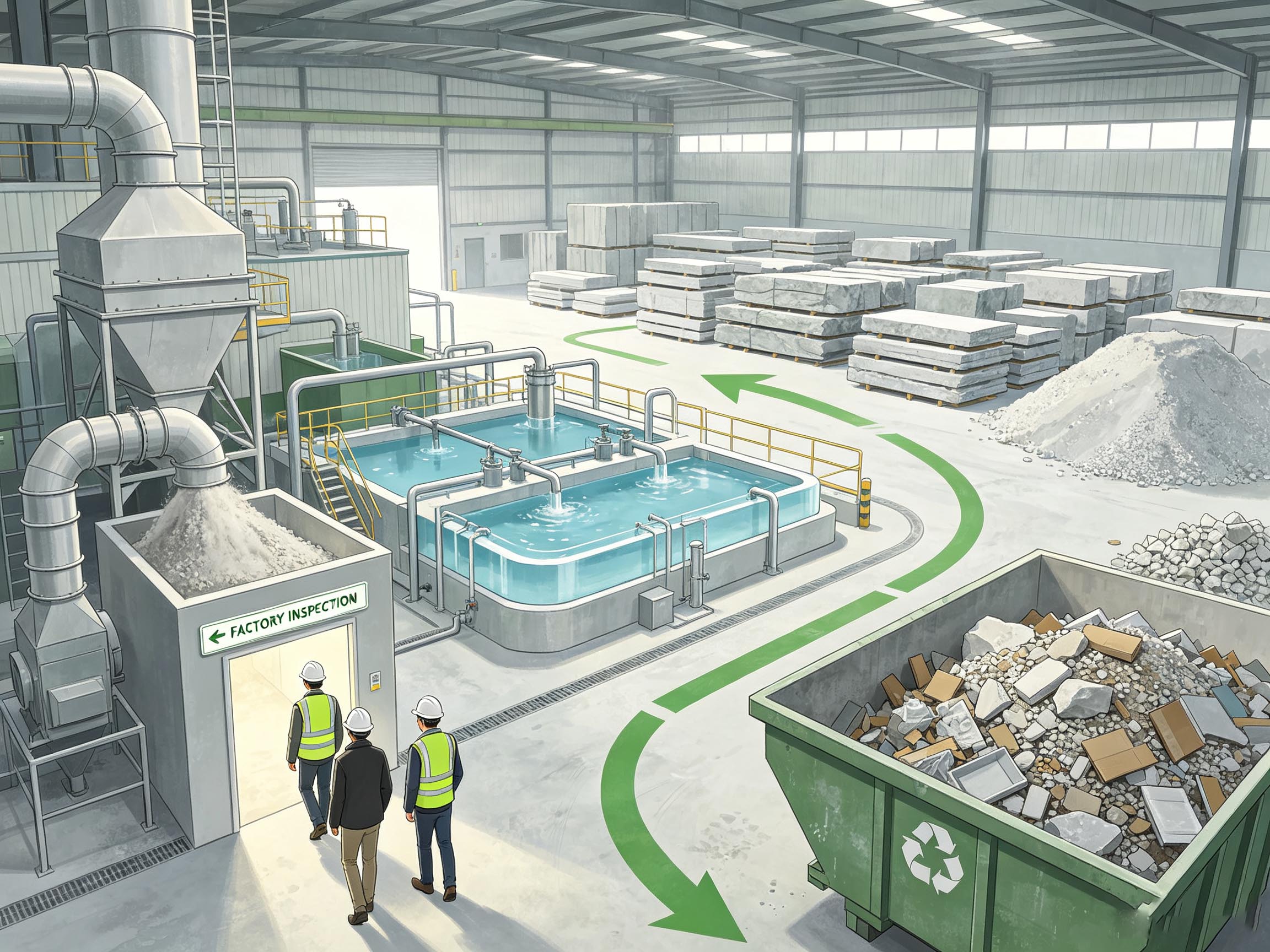
Check whether the factory has been audited by an international buyer or certification body. Audit reports provide independent verification of environmental practices. Ask for production waste recycling records and the percentage of waste reprocessed into new products. Visit the factory to observe environmental practices firsthand. Look for dust collection systems, water treatment facilities, and organized waste management areas.
Conclusion
Quartz stone sustainability depends on specific manufacturing practices rather than the material category itself. Buyers should evaluate individual manufacturers based on their energy efficiency, water management, waste reduction, and third-party certifications. Green certifications provide useful benchmarks, but verifiable evidence of environmental practices matters more than marketing claims. For project specifications requiring sustainable materials, explore our quartz slab product range or contact our export team for detailed environmental documentation and certification records.
Post time: Jul-06-2026