
By Yvonne Deng
International Sales Director, Apex Quartz Stone | 12+ Years in Engineered Stone Manufacturing
linkedin.com/in/yvonne-deng-5b35b543/
Selecting a reliable quartz slab supplier in China is one of the most critical decisions an importer can make. With hundreds of factories across Fujian, Guangdong, and Shandong provinces, quality varies dramatically between manufacturers. This verification checklist provides importers with a systematic framework for evaluating potential suppliers before committing to a purchase order.
Why Supplier Verification Matters for Quartz Slab Importers
The quartz slab industry in China includes manufacturers ranging from world-class export facilities with ISO certifications to small workshops producing inconsistent quality. The difference between a premium supplier and a budget supplier directly affects your business reputation, customer satisfaction, and long-term profitability.
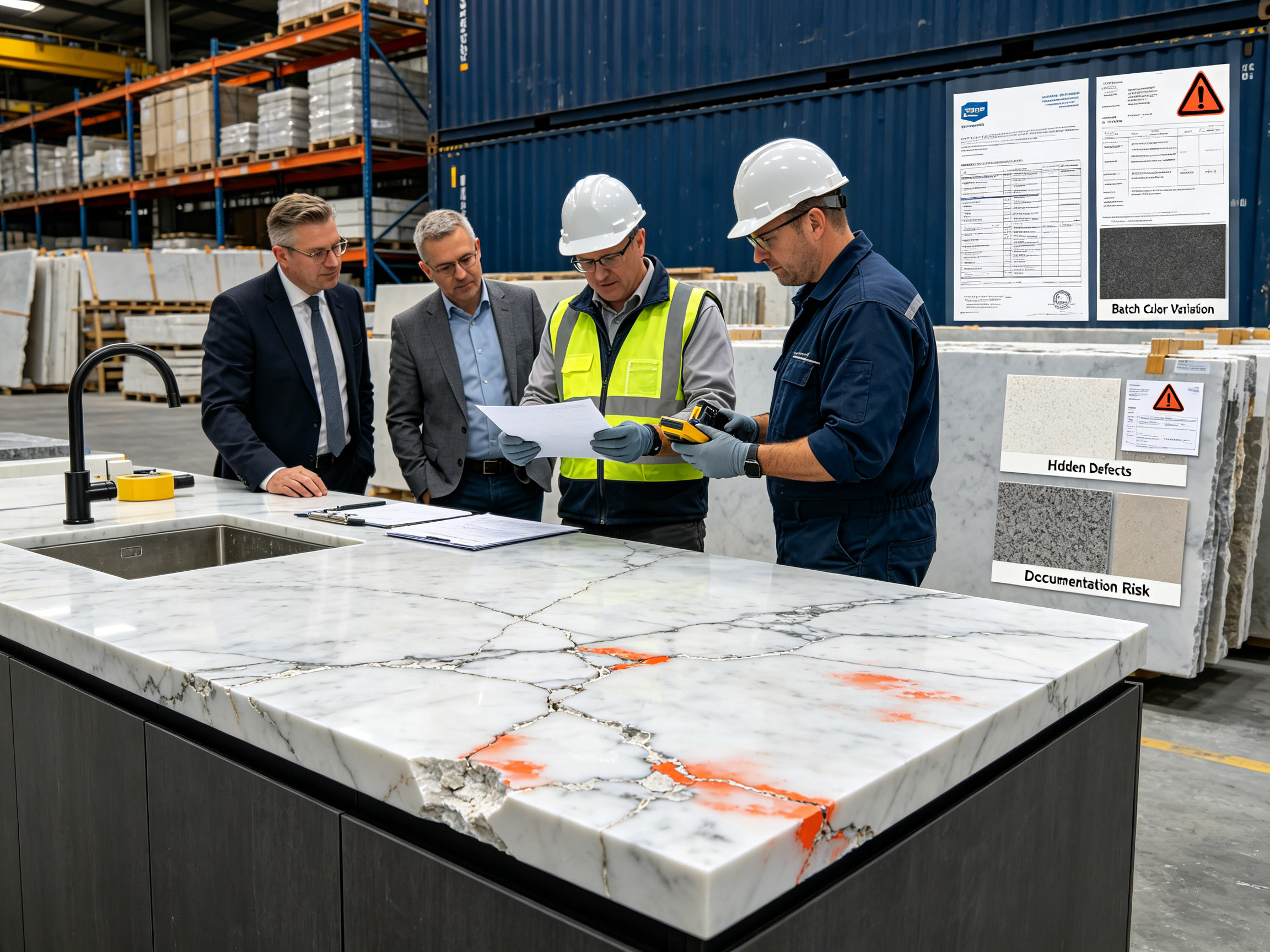
Importers who skip proper verification face several risks. Inconsistent color between batches makes kitchen installations look unprofessional. Hidden defects like micro-cracks or soft spots cause breakage during fabrication. Off-specification slabs may fail to meet local building codes or certification requirements. Poor supplier communication leads to shipping delays, incorrect documentation, and customs clearance problems.
A methodical verification process separates serious manufacturers from traders and low-quality producers. The investment of time in verification pays returns in reduced product returns, fewer customer complaints, and stronger supplier relationships over years of cooperation.
Phase 1: Initial Document Verification
Before visiting a factory or placing a trial order, verify basic documentation. These documents establish the supplier’s legal status and manufacturing capability.
Business License. Verify the supplier’s business license includes “quartz stone manufacturing” or “engineered stone production” in its registered business scope. Cross-check the company name with the factory address. Some trading companies present themselves as manufacturers but actually source from third parties.
Export License. Confirm the supplier has a valid import-export license. This allows them to handle international shipments directly. Without this license, they must work through an intermediary, adding cost and complexity to transactions.
Factory Ownership Proof. Request documentation showing the supplier owns or has long-term lease of their production facility. Companies operating in rented spaces without long-term commitments may relocate unexpectedly, disrupting supply continuity.
Certification Documents. Request copies of ISO 9001, ISO 14001, NSF, SGS, or other relevant certifications. Verify certification validity dates and scope. Expired certifications or certifications from unrecognized bodies should raise concerns.
Third-Party Audit Reports. Suppliers who have been audited by international buyers or inspection companies like SGS, Bureau Veritas, or TUV typically share these reports with serious buyers. Audit reports provide independent verification of production capability.
Phase 2: Remote Factory Assessment
If documentation checks pass, conduct a remote assessment before committing to a physical visit. Modern communication tools make this assessment practical and cost-effective.
Video Factory Tour. Request a live video walkthrough of the production facility. A legitimate manufacturer will accommodate this request. Watch for organized production areas, proper material storage, functioning equipment, and adequate lighting. A supplier who refuses or provides only pre-recorded videos deserves skepticism.
Production Capacity Assessment. Ask about the number of production lines, daily output capacity, and current utilization rate. Compare claimed capacity against factory size and equipment visible in the video tour. Inconsistencies between claims and observed capability should be investigated.
Raw Material Sourcing. Ask about quartz aggregate sources and resin suppliers. Quality manufacturers source raw materials from established suppliers and can name them. Generic answers like “we buy from the best sources” suggest limited supply chain control.
R&D Capability. Inquire about the factory’s ability to develop custom colors and patterns. Factories with dedicated R&D teams can offer exclusive designs. Factories without R&D capability can only produce standard colors available from multiple suppliers.

Phase 3: Sample Evaluation Protocol
Sample evaluation is the most reliable way to assess product quality. Follow this protocol to ensure meaningful comparison between suppliers.
Request Production Samples, Not Showroom Samples. Showroom samples are often specially selected for best appearance. Request samples cut from current production runs. Production samples accurately represent what you will receive in container shipments.
Evaluate Multiple Color Options. If ordering multiple colors, request samples of each. Color control capability varies significantly. Some factories maintain tight color consistency; others produce significant variation between batches.
Conduct Basic Quality Tests. Test samples for stain resistance by applying coffee, red wine, and cooking oil. Let them sit for 24 hours before cleaning. Quality quartz shows no staining. Test scratch resistance using a steel knife blade. Test water absorption by placing a water droplet and timing absorption. Quality quartz shows zero absorption after 60 minutes.
Check Color Consistency. Order samples from two different production dates if possible. Compare color and pattern between batches. Variation beyond acceptable limits indicates poor process control.
Verify Thickness and Flatness. Measure sample thickness at multiple points. Premium manufacturers maintain tolerance within 0.3mm. Place the sample on a flat surface and check for warping. Warped slabs cause installation problems and visible seams.
Phase 4: Factory Visit Checklist
For serious buyers planning ongoing orders, an in-person factory visit is essential. Use this checklist during your visit.
Raw Material Storage Area. Check that quartz aggregates are stored under cover, not exposed to weather. Verify multiple material sources are on site, indicating supply chain diversity. Inspect resin storage conditions. Resins have shelf lives and require temperature-controlled storage.
Production Floor. Observe mixing operations for consistency. Check vacuum compression equipment age and maintenance condition. Inspect curing ovens for temperature control systems. Count polishing heads and check their condition. Well-maintained equipment produces better quality.
Quality Control Lab. A proper factory has an on-site QC lab with testing equipment for hardness, stain resistance, flexural strength, and color measurement. Ask to see QC records from the past month. Consistent testing indicates commitment to quality.
Finished Goods Warehouse. Inspect finished slab storage. Slabs should be stored vertically in racks with proper padding between them. Check for damaged slabs in the warehouse, which may indicate handling quality issues. Look at the variety of colors and patterns in stock, which indicates production capability.
Packaging Area. Observe how slabs are prepared for export. Quality packaging includes protective film, corner protectors, vertical crating, and proper container loading procedures. Inadequate packaging results in damage during international shipping.
Worker Conditions. Observe workplace safety conditions. Proper dust control, safety equipment, and organized work areas indicate well-managed operations. Poor working conditions often correlate with poor product quality.
Phase 5: Commercial Terms Verification
Before placing an order, verify commercial terms align with industry standards. This protects both parties and establishes clear expectations.
| Term | Industry Standard | Red Flags |
|---|---|---|
| MOQ | 1×20′GP container (250-300 sqm) | Extremely low MOQ suggests small operation |
| Payment | 30% deposit, 70% before shipment | Insisting on 100% payment before shipment |
| Lead Time | 15-25 days after deposit | Consistently less than 10 days for custom colors |
| Sample Policy | Free samples, buyer pays shipping | Charging high fees for standard samples |
| Inspection | Third-party inspection before shipment | Refusing pre-shipment inspection |
| Warranty | 10-15 years for structural defects | No written warranty terms |
| Shipping | FOB Xiamen or nearest port | Vague shipping terms or unusual port requirements |
Payment Terms. Industry standard payment terms for first orders are 30% deposit with 70% balance before shipment. Established suppliers with long trading history may offer L/C terms for qualified buyers. Be cautious of suppliers demanding 100% upfront payment, as this eliminates leverage if quality issues arise.
Inspection Rights. Ensure your contract includes the right to third-party inspection before shipment. Reputable suppliers welcome inspection. Resistance to inspection suggests quality concerns.
Warranty Terms. Quality Chinese quartz manufacturers offer 10-15 year structural warranties. Verify warranty terms in writing. Understand what is covered versus excluded. Standard exclusions include damage from improper installation, abuse, and natural disasters.
Building Long-Term Supplier Relationships
Once you have identified a reliable supplier, invest in the relationship. Regular communication, timely payments, and constructive feedback strengthen partnerships. Visit your supplier annually to maintain personal connections. Share market feedback that helps them improve products for your market.
Consider developing exclusive colors or patterns with your chosen supplier. Exclusivity differentiates your product offering and strengthens the business relationship. Suppliers prioritize exclusive partners when allocating production capacity during peak demand periods.
Maintain sample archives from each production batch. If quality issues arise in future shipments, archived samples provide reference standards for comparison. Document all specifications, correspondence, and agreements in writing to prevent misunderstandings.
Conclusion
Finding the right quartz slab supplier in China requires systematic verification across five phases: document verification, remote assessment, sample evaluation, factory visit, and commercial terms review. Each phase filters out unsuitable suppliers and builds confidence in the final selection. The time invested in proper supplier verification pays returns in product consistency, reliable delivery, and long-term partnership value. For buyers seeking established manufacturers with proven export experience, Apex Quartz Stone provides factory tour arrangements and comprehensive product documentation for serious importers.
Post time: Jul-03-2026