
By Yvonne Deng
International Sales Director, Apex Quartz Stone | 12+ Years in Engineered Stone Manufacturing
linkedin.com/in/yvonne-deng-5b35b543/
Quartz countertop cleaning requires the right products to maintain the surface without causing damage. While quartz is more durable and less porous than natural stone, certain cleaners can break down the resin binders, dull the polish, or leave residue that attracts dirt. This guide covers which products are safe, which to avoid, and the best cleaning routine for long-lasting quartz countertops.
Why Quartz Needs Special Cleaning Care
Engineered quartz countertops consist of approximately 90-93% natural quartz crystals bound together with polymer resins and pigments. This composition gives quartz its non-porous surface and stain resistance, but it also creates specific vulnerabilities. The polymer resin binders can be damaged by harsh chemicals, extreme pH levels, and high-heat exposure.
Unlike natural stone surfaces that can be refinished and resealed repeatedly, quartz finishes are part of the material itself. Once damaged by improper cleaning products, the surface cannot be simply resealed. Damage may require professional re-polishing or, in severe cases, complete replacement. This makes proper cleaning product selection essential for maintaining warranty coverage and long-term appearance.
Most quartz manufacturers require the use of pH-neutral cleaners to maintain warranty validity. Alkaline or acidic cleaners gradually break down the resin binders, causing micro-etching that dulls the surface shine over time. Using the wrong products for just a few months can cause visible deterioration that is difficult to reverse.
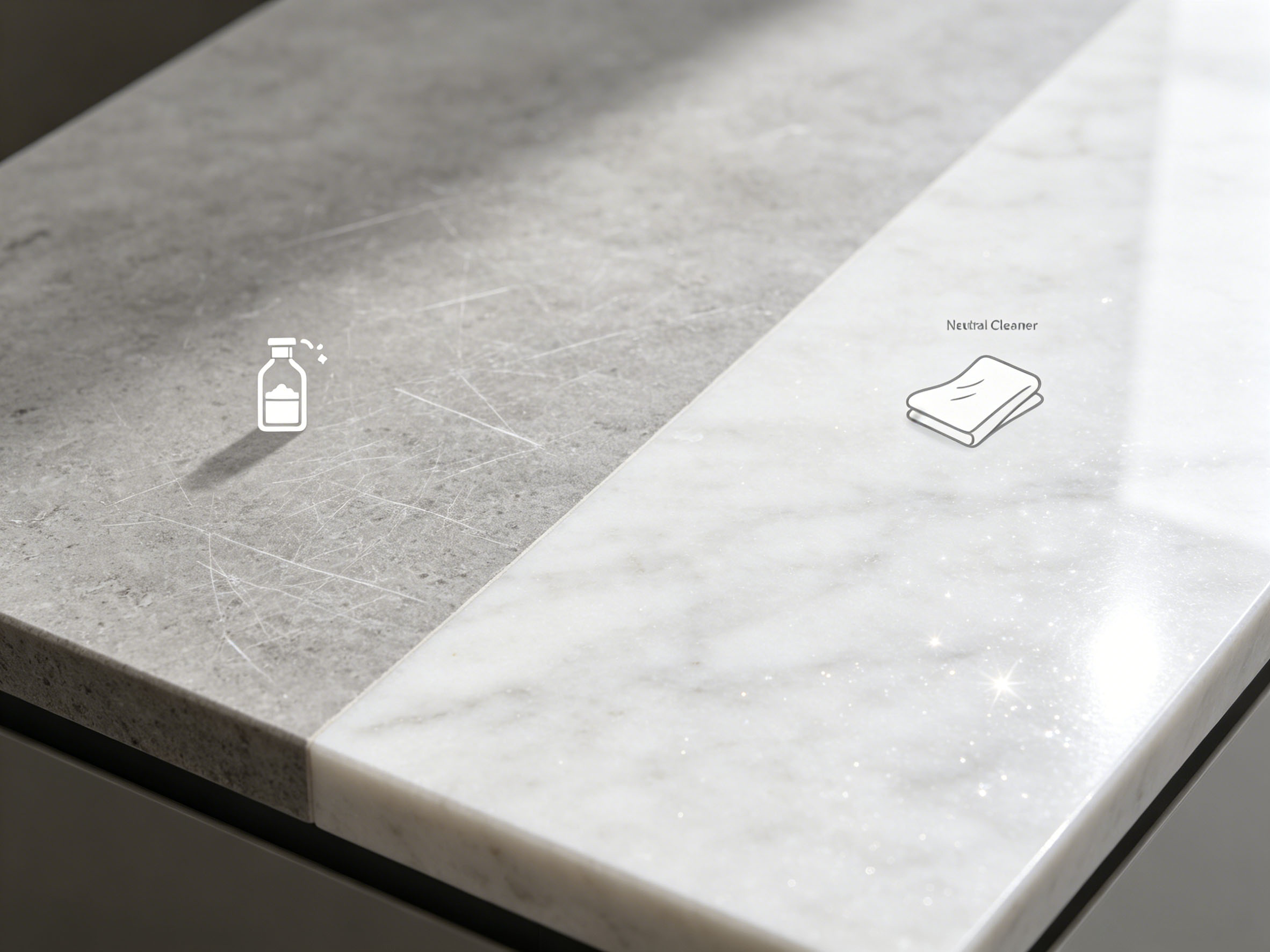
Safe Cleaning Products for Quartz
| Product Type | Safe Brands | Best For |
|---|---|---|
| Mild dish soap | Dawn, Seventh Generation, Mrs. Meyer’s | Daily cleaning, most food spills |
| pH-neutral stone cleaner | Granite Gold Daily Cleaner, Method Stone Cleaner | Regular maintenance, gentle on resin |
| Isopropyl alcohol solution | 70% isopropyl alcohol mixed with water (1:1) | Grease removal, disinfecting |
| Microfiber cloths | Any high-quality microfiber brand | Streak-free drying, daily dusting |
| Warm water | Regular tap water | Routine cleaning, most effective daily option |
Mild Dish Soap. A few drops of mild liquid dish soap mixed with warm water is the safest and most effective daily cleaner for quartz countertops. Choose soaps without added bleaches, citrus oils, or abrasive particles. Rinse thoroughly after cleaning and dry with a soft cloth to prevent water spots.
pH-Neutral Stone Cleaners. Commercially available pH-neutral cleaners formulated for engineered stone offer convenient spray-and-wipe cleaning. Look for cleaners specifically labeled safe for quartz countertops. These products typically have a pH of 7 and contain no harsh chemicals that could damage the resin.
Isopropyl Alcohol Solution. A 50:50 mixture of 70% isopropyl alcohol and water effectively removes grease and disinfects the surface without damaging quartz. This solution evaporates quickly and leaves no residue. It is particularly useful for cleaning kitchen countertops after cooking with oils or fats.
Products to Avoid on Quartz Countertops
| Avoid | Why It Damages Quartz | Safe Alternative |
|---|---|---|
| Bleach-based cleaners | Breaks down polymer resins, causes yellowing | Isopropyl alcohol solution |
| Vinegar (acetic acid) | Etches resin, dulls polish over time | pH-neutral stone cleaner |
| Lemon juice (citric acid) | Acidic etching of resin binders | Mild dish soap and water |
| Windex / ammonia-based | Ammonia attacks resin polymers | Isopropyl alcohol solution |
| Abrasive scouring powders | Scratches polished surface | Soft sponge or microfiber cloth |
| Oven cleaner | Extreme alkaline, destroys surface | Professional cleaning only |
| Drain cleaner | Corrosive chemicals, permanent damage | Plumber for clogs |
| Paint thinner / acetone | Chemical dissolution of resin | Mineral spirits (test first) |
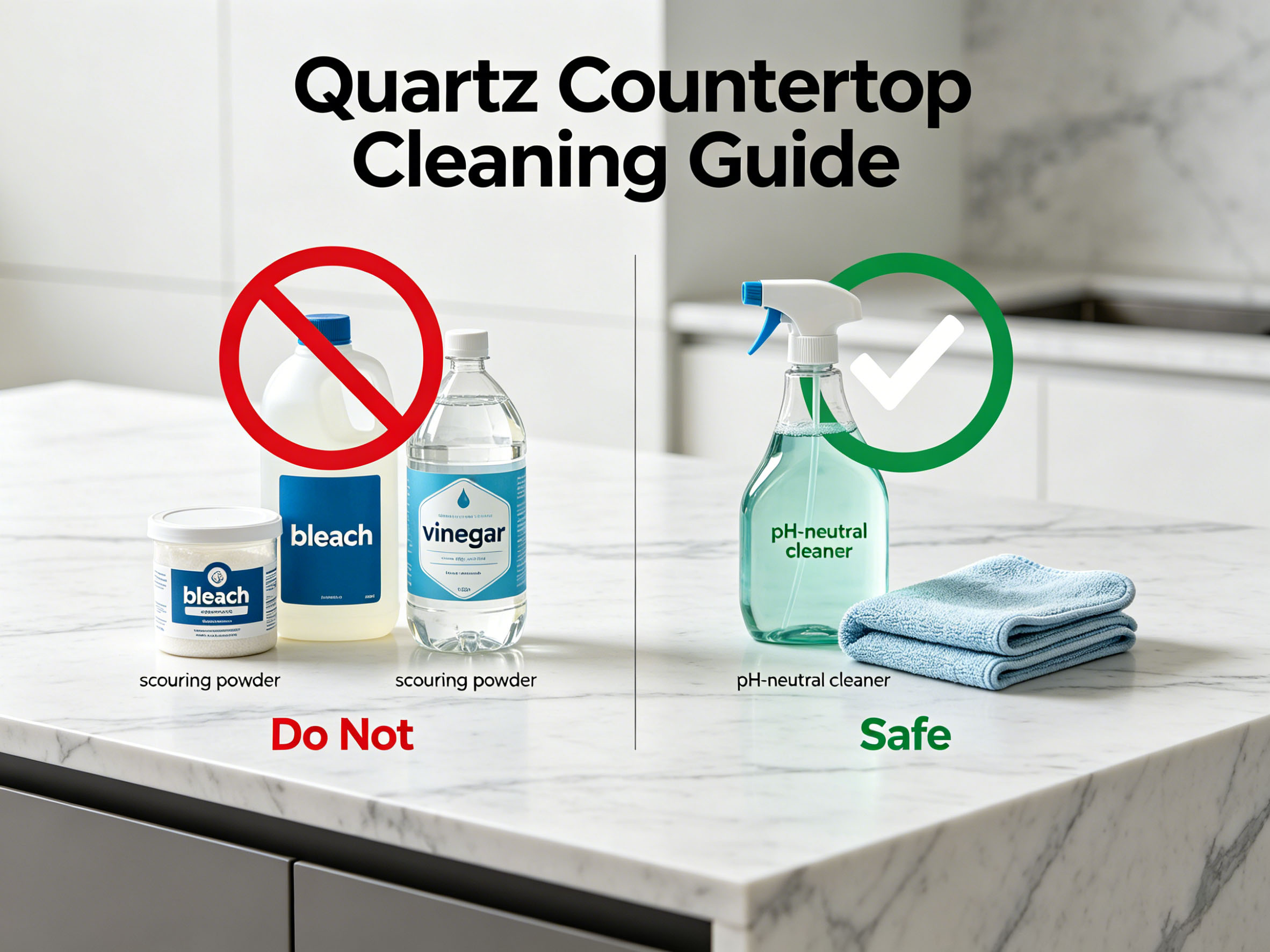
Vinegar and Lemon Juice. Despite being popular natural cleaning solutions, vinegar and lemon juice are acidic enough to slowly etch quartz surfaces. Regular use causes cumulative damage that appears as a dulling of the polished finish. The myth that vinegar is safe for all surfaces does not apply to engineered stone.
Bleach and Ammonia. Household bleach and ammonia-based cleaners like Windex chemically attack the polymer resins in quartz. Bleach causes yellowing and resin degradation. Ammonia penetrates micro-pores in the resin and causes clouding. Neither should be used on quartz countertops.
Abrasive Products. Scouring powders, steel wool, and abrasive scrub pads physically scratch the polished quartz surface. Once scratched, the surface collects dirt and stains more easily. Even mild abrasive products should be avoided in favor of soft sponges or microfiber cloths.
Daily Cleaning Routine
Following a consistent daily cleaning routine keeps quartz countertops in optimal condition without requiring special effort. Most cleaning can be done with items already in your kitchen.
After Each Use. Wipe the countertop with a soft cloth or sponge dampened with warm water. For food preparation messes, add one drop of mild dish soap to the sponge. Rinse with clean water and dry with a microfiber cloth to prevent water spots.
End of Day. Spray the surface with a pH-neutral stone cleaner and wipe clean with a microfiber cloth. This removes any accumulated oils, dust, and cooking residue. Pay special attention to areas near the sink and stove where buildup is most likely.
Weekly Deep Clean. Mix a solution of warm water with a few drops of mild dish soap. Clean the entire countertop surface using a soft sponge. For stubborn spots, allow the soapy water to sit for 30 seconds before wiping. Rinse thoroughly and dry completely.
Handling Specific Stain Types
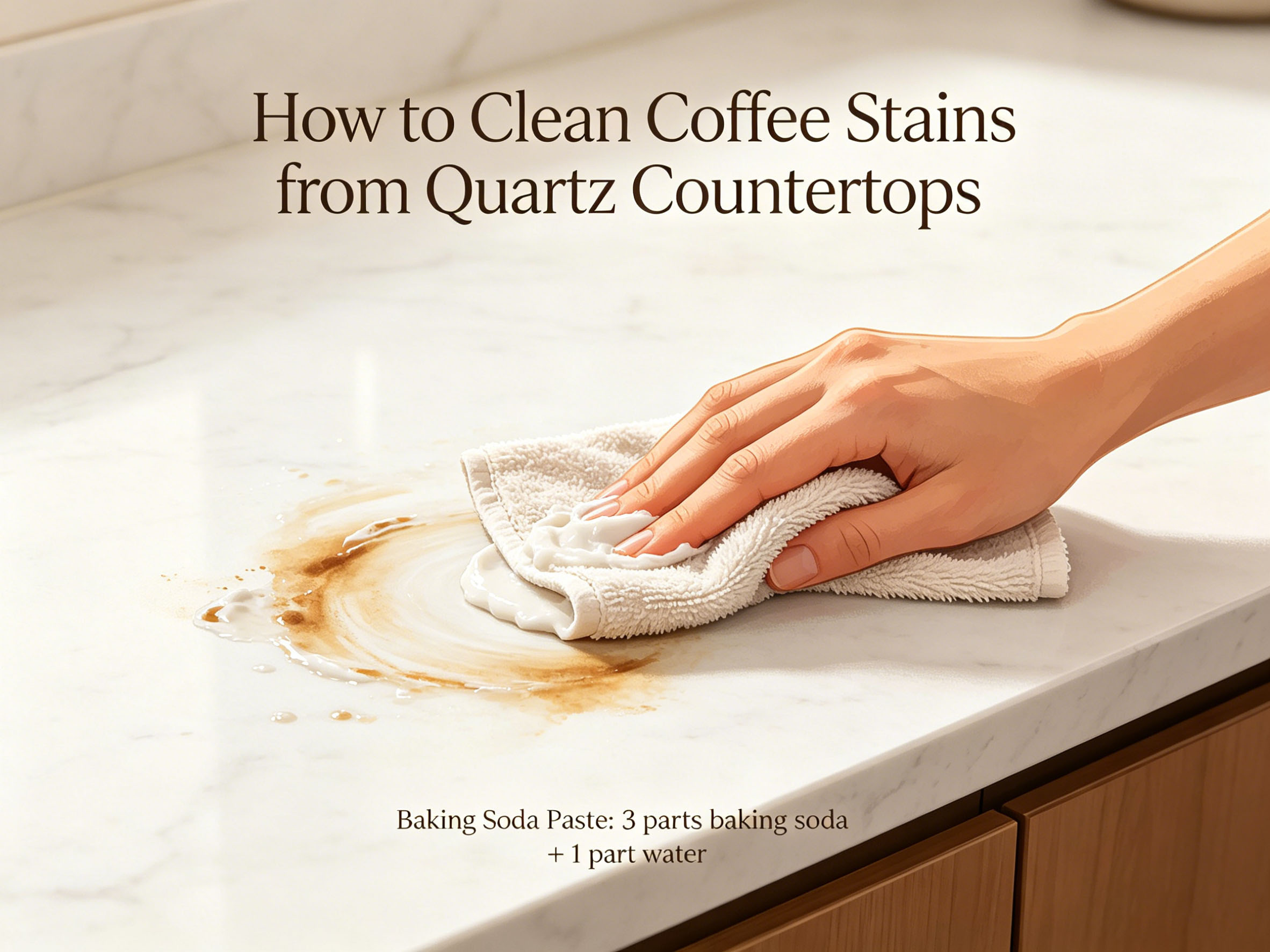
Wine and Coffee Stains. Because quartz is non-porous, most liquid stains remain on the surface. Wipe immediately with warm water and mild soap. For dried wine or coffee, use a paste of baking soda and water gently applied with a soft cloth. Rinse thoroughly.
Grease and Oil Residue. Cooking oils and grease can leave a film on quartz surfaces. Isopropyl alcohol solution works effectively on grease without damaging the surface. Spray the solution on the affected area, let it sit for 10 seconds, and wipe clean.
Dried Food and Sticky Residue. For dried food, hardened sugar, or adhesive residue, apply warm water and let it sit for several minutes to soften. Gently scrape with a plastic putty knife or credit card. Avoid metal scrapers, which can scratch the surface.
Hard Water Spots. Mineral deposits from hard water can build up near sinks. Use a 50:50 solution of isopropyl alcohol and water, which dissolves mineral deposits without damaging the quartz. Wipe dry after cleaning to prevent new spots from forming.
Dried Paint or Glue. Water-based paints and glues can be removed with warm water and gentle scraping. Oil-based products may require mineral spirits. Test any solvent on an inconspicuous area first. Avoid acetone and paint thinners, which damage the resin.
Cleaning Tools to Use and Avoid
Use These: Microfiber cloths provide streak-free cleaning without scratching. Soft cellulose sponges are safe for daily use. Plastic scrapers handle stubborn residue without surface damage. Soft-bristle brushes clean textured areas safely. Squeegees remove excess water without streaking.
Avoid These: Steel wool scouring pads leave metal particles that can rust and stain the surface. Green scrubby pads are too abrasive for quartz. Scotch-Brite heavy-duty pads cause micro-scratches visible under light. Hard-bristle brushes can scratch polished finishes. Paper towels with rough texture may leave fine scratches over time.
What About Sealing Quartz
One of the most common questions about quartz maintenance is whether sealing is necessary. The answer is no. Engineered quartz is manufactured with a non-porous surface that does not require sealing. Unlike natural granite or marble, quartz will not absorb liquids even without a sealant.
Some manufacturers offer sealant products marketed for quartz, but these are unnecessary. They may actually create a film on the surface that attracts dirt and reduces the natural shine of the quartz. Skip the sealant and invest in proper daily cleaning instead.
If your quartz countertop has been sealed previously, the sealant will wear off over time. Continue using pH-neutral cleaners as usual. The quartz underneath remains undamaged and will perform exactly as intended.
Long-Term Maintenance Tips
With proper care, quartz countertops maintain their appearance for 15-20 years or longer. Use cutting boards for food preparation to protect against scratches from knives, which can damage both the surface and the blade. Use trivets or hot pads for hot cookware. While quartz is heat-resistant, rapid temperature changes can cause thermal shock and cracking.
Avoid standing on quartz countertops. Weight concentrated on seams or unsupported areas may cause cracking. Clean spills immediately. Even though quartz is stain-resistant, prolonged contact with strong dyes like turmeric or berry juices may leave temporary marks.
Periodic professional re-polishing can restore the original gloss level after many years of use. This service is available through most countertop fabricators and costs significantly less than replacement. Professional cleaners used by re-polishing services are safe for the quartz structure.
Conclusion
Quartz countertop cleaning is straightforward when you know which products are safe and which to avoid. Daily cleaning with mild dish soap and water, weekly use of pH-neutral stone cleaner, and immediate attention to spills will keep your quartz countertops looking like new for decades. By avoiding bleach, vinegar, and abrasive products, you protect the resin binders and maintain the polished surface that makes quartz a premium countertop choice.
Post time: Jun-26-2026