
By Yvonne Deng
International Sales Director, Apex Quartz Stone | 12+ Years in Engineered Stone Manufacturing
linkedin.com/in/yvonne-deng-5b35b543/
Carrara quartz slab offers the timeless beauty of classic Italian marble with the practical benefits of engineered stone. This guide covers everything homeowners and designers need to know about selecting, installing, and maintaining Carrara quartz countertops for modern kitchens.
What Is Non Silica Stone
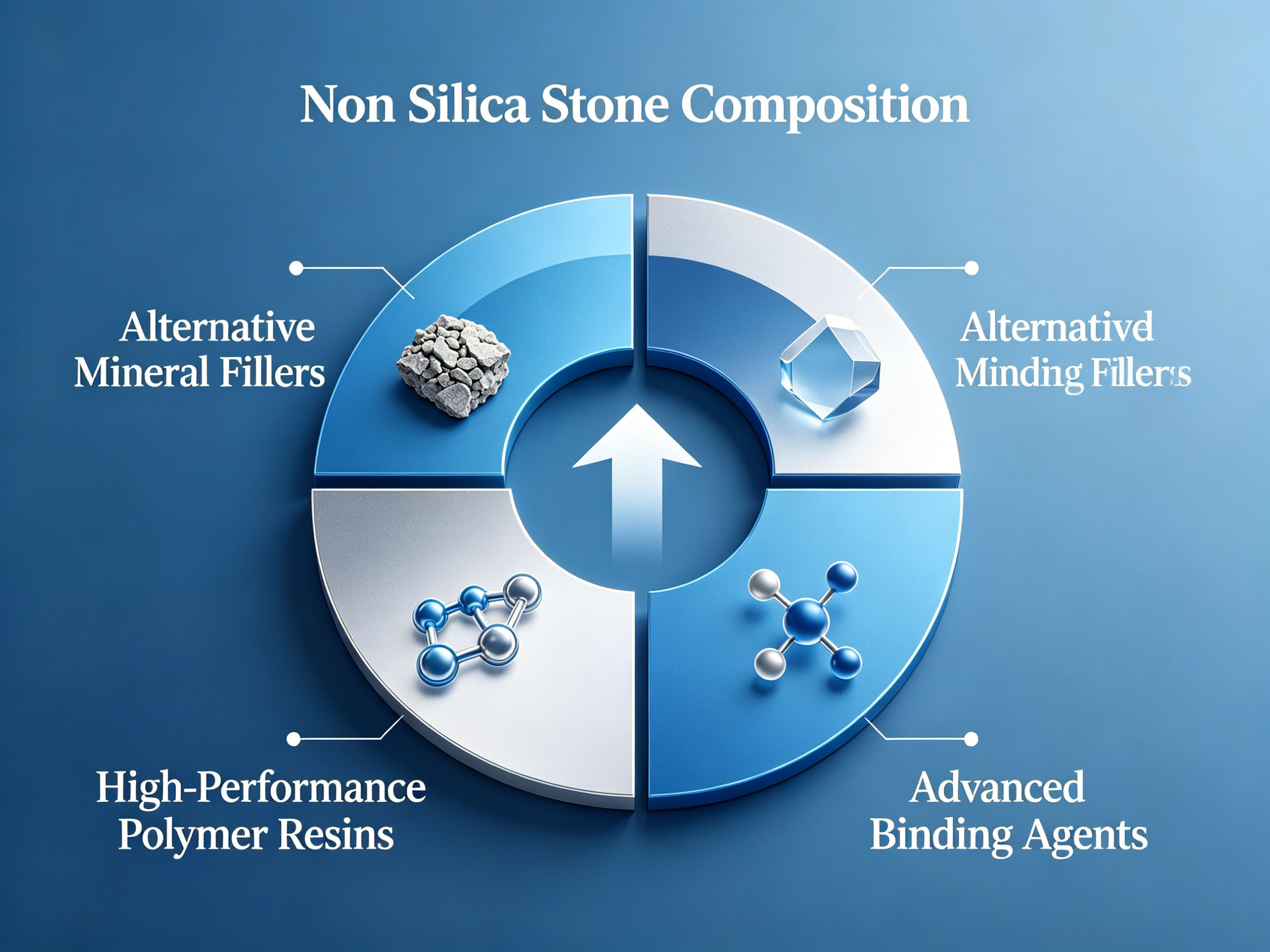
Non silica stone is an engineered surface material that eliminates crystalline silica from its composition. Traditional engineered quartz contains 90-95% crystalline silica, which poses health risks during fabrication and installation. Non silica stone replaces this component with alternative mineral compounds, creating a surface that delivers comparable performance without silica-related hazards.
The composition typically includes alternative mineral fillers, high-performance polymer resins, and advanced binding agents. Advanced digital printing technology applies realistic stone patterns and textures to the surface. UV-cured protective finishes ensure durability comparable to traditional quartz products.
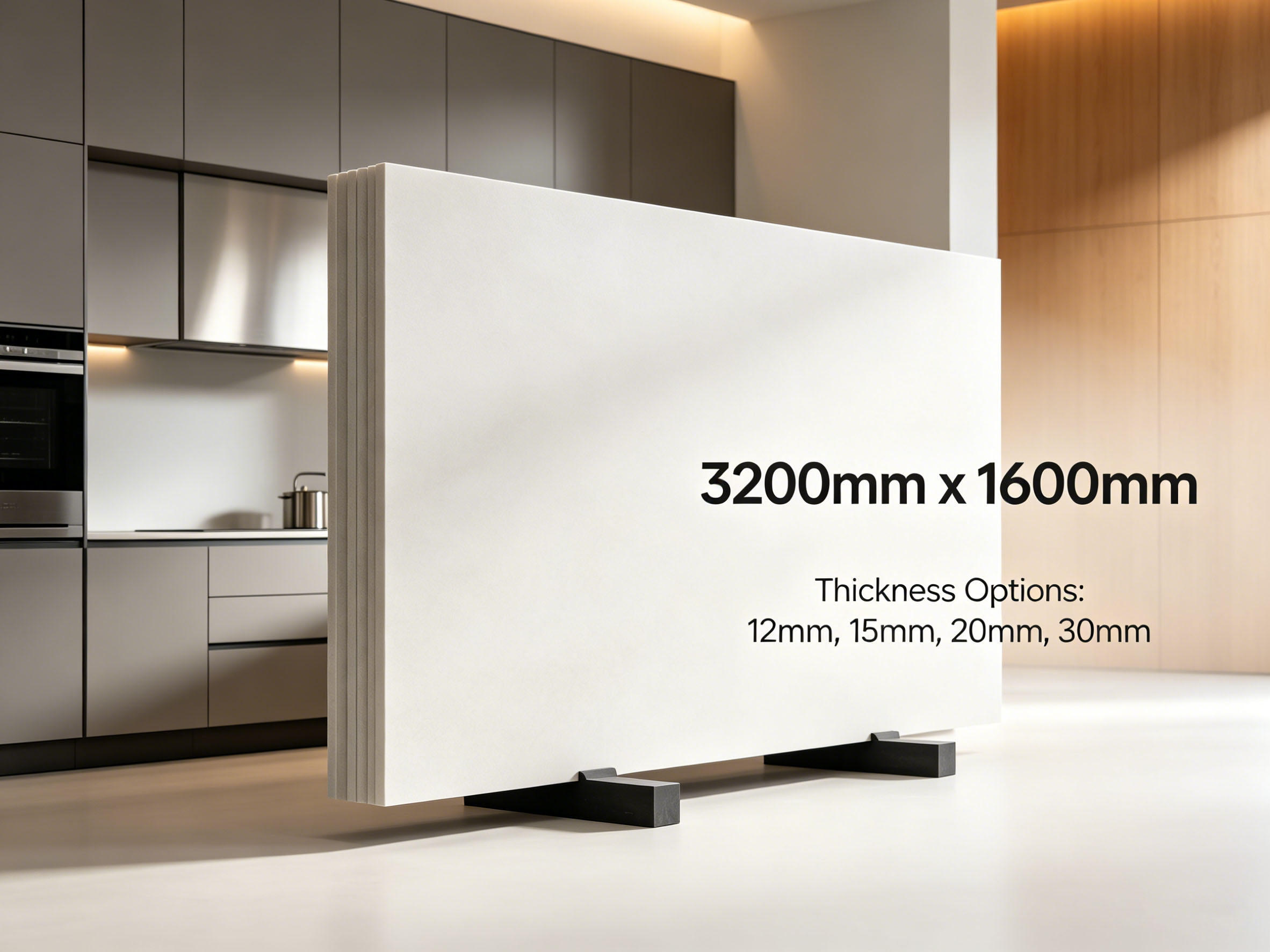
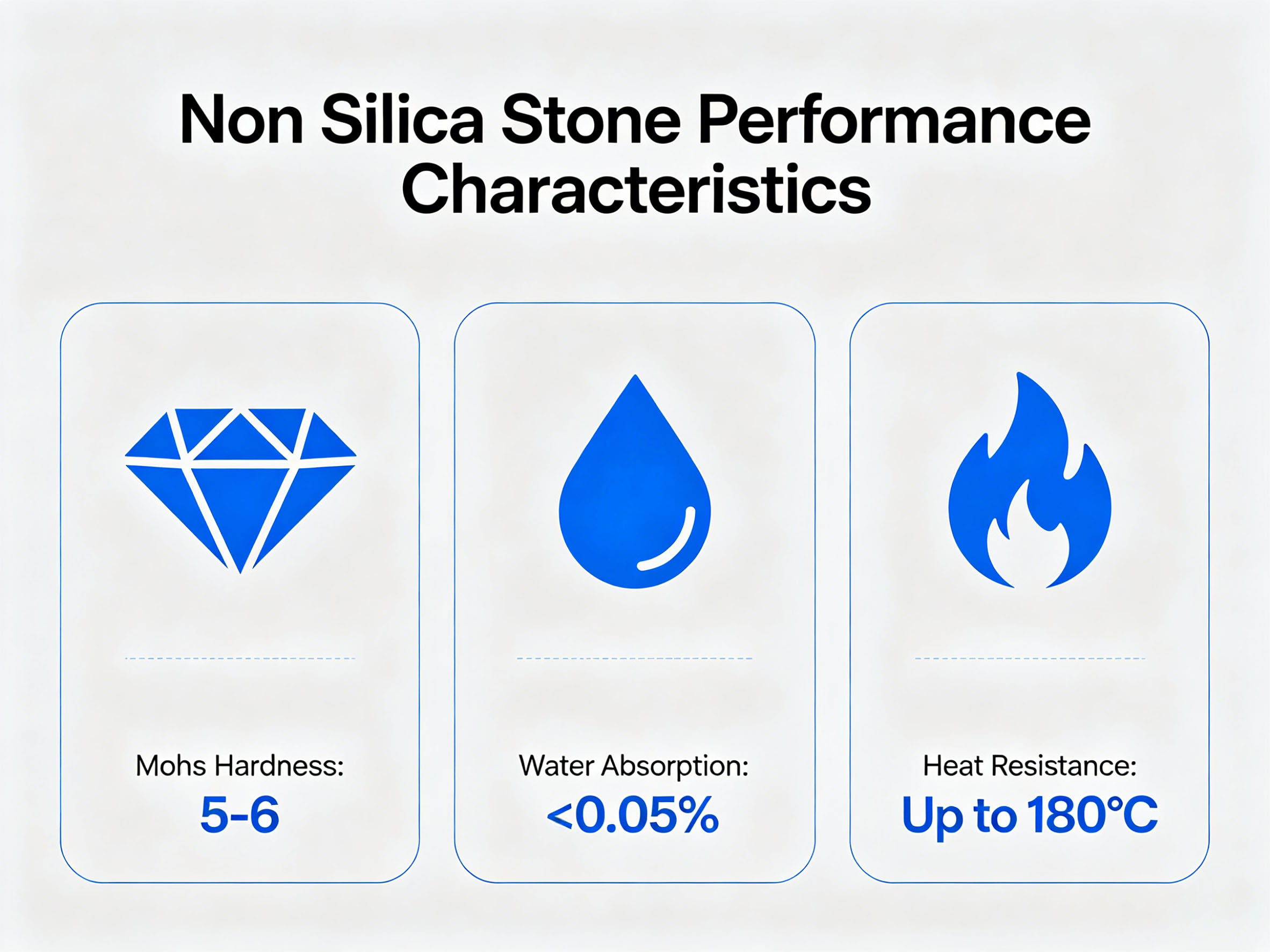
Standard slab dimensions match traditional quartz at 3200mm x 1600mm with thickness options of 12mm, 15mm, 20mm, and 30mm. Performance characteristics include Mohs hardness of 5-6, water absorption below 0.05%, and heat resistance up to 180 degrees Celsius.
Understanding the Silica Problem
Crystalline silica is a natural mineral found in stone, sand, and concrete. Traditional quartz countertops contain 90-95% silica. While these surfaces are safe for end-users in their installed state, the cutting, grinding, and polishing processes during fabrication release respirable silica dust into the air.
Prolonged inhalation of crystalline silica dust causes silicosis, an irreversible lung disease. The International Agency for Research on Cancer classifies crystalline silica as a Group 1 carcinogen. Additional health risks include chronic obstructive pulmonary disease, kidney disease, and autoimmune disorders. These concerns have driven regulatory changes worldwide.
Regulatory bodies have responded with stricter guidelines. The US Occupational Safety and Health Administration enforces a permissible exposure limit of 50 micrograms per cubic meter over an 8-hour workday. Australia has introduced some of the strictest regulations, with certain states banning engineered stone containing more than 40% crystalline silica. The European Union continues to strengthen worker protection standards across member states.
How Non Silica Stone Eliminates Health Risks
Non silica stone removes the primary hazard source by eliminating crystalline silica from the material composition. Alternative mineral fillers provide structural integrity without generating respirable silica dust during fabrication. This fundamental change transforms workplace safety for fabricators, installers, and construction workers.
Fabricators can cut, shape, and polish non silica stone without specialized silica dust suppression equipment. Standard stone fabrication tools with appropriate blades handle the material effectively. This simplification reduces equipment costs, improves workspace air quality, and eliminates the need for complex ventilation systems.
For employers, non silica stone reduces compliance burden and liability exposure. OSHA silica regulations require extensive monitoring, record-keeping, and protective measures for traditional quartz fabrication. Silica-free materials exempt workplaces from these requirements while maintaining the same level of protection.
Performance Comparison: Non Silica Stone vs. Traditional Quartz Durability.
Non silica stone achieves Mohs hardness of 5-6, compared to traditional quartz at 6-7. While slightly softer, it still resists scratching from normal kitchen activities. The material performs adequately for residential countertops and most commercial applications.
Stain Resistance. Both materials offer excellent stain resistance due to non-porous surfaces. Non silica stone’s polymer resin system prevents liquid absorption effectively. Wine, coffee, oil, and common kitchen substances wipe away without staining.
Heat Resistance. Non silica stone withstands temperatures up to 180 degrees Celsius, comparable to traditional quartz. Trivets and hot pads are recommended for both materials. Direct exposure to extreme heat or thermal shock may damage either surface.
Appearance. Advanced digital printing technology creates realistic stone patterns on non silica surfaces. Options include marble, granite, and abstract designs. The visual quality is comparable to traditional quartz with the same range of color and pattern choices.
Performance Comparison: Non Silica Stone vs. Traditional Quartz Durability.
Non silica stone achieves Mohs hardness of 5-6, compared to traditional quartz at 6-7. While slightly softer, it still resists scratching from normal kitchen activities. The material performs adequately for residential countertops and most commercial applications.
Stain Resistance. Both materials offer excellent stain resistance due to non-porous surfaces. Non silica stone’s polymer resin system prevents liquid absorption effectively. Wine, coffee, oil, and common kitchen substances wipe away without staining.
Heat Resistance. Non silica stone withstands temperatures up to 180 degrees Celsius, comparable to traditional quartz. Trivets and hot pads are recommended for both materials. Direct exposure to extreme heat or thermal shock may damage either surface.
Appearance. Advanced digital printing technology creates realistic stone patterns on non silica surfaces. Options include marble, granite, and abstract designs. The visual quality is comparable to traditional quartz with the same range of color and pattern choices.
Cost. Non silica stone typically costs 10-20% more than traditional quartz due to specialized materials and production processes. However, total project costs may be lower when accounting for reduced fabrication equipment and compliance expenses.
Applications for Non Silica Stone
Non silica stone suits a wide range of applications. Residential kitchens and bathrooms benefit from the material’s safety profile and performance characteristics. Healthcare facilities prioritize non silica surfaces for patient and worker safety. Educational institutions specify silica-free materials for workshop environments.
Commercial applications include hospital countertops, laboratory surfaces, school workshop benches, and food service preparation areas. The non silica stone products from Apex Quartz Stone include multiple models designed for different application requirements.
Installation Considerations
Non silica stone installation follows similar procedures to traditional quartz but with important differences. Fabricators can use standard tools without silica-specific dust collection systems. Cutting produces less hazardous dust, improving workspace conditions and reducing cleanup requirements.
Adhesive selection requires careful consideration. Non silica stone’s different composition may require modified adhesives for proper bonding. Edge profiles and seam preparation follow standard procedures. Proper substrate support is essential regardless of material composition.
Environmental Benefits
Non silica stone offers environmental advantages beyond worker safety. The manufacturing process requires less energy-intensive raw material extraction compared to quartz mining. The absence of silica simplifies end-of-life recycling and waste management. Some manufacturers incorporate recycled materials into their non silica formulations.
Sustainable production practices continue evolving. Water recycling systems, energy-efficient curing processes, and reduced emissions contribute to lower environmental impact. As building codes increasingly emphasize occupant health and environmental sustainability, non silica stone aligns with green building certification requirements.
Global Regulatory Trends
Regulatory momentum continues shifting toward silica restrictions. Australia’s ban on engineered stone exceeding 40% silica content, effective July 2024, has influenced policy discussions in other markets. California’s Occupational Safety and Health Standards Board has proposed stricter silica exposure limits. The European Union’s REACH regulations continue evaluating silica-related restrictions.
These regulatory trends suggest that non silica stone will become increasingly important for construction projects worldwide. Forward-thinking specifiers and contractors are adopting non silica surfaces proactively to prepare for anticipated regulatory changes and growing market demand.
Conclusion
Non silica stone represents a significant advancement in engineered surface technology, addressing critical health concerns while maintaining performance standards that architects and designers expect. As regulations tighten and awareness grows, silica-free surfaces are positioned to become the new standard in countertop materials.
For product specifications, safety data, and pricing on non silica stone options, contact Apex Quartz Stone. Their product range includes silica-free surfaces designed for residential and commercial applications.
Post time: Jun-12-2026