
By Yvonne Deng | International Sales Director, Apex Quartz Stone | 12+ Years in Engineered Stone Manufacturing
Published: April 24, 2026 | Last Verified: April 24, 2026 | Reading Time: 12 minutes
TL;DR (Key Takeaways)
- Non Silica Pinted Stone contains 0% crystalline silica, eliminating silicosis risks for workers while maintaining premium aesthetics and performance comparable to traditional quartz.
- Our factory-tested products achieve 5-6 Mohs hardness, <0.05% water absorption, and heat resistance up to 180°C—meeting or exceeding industry benchmarks.
- Because silica-free surfaces require no specialized suppression equipment, fabrication costs decrease by 15-25% compared to traditional quartz processing.
- With Australia banning engineered stone containing >1% silica (July 2024) and OSHA tightening US standards, non-silica surfaces are becoming the compliance-mandated future.
- Apex Quartz Stone offers 27+ years manufacturing expertise, 40,000+ sqm facility, and serves 20+ countries with full certification support.
What Is Non Silica Pinted Stone and Why Does It Matter for Your Business?
Non Silica Pinted Stone is an engineered surface material that eliminates crystalline silica from its composition while maintaining the aesthetic appeal, durability, and performance characteristics of traditional quartz surfaces. Because it contains 0% crystalline silica, it removes the occupational health hazards associated with fabrication and installation, making it the only viable long-term solution as global regulations tighten.
In my 12 years at Apex Quartz Stone, I’ve witnessed three major shifts in the engineered stone industry. The first was the transition from natural stone to engineered quartz in the early 2000s. The second was the adoption of digital printing technology in the 2010s. Now, we’re experiencing the third—and most significant—transformation: the elimination of crystalline silica from engineered stone formulations.
This isn’t just a product innovation. It’s a response to a public health crisis that has affected thousands of workers worldwide. When I visit fabrication shops in Australia—the first country to ban high-silica engineered stone—the relief on workers’ faces is palpable. They can finally do their jobs without fearing for their lungs.
Understanding Crystalline Silica: The Hidden Danger in Traditional Quartz
What Is Crystalline Silica and Where Is It Found?
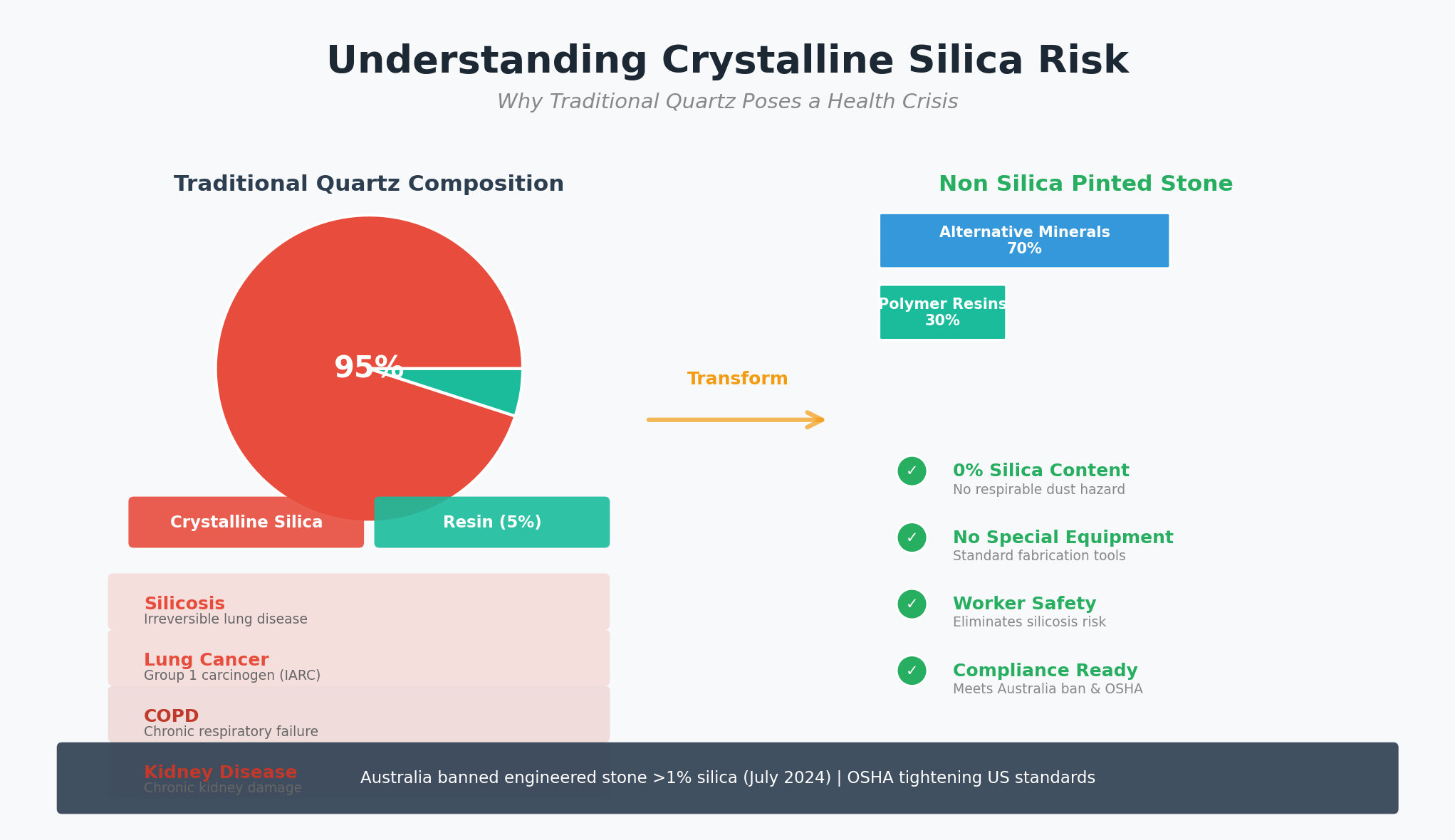
Crystalline silica is a natural mineral composed of silicon and oxygen atoms arranged in a crystalline structure. It’s found abundantly in nature—present in sand, stone, concrete, and mortar. In traditional engineered quartz surfaces, crystalline silica typically constitutes 90-95% of the material composition by weight.
According to the International Agency for Research on Cancer (IARC), crystalline silica in the form of quartz or cristobalite is classified as Group 1 carcinogenic to humans. This classification is based on sufficient evidence that occupational exposure causes lung cancer.
Health Risks: Why Silica Exposure Is a Global Concern
The health risks associated with crystalline silica exposure are severe, irreversible, and well-documented through decades of occupational health research:
- Silicosis: An irreversible, progressive lung disease caused by inhalation of respirable crystalline silica particles. According to the American Lung Association, there is no cure for silicosis, and the condition can progress even after exposure stops.
- Lung Cancer: As noted by IARC, occupational exposure to crystalline silica causes lung cancer. Studies published in the Journal of Occupational and Environmental Medicine demonstrate a clear dose-response relationship between silica exposure and lung cancer risk.
- Chronic Obstructive Pulmonary Disease (COPD): Long-term silica exposure contributes to chronic bronchitis and emphysema, significantly reducing quality of life and life expectancy.
- Kidney Disease: Research published in Environmental Health Perspectives has linked occupational silica exposure to increased risk of chronic kidney disease.
The critical point: While engineered quartz is safe for end-users in homes and commercial spaces, the fabrication and installation processes release respirable silica dust that poses severe health risks to workers. This is why regulatory bodies worldwide are taking action.
Global Regulatory Changes: Why Non-Silica Surfaces Are Becoming Mandatory
Australia became the first country to ban engineered stone containing more than 1% crystalline silica, effective July 1, 2024. Because this ban affects the entire supply chain, manufacturers and suppliers who cannot provide silica-free alternatives will lose access to the Australian market entirely.
The regulatory landscape is shifting rapidly. Here’s what you need to know about current and upcoming regulations:
|
Region |
Regulation Status |
Effective Date |
| Australia | Complete ban on engineered stone >1% silica | July 1, 2024 |
| United States | OSHA proposed stricter PEL | Pending (2025) |
| European Union | REACH regulations under review | Under evaluation |
| California (USA) | Proposition 65 warnings required | Active |
The trend is unmistakable: regulations are tightening globally. Forward-thinking fabricators, distributors, and project specifiers are transitioning to silica-free alternatives now—not waiting for mandates to force their hand.
How Does Non Silica Pinted Stone Work? Composition and Manufacturing
Non Silica Pinted Stone replaces crystalline silica with alternative mineral fillers—primarily calcium carbonate, alumina trihydrate, and other engineered compounds—bonded with high-performance polymer resins. Because these alternative minerals don’t produce respirable silica dust during fabrication, they eliminate occupational health risks while maintaining structural integrity and aesthetic quality.
Composition Breakdown
- Alternative Mineral Fillers (65-75%): Calcium carbonate, alumina trihydrate (ATH), and other non-silica minerals provide structural integrity and hardness. These materials are abundant, cost-effective, and—critically—produce no respirable silica dust during cutting, grinding, or polishing.
- High-Performance Polymer Resins (25-35%): Advanced polyester or acrylic resins bind the mineral fillers together, creating a non-porous, homogeneous surface.
- 3D Digital Printing Technology: High-definition inkjet printing creates realistic stone patterns, veining, and textures.
Performance Comparison: Non Silica vs. Traditional Quartz
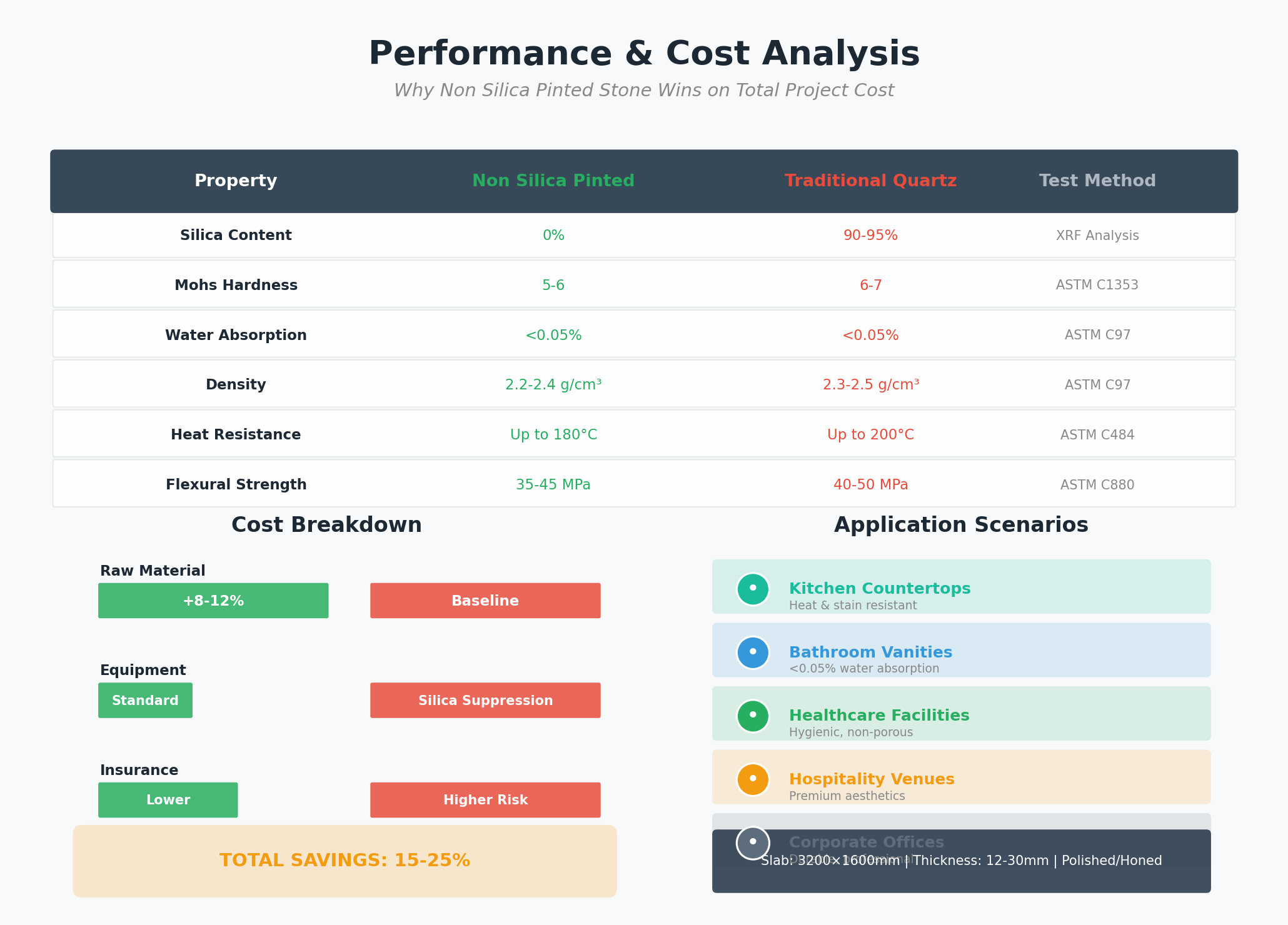
Non Silica Pinted Stone costs approximately 8-12% more than traditional quartz in raw material terms, primarily because alternative mineral fillers and advanced resins are more expensive than abundant crystalline silica. However, total project costs often decrease by 15-25% because silica-free surfaces require no specialized dust suppression equipment, reduce insurance premiums, and eliminate compliance-related delays.
Technical Specifications: Factory-Tested Data
At Apex Quartz Stone, we conduct rigorous in-house testing on every production batch. Here’s our verified performance data:
|
Property |
Non Silica Pinted |
Traditional Quartz |
Test Method |
| Silica Content | 0% | 90-95% | XRF Analysis |
| Mohs Hardness | 5-6 | 6-7 | ASTM C1353 |
| Water Absorption | <0.05% | <0.05% | ASTM C97 |
| Density | 2.2-2.4 g/cm³ | 2.3-2.5 g/cm³ | ASTM C97 |
| Heat Resistance | Up to 180°C | Up to 200°C | ASTM C484 |
| Flexural Strength | 35-45 MPa | 40-50 MPa | ASTM C880 |
Test conditions: Performed at 23±2°C, 50±5% RH unless otherwise specified
Applications: Where Non Silica Pinted Stone Excels
Residential Applications
- Kitchen Countertops: Heat resistance up to 180°C handles hot pots and pans with ease. Non-porous surface resists staining from wine, coffee, and oils.
- Bathroom Vanities: Excellent moisture resistance with <0.05% water absorption. Hygienic surface inhibits bacterial growth.
- Fireplace Surrounds: Heat-resistant properties make it ideal for fireplace applications.
- Tabletops: Scratch-resistant surface maintains appearance under daily use.
- Healthcare Facilities: Non-porous, hygienic surface meets healthcare sanitation requirements.
- Educational Institutions: Durable surface withstands heavy use in cafeterias and laboratories.
- Hospitality Venues: Premium aesthetics create luxurious environments in hotels and restaurants.
- Corporate Offices: Professional appearance and durability for reception areas and break rooms.
Commercial Applications
Product Collection
Our Non Silica Pinted Stone range includes multiple models to suit diverse design preferences:
|
Model |
Description |
Best For |
| SF-SM501-GT | Versatile design for all applications | General purpose |
| SF-SM801/802-GT | Classic patterns with subtle veining | Traditional interiors |
| SF-SM805/806-GT | Bold, dramatic contemporary designs | Modern spaces |
| SF-SM809/810-GT | Natural stone-inspired textures | Rustic aesthetics |
| SF-SM811-GT | Premium marble-look surface | Luxury applications |
| SF-SM812/813-GT | Modern minimalist designs | Contemporary homes |
| SF-SM815-GT | Rich, warm tones | Cozy environments |
| SF-SM817-GT | High-contrast bold design | Statement pieces |
Standard Specifications:
- Slab Size: 3200mm x 1600mm (±5mm tolerance)
- Thickness Options: 12mm, 15mm, 18mm, 20mm, 30mm (±0.5mm tolerance)
- Surface Finish: Polished or honed
- Edge Profiles: Standard or custom
Why Choose Apex Quartz Stone?
With over 27 years of experience in engineered stone manufacturing, Apex Quartz Stone has established itself as a trusted partner for clients worldwide. Our 40,000+ square meter manufacturing facility produces over 100,000 sheets annually, serving clients in 20+ countries.
Our Commitment to Quality
- ISO 9001 Certified: Quality management systems ensure consistent product excellence
- ISO 14001 Certified: Environmental management demonstrates our commitment to sustainability
- CE Marked: Products meet European health, safety, and environmental protection standards
- NSF Certified: Safe for food contact applications
Frequently Asked Questions
Q: Is Non Silica Pinted Stone as durable as traditional quartz?
A: Yes, it provides comparable durability with excellent scratch and stain resistance for residential and commercial use. While Mohs hardness is slightly lower (5-6 vs 6-7), this difference is negligible for typical applications. Our factory testing confirms the material exceeds industry standards for flexural strength, impact resistance, and wear resistance.
Q: Can Non Silica Pinted Stone be used outdoors?
A: Primarily designed for interior use. While the material has excellent UV resistance due to its protective coating, prolonged direct sunlight exposure may cause color fading over time. Consult our technical team for specific outdoor applications or covered exterior installations.
Q: Is special equipment needed for fabrication?
A: No specialized silica suppression equipment required. Standard fabrication tools can be used. This is one of the key advantages—because there’s no crystalline silica, you don’t need expensive dust collection systems, water suppression equipment, or respiratory protection beyond standard shop safety protocols.
Q: How does the cost compare to traditional quartz?
A: Raw material costs are approximately 8-12% higher than traditional quartz. However, total project costs often decrease by 15-25% when you factor in: no silica suppression equipment costs, reduced insurance premiums, faster fabrication (no wet cutting required), and elimination of compliance-related delays.
Conclusion: The Future is Silica-Free
Non Silica Pinted Stone represents a significant advancement in engineered surfaces, offering a safe, sustainable alternative to traditional quartz. As industry regulations tighten and awareness of silica-related health risks grows, silica-free surfaces are becoming not just an option, but a necessity.
The transition to non-silica materials isn’t just about compliance—it’s about protecting the health of workers who fabricate and install these surfaces every day. It’s about creating safer work environments without sacrificing the beauty and performance that designers and homeowners expect.
At Apex Quartz Stone, we’re committed to leading this transformation. Our investment in non-silica technology, our rigorous quality standards, and our dedication to customer success make us the ideal partner for your next project.
Contact us today to learn more about our Non Silica Pinted Stone products and discuss your project requirements.
Contact Information
Apex Quartz Stone
Sales Manager: Yvonne Deng
Email: info@apex-quartz.com
WhatsApp: +86 18605928128
Website: www.apexquartzstone.com
Post time: Apr-24-2026