
By Yvonne Deng
Every quartz-versus-marble comparison eventually arrives at the same test case: Carrara. The soft white stone with feathery grey veining, quarried in the Apuan Alps above the Tuscan city of Carrara, is the most heavily extracted classic marble in the world — and its look is the single most replicated pattern in engineered stone. If you have fallen for a white-and-grey kitchen on a design feed, you have almost certainly seen either genuine Carrara marble or a quartz slab designed to imitate it. The question is no longer quartz versus marble in the abstract. It is whether the specific look you already chose should come out of a quarry or out of a factory.
For the classic Carrara look, engineered Carrara quartz matches the aesthetic within the same installed price band as genuine Carrara marble while removing the grading lottery, the sealing schedule, and the acid etching that come with the natural stone — which is why it has become the default for working kitchens and commercial projects, while natural Carrara remains the authentic choice for protected statement placements like bathroom vanities, fireplace surrounds, and low-risk display surfaces. This guide walks the buying journey in three stages — what you see, what you pay, and what you live with — so the decision lands on evidence rather than on brochure romance.
TL;DR
- The same look is available from two supply chains, and the installed price bands overlap: engineered quartz runs roughly $15–$70 per square foot while most marble sits at $25–$60, with Carrara at the accessible end of the marble band.
- Natural Carrara is sorted into commercial grades rather than designed to one, so two slabs sold under the same name can look meaningfully different — engineered Carrara repeats within a series.
- Durability is decided by chemistry: marble’s calcite sits near 3 on the Mohs scale and etches on contact with acid, while quartz-bound surfaces sit near 7 and do not etch or stain.
- Carrara’s soft grey toning hides light etching better than bright white Calacatta does — an honest point in marble’s favor that most comparisons skip.
- Verdict by room: quartz for working kitchens and commercial washrooms; natural Carrara for vanities, fireplaces, and statement surfaces where authenticity outranks convenience.
Why Carrara Is the Real Test Case
Carrara matters to this comparison more than any other marble for one reason: supply. The quarries above Carrara have produced stone continuously for two millennia, and the volume they yield makes Carrara the accessible end of the classic-marble market — the point where natural stone pricing genuinely overlaps engineered stone pricing, rather than towering above it as Calacatta and Statuario do. Because Carrara is abundant, the choice between the natural stone and its engineered imitation is a fair fight on price, which forces the decision onto the criteria that actually differ: consistency, upkeep, and risk.
That abundance also explains why the look is everywhere. Fine, linear, low-contrast grey veining on a soft white ground translates to manufacturing far more faithfully than the bold, random gold veining of Calacatta — a smaller visual target for a factory to hit. The result is a crowded shelf of engineered Carrara-look slabs at every quality level, alongside a natural stone whose appearance shifts quarry by quarry and block by block, since marble’s veined structure is a geological accident that no two blocks share. Choosing between them starts with understanding what each supply chain can and cannot promise your project.
What You See: Grading, Veining, and the Lot You Actually Get
Natural Carrara is sold under a name, not a specification. Bianco Carrara is sorted into commercial grades based on background whiteness and vein density, and the spread within one grade name is wide enough that the slab you approved in a showroom and the lot delivered to your fabricator can read as two different stones. Professional buyers handle this the only reliable way: they approve physical lot photos — or the slabs themselves — before cutting. Because natural Carrara is sorted rather than designed, the look you buy is a range, not a point; every additional slab in a project widens that range.
Engineered Carrara quartz inverts that logic. The pattern is designed once, and every slab in a series repeats it within controlled tolerance, which is why multi-slab runs keep vein direction coherent across seams and why a twenty-unit project can specify one batch card instead of hand-selecting twenty lots. The trade is depth: no printed or blended vein fully reproduces the way light penetrates natural marble’s crystal structure. Side by side, up close, the natural stone still wins the authenticity test — it just cannot promise to look like the sample.
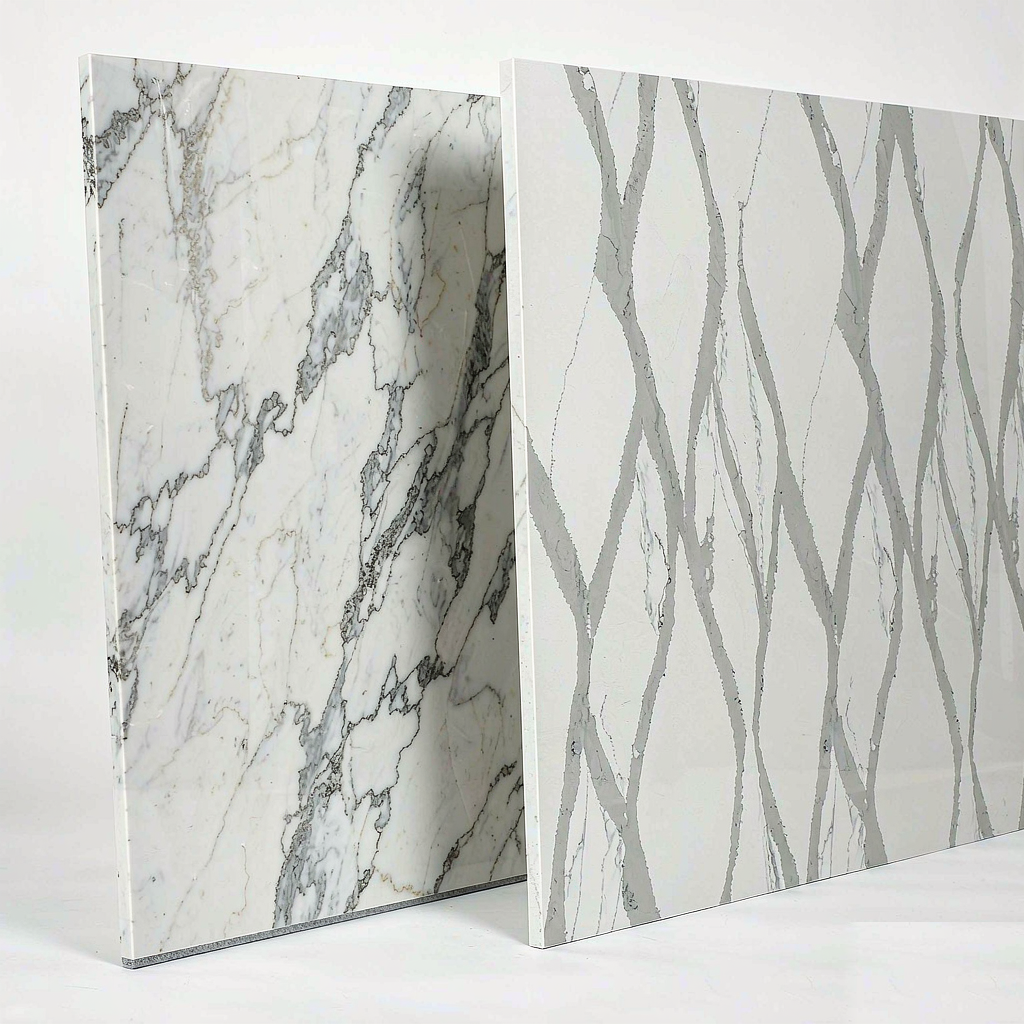
| What varies | Natural Carrara marble | Carrara quartz |
|---|---|---|
| Background tone | Soft white to greyish; shifts between blocks and lots | Controlled to a batch standard |
| Vein character | Feather-grey, organic, never repeats | Feather-grey, designed, repeats within series |
| Slab-to-slab match | Requires physical lot selection | Batch card guarantees continuity |
| Visual depth | Light penetrates the crystal structure | Surface reflection; very close at a distance |
| Specification basis | Grade name plus approved lot | Series number and batch |
What You Pay: Cost Bands and the Hidden Waste Factor
On sticker price, the two materials start closer than most buyers expect. According to HomeAdvisor’s countertop cost data, engineered quartz runs $15 to $70 per square foot installed, while most marble falls at $25 to $60 — and because Carrara is the most heavily quarried classic marble, it sits toward the accessible end of that marble band, with higher-whiteness grades climbing steeply. Installation labor is broadly comparable for both materials. In other words, the “marble is the expensive one” assumption fails precisely at Carrara: an entry lot of genuine Carrara can undercut a premium engineered slab.
What the quote hides is the waste factor, and it runs in marble’s disfavor. Because natural Carrara veining never repeats, a fabricator cutting a veined run must buy extra slab — commonly 10–20% more than finished area — to keep vein directions coherent across seams, and higher-grade lots push that premium further. Because engineered Carrara repeats within a series, the same kitchen cuts from measurably less raw slab, which quietly pulls the real material bill back toward quartz even when the quoted per-square-foot prices look equal. Guidance on what installation and fabrication should include is maintained by the Natural Stone Institute for natural stone and by resources such as This Old House’s countertop guides for the engineered side.
What You Live With: Durability in Carrara Terms
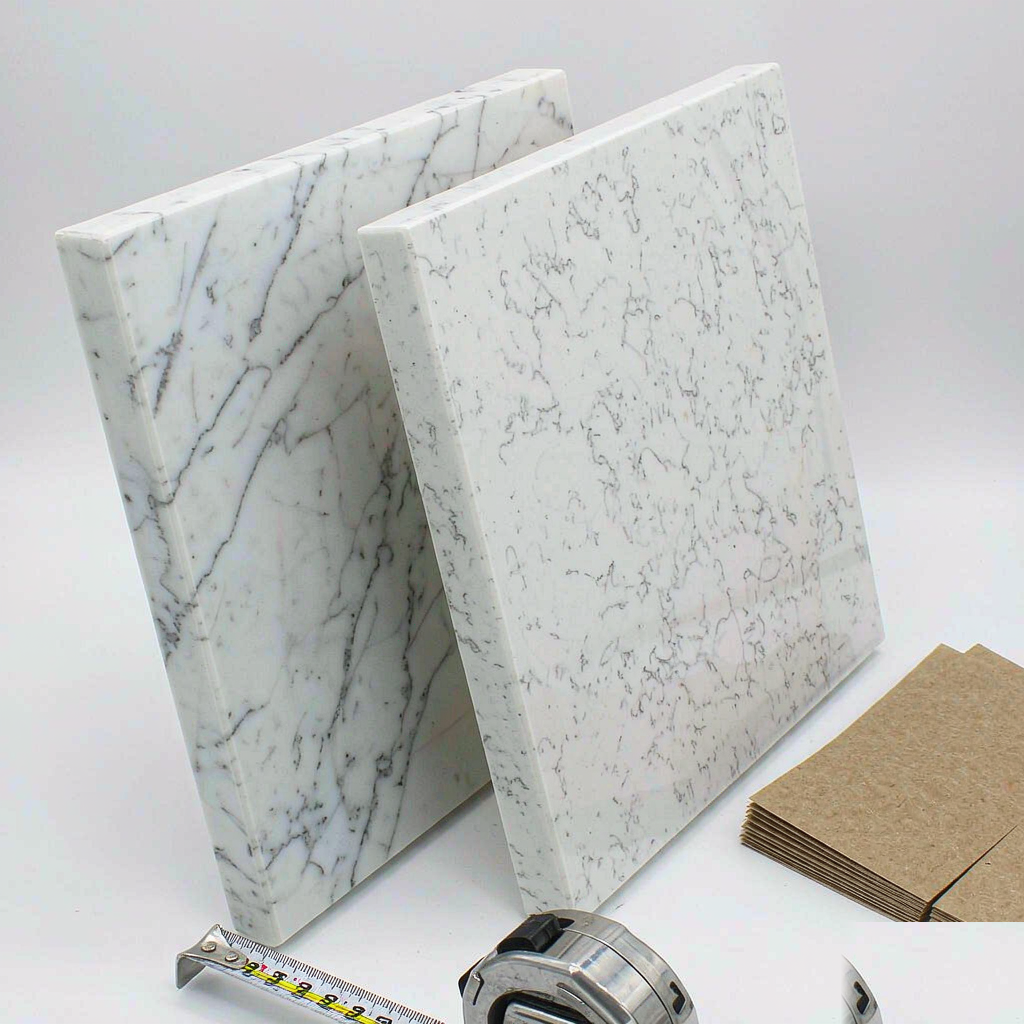
The durability gap between the two materials is chemistry, and it is unchanged by how affordable Carrara is. Natural Carrara is calcite — near 3 on the Mohs scale — so it scratches under ordinary kitchen abrasion and etches on contact with acid: lemon, wine, vinegar, and tomato leave dull ghost patches no cleaner can lift. It is also porous, which is why fabricators recommend sealing on installation and resealing every 6 to 12 months with pH-neutral cleaners thereafter. Quartz-bound surfaces sit near 7 on the Mohs scale, are non-porous, never seal, and shrug off the spill-and-wipe reality of a household that actually cooks. Heat is the one axis where the natural stone holds its ground, since quartz’s resin binder can scorch under a prolonged hot pan; trivets are good practice on both.
One honest nuance belongs to Carrara specifically, and most comparisons skip it. Because Carrara’s background already carries soft grey toning and fine veining, light etching and hairline scratches blend into it far better than they would on a bright white Calacatta surface — the natural stone forgives visually what its chemistry cannot forgive structurally. That forgiveness is real but partial: deep etches remain visible until professionally honed, and the sealing schedule exists regardless.
The Room-by-Room Verdict
Because the materials’ weaknesses cluster around specific hazards — acid, abrasion, and volume of use — the right answer often changes from room to room within one project. The table below compresses the comparison into placement guidance we give buyers weighing a mixed specification.
| Placement | Recommendation | Why |
|---|---|---|
| Working kitchen countertop | Carrara quartz | Daily acid and abrasion exposure; no sealing; vein continuity across seams |
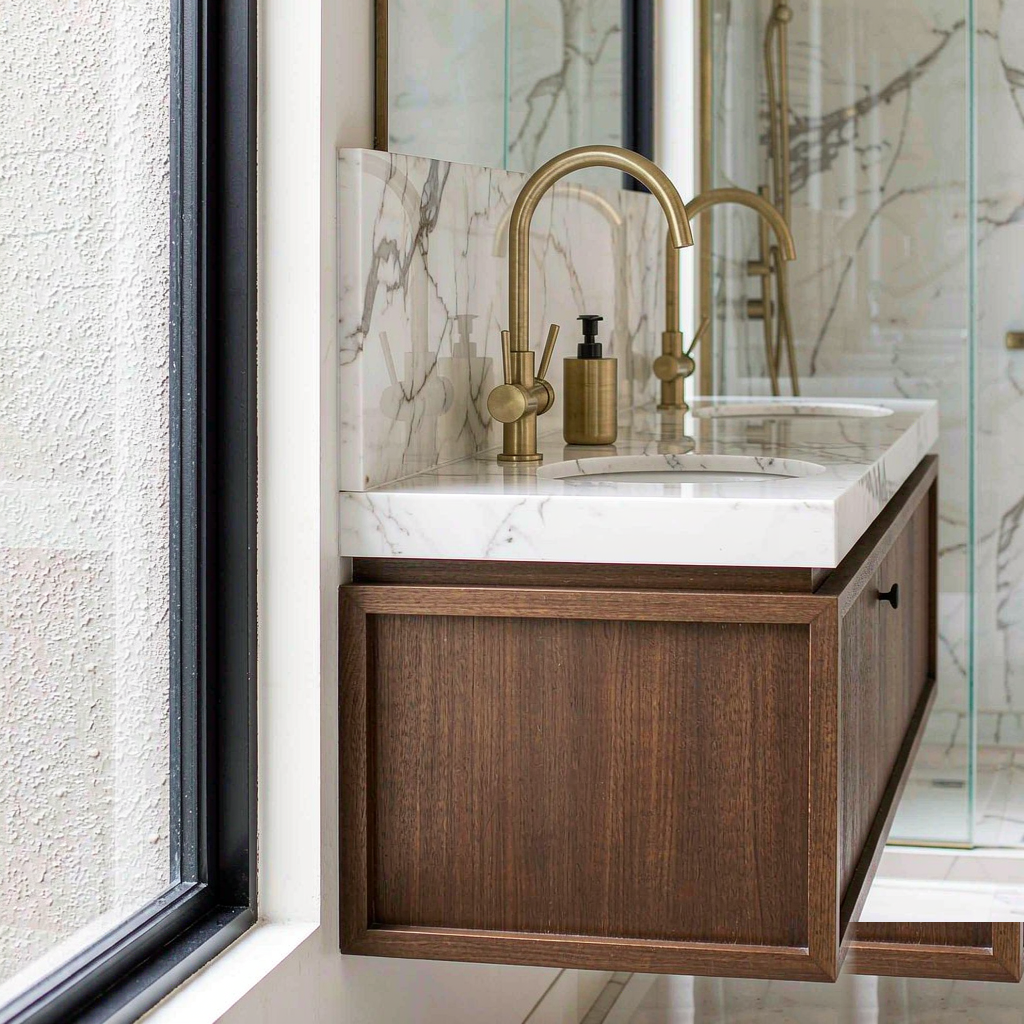
| Bathroom vanity (residential) | Natural Carrara | Kitchen hazards absent; authenticity reads in a statement space; seal annually |
| Fireplace surround | Natural Carrara | Heat tolerance of natural stone; low contact risk |
| Baking station | Natural Carrara | Naturally cool surface prized for pastry; protect from citrus and spills |
| Commercial washrooms / hospitality | Carrara quartz | High traffic, cleaning-chemical exposure, and multi-unit lot consistency |
| Display and low-contact surfaces | Either | Let budget and depth preference decide |
The Specifier’s Question: Lot Matching at Scale
For single kitchens, the grading lottery is an inconvenience. For multi-unit projects — hotels, apartment developments, retail rollouts — it is a procurement risk. Specifying natural Carrara across twenty bathrooms means either accepting visible variation between units or paying for someone to select and match lots at the quarry or distributor, and the variation is exactly the kind of detail that surfaces in punch lists. Engineered Carrara is specified by series and batch, arrives within tolerance, and — in our own export experience at Apex’s Carrara quartz slab collection — holds tone across containers and production cycles. Because specification risk scales with unit count, natural stone suits projects where variation is a feature, and engineered stone suits projects where it is a defect.
Frequently Asked Questions
Decide by How the Room Will Treat the Stone
Compressed to a sentence: buy natural Carrara when the room will protect the stone and its authenticity is the point — a vanity, a fireplace, a baking counter — and buy Carrara quartz when the surface must survive daily life unattended while wearing the same look. The price bands overlap; the ownership experiences do not. If your project leans toward the engineered side, the full engineered quartz stone range from Apex Quartz Stone includes Carrara-look series alongside Calacatta quartz slab collections and brighter whites — send us your room dimensions and we will recommend a series and batch for your seams.
Post time: Sep-15-2026