
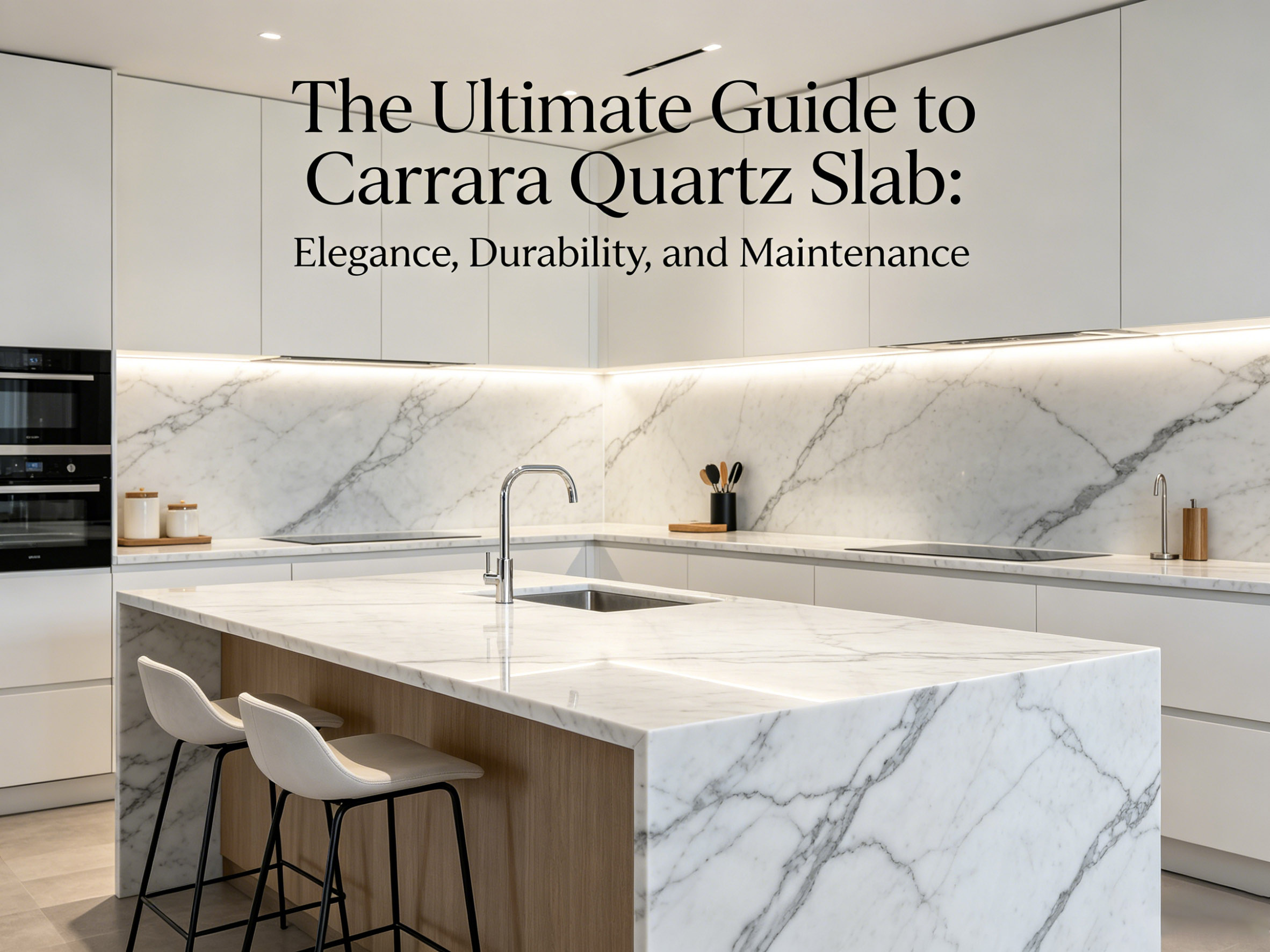
Carrara quartz slab has emerged as a leading choice for homeowners and designers seeking the timeless elegance of natural marble without the maintenance challenges. This white engineered stone features distinctive grey veining that replicates the classic Italian Carrara marble aesthetic. The global quartz surfacing market continues to expand, with Carrara-style patterns representing approximately 35% of white quartz sales in residential applications.
Engineered quartz combines approximately 93% natural quartz aggregate with polymer resins to create a non-porous, durable surface material. Unlike natural stone, this composite material offers consistent patterning and requires no sealing. Apex Quartz Stone Carrara collection provides multiple variations of this popular design for diverse project requirements.
This comprehensive guide examines Carrara quartz specifications, installation considerations, maintenance protocols, and application suitability for residential and commercial environments.
What Is Carrara Quartz Slab?
Carrara quartz slab is an engineered stone surface material designed to replicate the appearance of Carrara marble from Italy. The material features a soft white background with subtle grey veining patterns. Manufacturing involves combining crushed quartz crystals with resin binders under high pressure and heat.
The composition typically includes 90-95% quartz aggregate by weight. Pigments are added during production to achieve the characteristic white base and grey vein patterns. Unlike natural marble, which varies significantly between slabs, engineered Carrara quartz offers consistent coloration and veining across production batches.
Standard slab dimensions measure 3200mm x 1600mm (126 x 63 inches). Thickness options range from 12mm to 30mm, with 20mm and 30mm being most common for countertop applications. The material weighs approximately 2.4 kg per square meter per millimeter of thickness.
Benefits of Carrara Quartz Countertop Material
Stain Resistance and Durability
Carrara quartz surfaces demonstrate exceptional stain resistance due to their non-porous structure. The resin binder creates an impermeable surface that prevents liquid absorption. Common household substances including coffee, wine, and oil do not penetrate the material when wiped promptly.
The material achieves Mohs hardness ratings of 6-7, making it resistant to scratches from normal kitchen activities. While cutting directly on the surface is not recommended, accidental contact with utensils typically does not cause permanent damage. This durability makes Carrara quartz suitable for high-traffic kitchen environments.
Low Maintenance Requirements
Unlike natural marble, which requires periodic sealing, Carrara quartz needs no sealing or special treatments. Daily cleaning with mild soap and water maintains surface appearance. The material does not etch from acidic substances, addressing a significant limitation of natural marble surfaces.
The consistent patterning simplifies seam placement during installation. Fabricators can position joints strategically to minimize visibility. This predictability supports cleaner aesthetics in large installations requiring multiple slabs.
Carrara Quartz Applications and Use Cases
Kitchen Countertop Installations
Kitchen countertops represent the primary application for Carrara quartz slab. The material performs well in food preparation areas due to its non-porous nature and resistance to bacterial growth. The white surface with grey veining complements both traditional and contemporary cabinet styles.
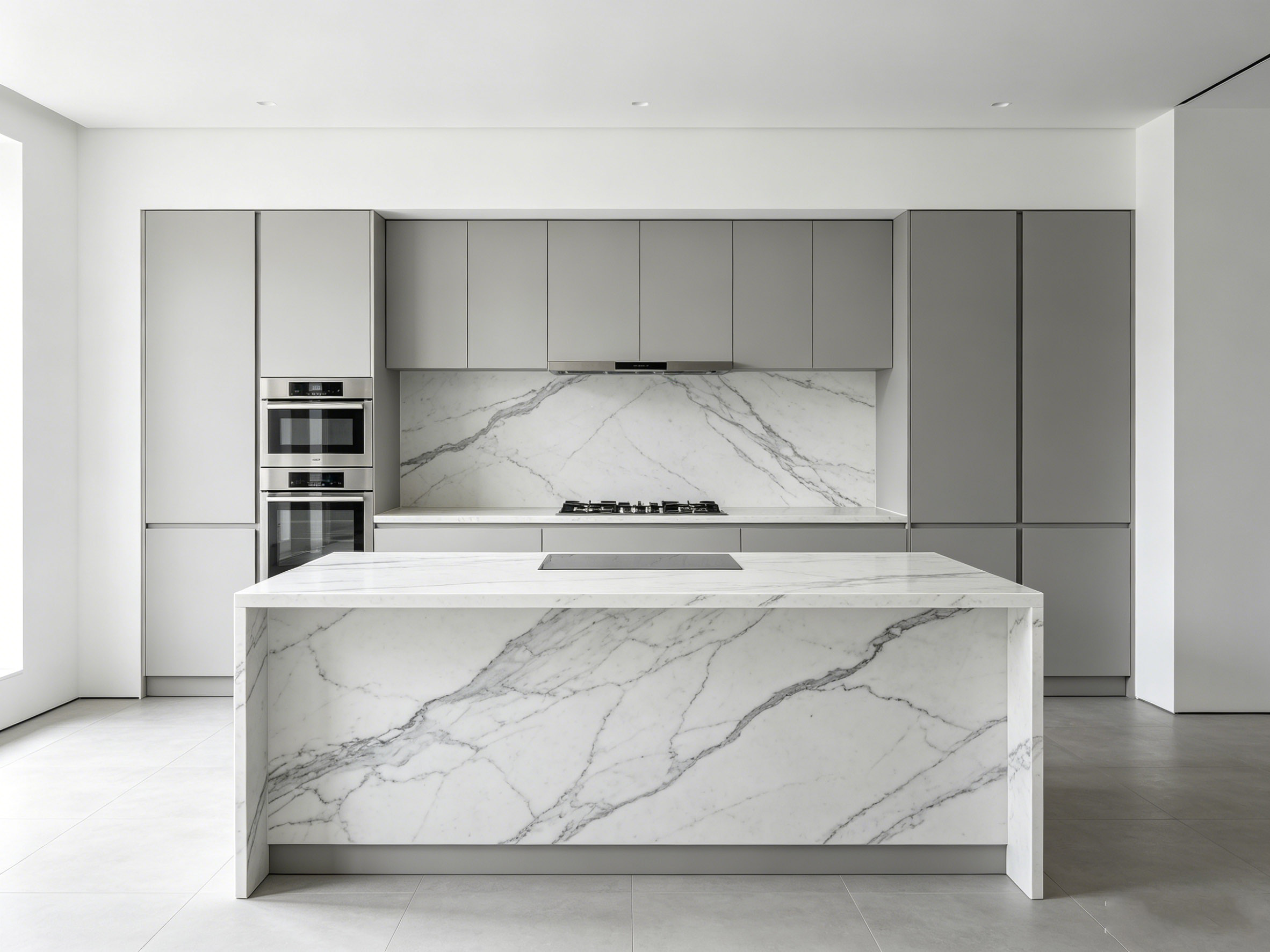
Island countertops particularly benefit from Carrara quartz installation. The large surface areas showcase the material’s pattern consistency. Waterfall edge treatments, where the material extends vertically down the sides, create dramatic visual impact in open-concept kitchen designs.
Bathroom Vanity Applications
Bathroom vanity tops utilize Carrara quartz for its moisture resistance and aesthetic appeal. The material withstands humid environments without degradation. Integrated sink options create seamless, easy-to-clean surfaces that eliminate caulking joints where mold typically develops.
Shower wall cladding represents an emerging application for engineered quartz. Large-format slabs reduce grout lines compared to tile installations. The material’s water resistance and mold-resistant properties make it suitable for wet area applications when properly installed.
Carrara Quartz vs Natural Marble: Material Comparison
Understanding the differences between Carrara quartz and natural Carrara marble informs material selection decisions. Each material offers distinct advantages depending on project priorities.
Natural marble requires sealing every 6-12 months to prevent staining. Etching from acidic substances like lemon juice or vinegar causes permanent dull spots on marble surfaces. Carrara quartz eliminates these maintenance concerns through its engineered composition.
Marble pricing varies significantly based on grade and availability, ranging from $60 to $200 per square foot installed. Carrara quartz typically falls within $50-$120 per square foot installed, offering cost predictability for budget planning.
Natural marble exhibits unique veining patterns that cannot be replicated exactly. Carrara quartz provides consistent appearance across slabs, facilitating large installations with uniform aesthetics. This consistency proves advantageous for commercial projects requiring material uniformity.
Carrara Quartz Slab Selection Guide
Veining Pattern Variations
Carrara quartz products vary in veining intensity and pattern style. Options range from minimal, subtle veining to bold, dramatic patterns. Selection should consider cabinet color, backsplash materials, and overall design aesthetic.
Fine veining patterns create a softer, more understated appearance suitable for traditional interiors. Bold veining makes stronger design statements appropriate for contemporary spaces. Apex Quartz Stone product range includes multiple veining options to match diverse design preferences.
Finish Options
Surface finishes affect both appearance and performance. Polished finishes provide maximum gloss and color depth but may show fingerprints more readily. Honed finishes offer matte appearances that conceal minor surface marks.
Leathered or textured finishes add tactile dimension and further reduce visible marking. These specialty finishes typically command premium pricing but offer distinctive aesthetic characteristics.
Installation Considerations for Carrara Quartz Surfaces
Substrate Requirements
Proper substrate preparation ensures long-term performance. Cabinetry must provide level support across the entire surface area. Maximum allowable deviation is 3mm over 3000mm length. Inadequate support risks cracking under load or thermal stress.
Overhangs beyond cabinet supports require corbels or brackets for 20mm material. Standard 300mm overhangs need support when using 20mm thickness. Thirty-millimeter material may extend unsupported up to 300mm depending on manufacturer specifications.
Seam Placement Strategy
Seam visibility depends on pattern matching and placement location. Professional fabricators align veining patterns across seams to minimize visual interruption. Seams positioned away from primary viewing angles reduce perceptibility.
Adhesive color selection affects seam appearance. Clear adhesives work well for most Carrara quartz installations. Some fabricators tint adhesives to match specific veining colors for enhanced concealment.
Maintenance Protocols for Carrara Quartz Countertops
Daily maintenance requires minimal effort. Warm water with mild dish soap removes most surface contaminants. Non-abrasive cloths or sponges prevent surface scratching during cleaning.
Avoid harsh chemicals including oven cleaners, drain openers, and products containing methylene chloride or trichloroethane. These substances may degrade resin binders and cause surface damage. pH-neutral cleaners provide safe alternatives for stubborn stains.
Heat protection remains important despite quartz’s thermal resistance. Trivets or hot pads should protect surfaces from cookware exceeding 150°C. Thermal shock from extreme temperature changes may cause cracking in rare instances.
Carrara Quartz Investment and Value Analysis
Material costs for Carrara quartz typically range from $50 to $85 per square foot for the slab itself. Installation adds $30 to $50 per square foot depending on project complexity and geographic location. Total installed costs generally fall between $80 and $135 per square foot.
Long-term value considerations include maintenance cost savings. Natural marble requires professional sealing services costing $200-$400 annually. Over a ten-year period, Carrara quartz maintenance savings may offset initial price premiums compared to marble.
Property value impacts vary by market. Kitchen renovations consistently rank among the highest return-on-investment home improvements. Quality countertop materials contribute significantly to buyer perceptions of overall home condition.
Frequently Asked Questions
Is Carrara quartz stain-resistant?
Yes, Carrara quartz demonstrates excellent stain resistance due to its non-porous engineered composition. The resin binder prevents liquid absorption, making it highly resistant to common household staining agents like wine, coffee, and oil when cleaned promptly.
How does Carrara quartz compare to natural marble in appearance?
Carrara quartz replicates the white background and grey veining characteristic of natural Carrara marble. While engineered quartz offers pattern consistency, natural marble exhibits unique variations. Modern manufacturing techniques produce convincing marble aesthetics with superior performance characteristics.
What thickness should I choose for my countertop?
Twenty-millimeter thickness suits most residential kitchen applications. Thirty-millimeter material provides enhanced durability and allows greater unsupported overhangs. Thinner 12mm or 15mm options work for vertical applications like wall cladding or fireplace surrounds.
Can Carrara quartz be used outdoors?
Carrara quartz is designed for interior applications. Prolonged UV exposure may cause color fading or resin degradation over time. Outdoor use voids most manufacturer warranties. For exterior applications, consider materials specifically formulated for outdoor conditions.
How do I clean and maintain Carrara quartz surfaces?
Clean daily with mild soap and warm water using a soft cloth. Avoid abrasive scrubbers and harsh chemicals. No sealing or special treatments are required. For stubborn residues, use pH-neutral stone cleaners specifically formulated for engineered quartz surfaces.
Conclusion
Carrara quartz slab offers a practical alternative to natural marble for residential and commercial applications. The material combines aesthetic appeal with performance benefits including stain resistance, durability, and low maintenance requirements.
Selection considerations include veining pattern intensity, finish type, and thickness requirements. Professional installation ensures optimal performance and appearance. With proper care, Carrara quartz surfaces provide decades of service while maintaining their elegant appearance.
For specific product availability and technical specifications, consult Apex Quartz Stone Carrara quartz offerings to identify options matching your project requirements.
Post time: May-14-2026