
By Yvonne Deng
International Sales Director, Apex Quartz Stone | 12+ Years in Engineered Stone Manufacturing
linkedin.com/in/yvonne-deng-5b35b543/
Carrara quartz slab offers the timeless beauty of classic Italian marble with the practical benefits of engineered stone. This guide covers everything homeowners and designers need to know about selecting, installing, and maintaining Carrara quartz countertops for modern kitchens.
What Is Carrara Quartz Slab
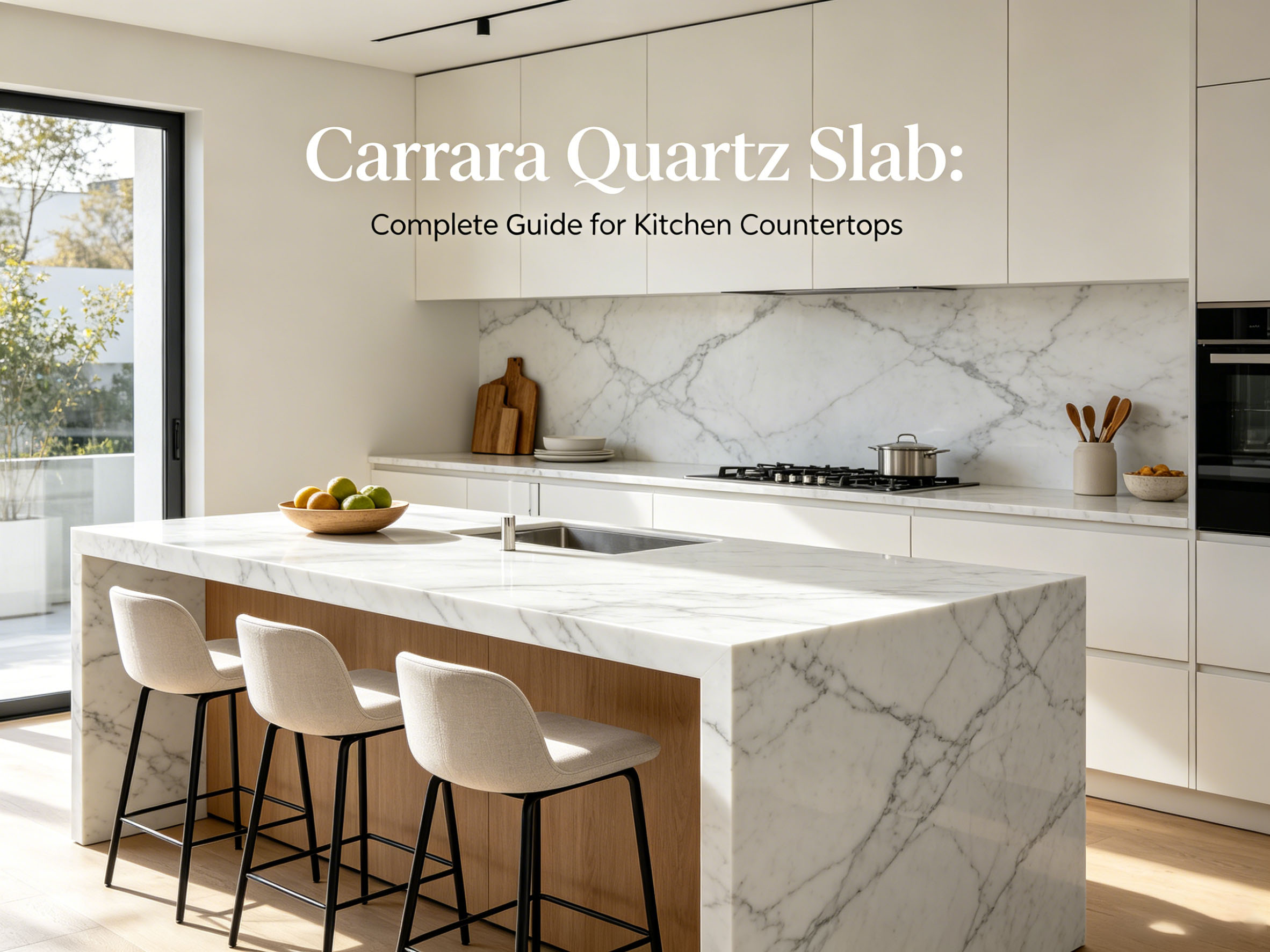
Carrara quartz slab is an engineered stone surface designed to replicate Carrara marble, a classic Italian stone quarried in the Carrara region of Tuscany. Unlike the bold dramatic veining of Calacatta marble, Carrara features softer, more subtle grey veining against a white or off-white background. This understated elegance has made Carrara one of the most popular choices for kitchen countertops worldwide.
The manufacturing process combines approximately 93% natural quartz aggregate with polymer resins and pigments. The mixture undergoes vacuum compression at high pressure, followed by heat curing and precision polishing. The result is a dense, non-porous material that resists staining, scratching, and bacterial growth. Standard slab dimensions are 3200mm x 1600mm with thickness options of 12mm, 20mm, and 30mm.
Carrara quartz slab differs from Carrara marble in several fundamental ways. Quartz is harder (Mohs 6-7 vs. marble’s 3-4), more resistant to staining, and requires no sealing. Natural Carrara marble develops a patina over time and etches when exposed to acidic substances like lemon juice or vinegar. Carrara quartz delivers the same visual appeal without these maintenance concerns.
Carrara Quartz vs. Carrara Marble: Detailed Comparison
Durability. Carrara quartz resists scratches from everyday kitchen activities. Marble scratches easily and requires professional refinishing to restore its surface. Quartz maintains its appearance through years of regular use without special treatment.
Stain Resistance. The non-porous nature of engineered quartz prevents liquid absorption. Wine, coffee, oil, and acidic foods sit on the surface without penetrating. Natural marble requires sealing every 6-12 months and remains vulnerable to staining from common kitchen substances.
Maintenance. Carrara quartz requires only daily cleaning with mild soap and water. No sealing, polishing, or special cleaners are needed. Marble demands pH-neutral cleaners, immediate spill wiping, and periodic professional maintenance.
Cost. Carrara quartz typically costs $50-$80 per square foot for material. Premium Carrara marble ranges from $60-$150 per square foot. When factoring lifetime maintenance costs, quartz represents significant long-term savings.
Consistency. Quartz slabs from the same production batch match perfectly, enabling uniform installations across large kitchens. Natural marble slabs vary significantly in veining and color, making seamless matching challenging for large projects.
Hygiene. The non-porous quartz surface inhibits bacterial growth without chemical treatments. Marble’s porous structure can harbor bacteria in microscopic crevices, especially in unsealed areas around sink cutouts and edges.
Why Carrara Quartz Works for Kitchen Countertops
Kitchen countertops endure daily exposure to heat, moisture, acidic foods, and heavy use. Carrara quartz slab handles these conditions exceptionally well. The material’s non-porous structure prevents bacterial growth in food preparation areas, making it a hygienic choice for kitchens.
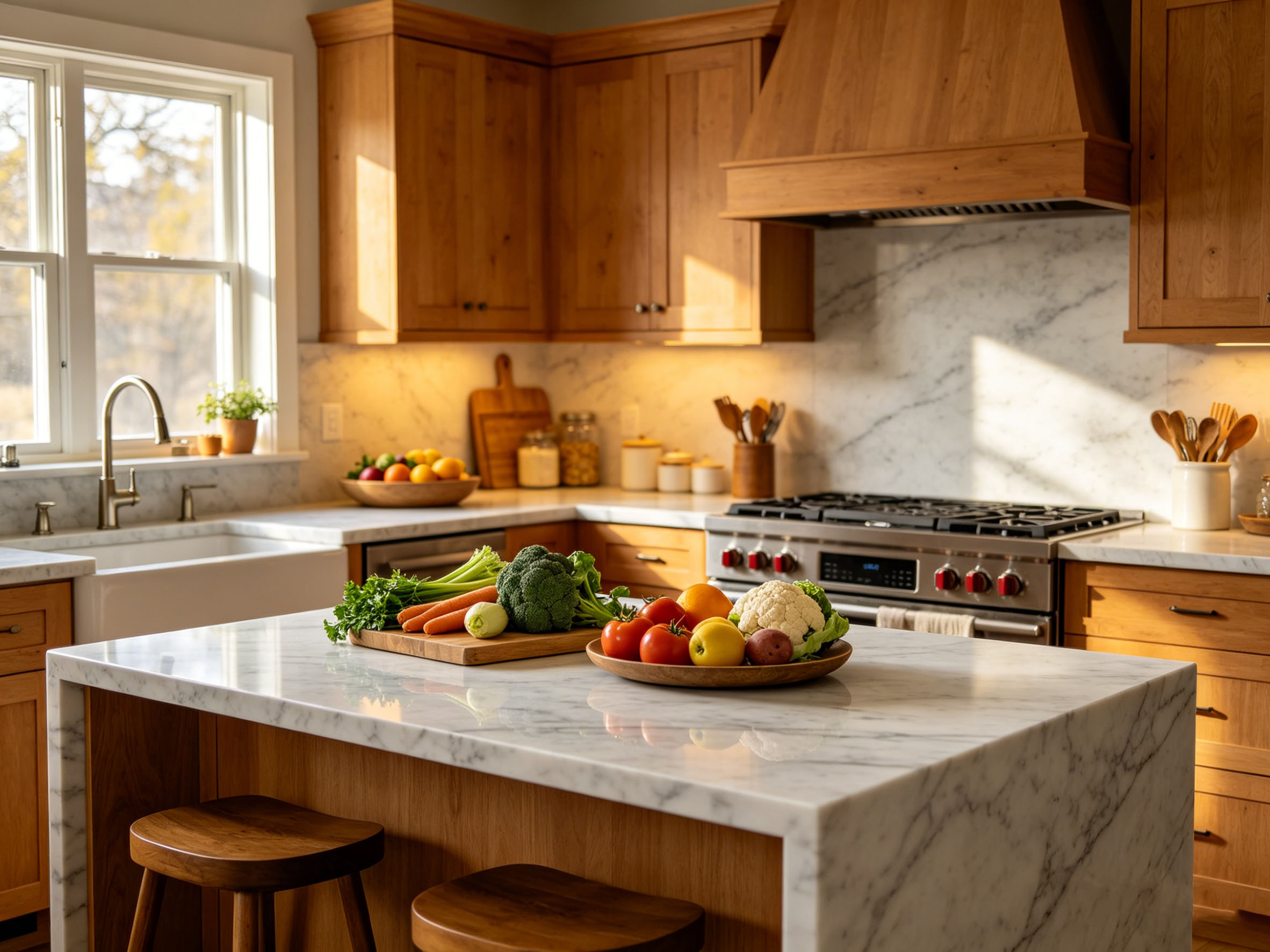
The subtle grey veining of Carrara quartz complements a wide range of kitchen styles. White shaker cabinets create a classic farmhouse look. Dark espresso cabinetry produces striking contrast. Natural wood tones pair beautifully with the warm white background of Carrara patterns. This versatility makes Carrara one of the most forgiving materials for kitchen design.
Heat resistance allows Carrara quartz to withstand normal kitchen activities. While trivets are recommended for hot cookware, the material can tolerate brief exposure to moderate heat. Thermal shock from rapid temperature changes is the primary concern, which is easily avoided with basic kitchen practices.
Popular Carrara Quartz Patterns and Finishes
Carrara quartz is available in several pattern variations. Classic Carrara features soft, consistent grey veining with minimal variation. Carrara Venato offers slightly bolder veining with more pronounced movement. Carrara Statuario provides a brighter white background with fine, delicate veins.
Surface finish selection affects both appearance and maintenance. Polished finishes deliver high-gloss shine that enhances color depth. Honed finishes provide matte surfaces that minimize fingerprint visibility. Leathered finishes add tactile texture while hiding daily wear. The Carrara quartz slab collection from Apex Quartz Stone includes all three finish options to match different design requirements.
Installation Best Practices
Professional installation ensures optimal performance. Substrate preparation requires level cabinetry with deviation under 3mm over 3 meters. Seam placement should align with veining patterns for minimal visibility. Standard 20mm thickness works for most residential kitchens. Thirty-millimeter thickness supports larger islands with unsupported overhangs.
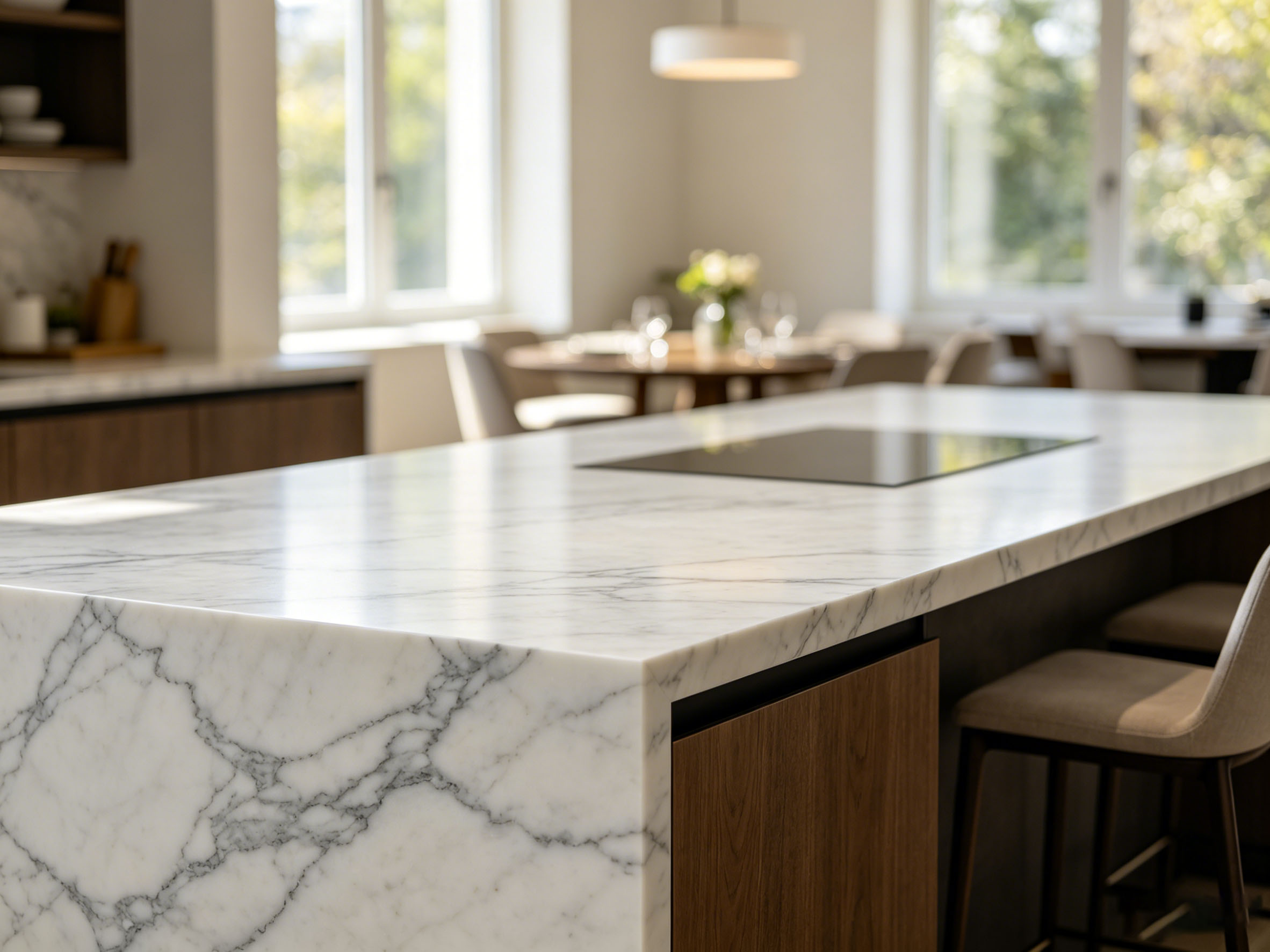
Edge profile selection significantly affects the finished appearance. Mitered edges create a thicker visual profile. Waterfall edges require precise cutting for seamless corner transitions. Eased edges provide clean, modern lines suitable for contemporary designs. Each edge style changes the material’s visual weight in the kitchen.
Maintenance and Care
Daily maintenance is straightforward. Clean with warm water and mild dish soap using a soft cloth. Avoid abrasive scrubbers, harsh chemicals, and bleach-based cleaners. Wipe spills promptly to prevent any potential residue buildup. No sealing or special treatments are required throughout the material’s lifetime.
For stubborn stains, use pH-neutral stone cleaners formulated for engineered quartz. Avoid products containing methylene chloride, oven cleaners, and drain openers. Use cutting boards for food preparation and trivets for hot cookware. With proper care, Carrara quartz countertops maintain their appearance for 15-20 years or longer.
Commercial Applications
Carrara quartz slab extends beyond residential kitchens into commercial applications. Hotels, restaurants, and retail spaces benefit from the material’s durability and consistent appearance. The non-porous surface meets health department requirements for food service environments. Large commercial projects benefit from pattern consistency across multiple slabs.
Commercial installations typically require 30mm thickness for enhanced durability. The Carrara quartz slab options from Apex Quartz Stone include commercial-grade products with reinforced resin systems for high-traffic environments.
Conclusion
Carrara quartz slab combines the timeless elegance of classic Italian marble with the durability and low maintenance of modern engineered stone. For homeowners and designers seeking a beautiful, practical countertop material that suits diverse design styles, Carrara quartz represents an excellent investment. Contact Apex Quartz Stone for product specifications, samples, and pricing information.
Post time: Jun-04-2026