
Engineered Stone Defined – How It’s Made
Engineered stone is a man-made material composed mainly of 90-95% crushed natural quartz, combined with resins and pigments. This mix creates a durable, non-porous surface ideal for bathroom vanity tops. The manufacturing process involves a vibro-compression vacuum technique, where the quartz and binders are tightly compressed and vacuum-sealed to eliminate air pockets, resulting in a dense, consistent slab.
It’s called “engineered” stone because it is manufactured under controlled conditions, unlike natural stone that’s cut directly from quarries. This engineered process allows for a wider range of colors, patterns, and properties tailored for harsh bathroom environments.
Popular global brands offering high-quality engineered quartz vanity tops include Caesarstone, Silestone, Cambria, and Vicostone, known for their innovation and reliability in bathroom countertops.
Engineered Stone vs Natural Stone vs Solid Surface
Here’s a quick side-by-side look at how engineered quartz stacks up against natural stones like marble and granite, plus solid surface (acrylic) options for bathroom vanity tops:
| Feature | Marble | Granite | Engineered Quartz | Solid Surface (Acrylic) |
|---|---|---|---|---|
| Porosity | High (needs sealing) | Medium (sealing advised) | Very low (non-porous) | Non-porous |
| Stain Resistance | Low (prone to stains) | Good (with sealing) | Excellent (no staining) | Very good |
| Scratch Resistance | Medium | High | High | Medium |
| Heat Resistance | Moderate (can etch) | High | Moderate (use trivets) | Low |
| Price Range | $$ – $$$ | $$ – $$$ | $$ – $$$ | $ – $$ |
| Maintenance | Regular sealing & careful cleaning | Occasional sealing | Easy: wipe clean, no sealing | Easy, repairable surface |
Bottom line: Engineered quartz is a non-porous, low-maintenance option with strong stain and scratch resistance. It offers more consistent colours than natural stone, but you should still avoid placing hot items directly on it. Solid surface tops are budget-friendly and easy to repair but less heat resistant. Marble gives a classic look but demands more care. Granite is tough but needs sealing to protect it.
If you want a durable, hygienic, and low-maintenance engineered quartz vanity top, it’s a solid choice for the modern bathroom.
Key Benefits of Engineered Stone Vanity Tops
Engineered stone vanity tops offer a lot of perks that make them a smart choice for bathrooms:
-
Completely Non-Porous
No sealing needed ever. This stops water, stains, and bacteria from soaking in.
-
Superior Stain & Bacteria Resistance
Perfect for bathroom use where hygiene is key. Resistant to makeup, soap, and other common stains.
-
Consistent Color & Pattern
What you see is what you get—no surprise veining or color shifts like with natural stone.
-
Wider Range of Colors
Offers more design options than natural stone, from classic neutrals to bold, modern shades.
-
Stronger and More Flexible Than Quartzite
Less likely to crack or chip, making it durable for daily bathroom wear.
-
Certified Safe and Eco-Friendly
Many options are Greenguard Gold & NSF certified—meaning they meet strict indoor air quality and safety standards.
| Benefit | Why It Matters |
|---|---|
| Non-porous | No sealing, no stains, bacteria-resistant |
| Stain & Bacteria Resistance | Keeps bathroom hygienic and easy to clean |
| Consistent Look | Reliable color & pattern every time |
| Wide Color Range | More style options to fit any bathroom design |
| Stronger & Flexible | Durable and less prone to damage |
| Eco & Health Certifications | Safe for your family and the environment |
This combination of features makes engineered stone vanity tops one of the best materials for bathroom vanity tops in 2026 and beyond.
Real Drawbacks You Should Know
While engineered stone vanity tops have plenty of perks, there are some honest downsides to keep in mind:
- Sensitive to heat: Placing hot pots or curling irons directly on the surface can cause damage or discoloration. Always use trivets or heat pads to protect your countertop.
- Higher upfront cost: Compared to laminate or basic granite, engineered stone can be a bit pricier initially. However, many find the long-term benefits worth the investment.
- Not ideal for outdoor use: Some brands can fade or change color when exposed to direct sunlight over time because of UV rays, so it’s best to keep engineered stone tops indoors.
- Heavier than solid surface options: This can affect installation costs and may require sturdier cabinetry to support the weight.
Knowing these drawbacks helps set realistic expectations when choosing your engineered quartz vanity top.
Popular Thicknesses, Edge Profiles & Sizes for Bathroom Vanities
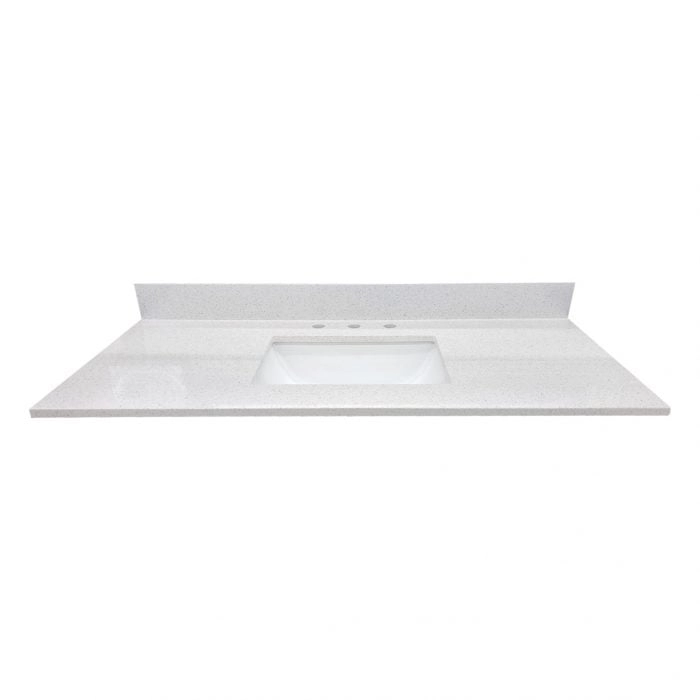
When picking an engineered stone vanity top, thickness matters. The two most common thicknesses you’ll see are:
- 2 cm (about 3/4 inch): Slimmer look, lighter, often more budget-friendly
- 3 cm (about 1 1/4 inch): Thicker, heavier, feels more substantial and upscale
Edge profiles can really change the style and feel of your vanity top. The most popular ones include:
- Eased edge: Simple, clean, and modern with slightly rounded corners
- Ogee edge: Classic and decorative, with a gentle S-shaped curve
- Waterfall/Mitered edge: A sharp, angled look often used to create a seamless, thick appearance
Size-wise, standard engineered stone vanity tops usually come in:
- Single sink: Around 24 to 36 inches wide
- Double sink: Typically 60 to 72 inches wide, giving plenty of space for two users
Choosing the right thickness, edge, and size helps your vanity top match your bathroom’s style and function perfectly.
Cost Breakdown in 2026 (What to Expect)
When planning for an engineered stone vanity top in 2026, here’s a quick look at the costs you can expect:
- Budget Level: $55–$80 per square foot installed
Basic colors and simpler edge profiles fit here. Good for those who want the look and durability without extra frills. - Mid-Range: $80–$110 per square foot installed
Popular brands with more color choices and better edge details fall in this range. A solid balance of quality and style. - Premium & Exotic Colors: $110–$150+ per square foot installed
Rare or custom colors, complex edge work, and top brand names push prices up. Ideal if you want a unique, standout vanity top.
What Drives the Price?
- Brand: Big names like Caesarstone or Silestone usually cost more because of quality and warranties.
- Color Rarity: More unique or custom colors typically carry higher price tags.
- Edge Detail: Fancy edges like ogee or mitered add to both material cost and installation time.
- Location: Labor and material availability where you live can also affect the final price.
Knowing these factors helps you set a budget that matches your style and needs without surprises.
Maintenance & Cleaning – Easier Than You Think
Keeping your engineered stone vanity top looking fresh is simple with a regular cleaning routine. Just wipe it down daily with a soft cloth and warm soapy water or a mild, non-abrasive cleaner. Avoid harsh chemicals like bleach or abrasive scrub pads—they can dull the surface over time.
For tougher spots like hard-water stains or makeup, try a gentle mixture of vinegar and water or a specially formulated quartz cleaner. Apply with a soft cloth, let it sit for a few minutes, then rinse well. Remember, engineered stone tops are non-porous, so stains usually don’t soak in, making cleanup quicker and easier compared to natural stone.
Stick to these simple steps, and your quartz vanity top will stay beautiful and hygienic for years to come.
How to Choose the Right Engineered Stone Vanity Top
Picking the right engineered stone vanity top is easier when you think about style, color, and how it fits your space. Here’s a quick guide to help you decide:
Match Your Bathroom Style
- Modern: Go for clean lines, solid colors, or subtle patterns. Matte finishes work well too.
- Traditional: Look for warmer tones and classic edge profiles like ogee. Marble-like patterns fit nicely.
- Transitional: Blend simple with a little pattern or texture for a balanced look.
Light vs Dark Colors – Practical Tips
| Color Choice | Pros | Cons |
|---|---|---|
| Light (white, cream) | Brightens space, hides dust | Shows stains & makeup more |
| Dark (black, navy, deep gray) | Hides stains, adds drama | Shows water spots, needs frequent cleaning |
Vein-Matched vs Uniform Look
- Vein-Matched (Bookmatched): Perfect if you want a natural stone feel with continuous patterns across your vanity. It’s elegant but a bit pricier.
- Uniform Look: More consistent and predictable. Great for those who want no surprises in color or pattern.
Coordinate with Cabinets and Flooring
Make sure your vanity top complements other elements:
- Light cabinetry pairs well with darker tops.
- Dark cabinets look great with lighter engineered stone.
- Flooring color and texture should balance with your vanity top to keep the room cohesive.
Quick checklist before buying:
- Does the color fit your lighting?
- Will the pattern match your overall bathroom vibe?
- Have you thought about maintenance for your chosen color?
- Does the size/thickness fit your vanity dimensions?
Considering these will help you pick an engineered quartz vanity top that works best for your style and daily use.
Installation Basics Every Homeowner Should Know
When it comes to installing an engineered stone vanity top, professional installation is a must. These countertops are heavy and require precise handling to avoid damage or poor fitting. Most installers will complete the job within 1 to 2 days, depending on the complexity—like whether you’re going for a single or double sink setup.
Before installation, make sure to ask your fabricator:
- If they measure your bathroom space themselves to ensure a perfect fit
- What edge profiles and thickness options they recommend for your chosen engineered quartz vanity top
- How long the lead time is from ordering to installation
- What warranty or aftercare support comes with your installation
Proper installation sets the foundation for your vanity top’s durability and appearance, so investing time here pays off long-term.
Frequently Asked Questions about Engineered Stone Vanity Tops
Is engineered stone the same as quartz?
Yes, engineered stone often goes by the name quartz vanity top because it’s mostly made of natural quartz crystals mixed with resin. So, “engineered stone” and “quartz” basically refer to the same thing when it comes to bathroom vanities.
Can it chip or scratch?
While engineered stone is quite durable and scratch-resistant compared to natural stone, it’s not completely chip-proof. Sharp or heavy impacts can cause chips or scratches, so it’s smart to be cautious with heavy objects and avoid cutting directly on the surface.
Does it yellow over time?
Quality engineered stone vanities from reputable brands typically do not yellow. However, lower-grade products or prolonged exposure to direct sunlight can cause some discoloration. Check for UV-resistant options if your vanity gets a lot of sun.
Is it safe for families with kids?
Yes, engineered stone is a very safe choice for families. It’s non-porous, meaning it won’t harbor bacteria, and it’s easy to clean. Many surfaces also come with certifications like Greenguard Gold, ensuring no harmful emissions.
What about warranty?
Most engineered quartz vanity tops come with a 10-15 year warranty that covers defects in materials and workmanship. This usually includes chips and cracks caused by normal use, but be sure to read the fine print for specifics and installation requirements.
If you’re after a reliable, stylish, and easy-care vanity top, engineered stone is a solid pick that blends beauty and performance with peace of mind
Post time: Dec-08-2025