
By Yvonne Deng
International Sales Director, Apex Quartz Stone | 12+ Years in Engineered Stone Manufacturing
linkedin.com/in/yvonne-deng-5b35b543/
Why Do Quartz Slabs Crack
Quartz slabs crack when internal stress exceeds the material’s flexural strength. The causes fall into four categories: manufacturing defects, fabrication errors, installation problems, and post-installation stress. The good news is that the majority of cracking incidents are preventable with proper material selection, handling, and installation practices.
Quality-engineered quartz has flexural strength of 40-60 MPa (5,800-8,700 PSI) per ASTM C880 testing standards, comparable to natural granite. Well-manufactured slabs from reliable quartz stone manufacturers rarely crack under normal use conditions. When cracking does occur, it typically points to a specific avoidable cause rather than a material defect.
Manufacturing Defects That Lead to Cracking
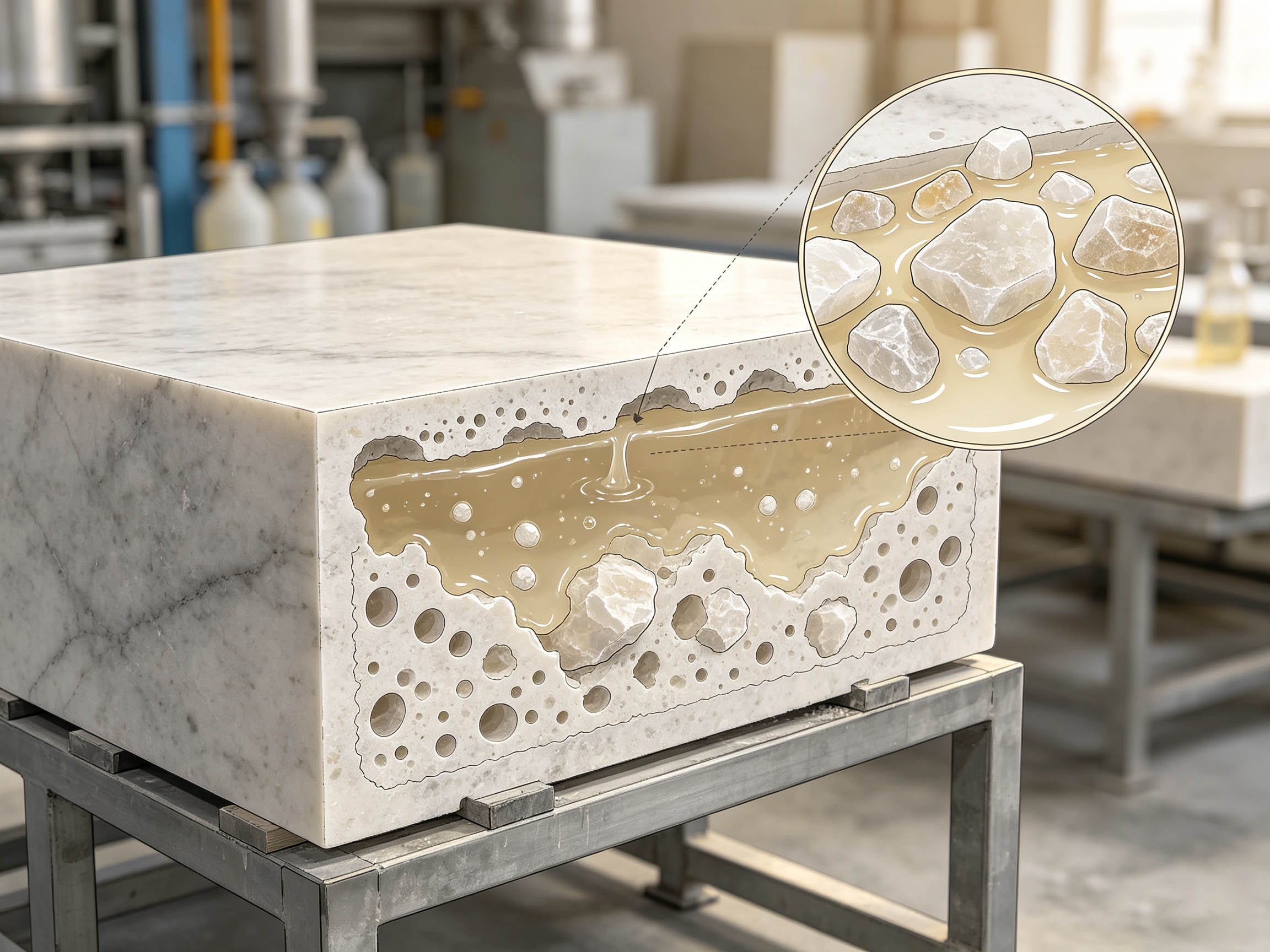
Incomplete Resin Saturation. Inadequate resin distribution during mixing leaves micro-voids within the slab structure. These voids act as stress concentration points where cracks can initiate under load. Premium manufacturers use computer-controlled mixing systems that ensure uniform resin distribution throughout the batch. Budget factories relying on manual mixing produce slabs with inconsistent resin distribution, creating weak zones that are invisible to the naked eye.
Insufficient Compression. Vacuum compression removes air pockets and compacts the quartz-resin mixture into a dense slab. Insufficient vacuum pressure or inadequate compression time leaves residual porosity that weakens the slab. Quality production uses 100-150 tons of compression pressure with sustained vacuum application. Low-cost production shortcuts in this stage produce slabs with hidden weaknesses.
Improper Curing. The resin curing process requires precise temperature control over a specific time period. Over-curing makes the slab brittle. Under-curing leaves the resin soft and unable to hold the quartz aggregates together. Both conditions significantly increase cracking risk. Multi-zone temperature-controlled curing ovens with automated monitoring provide consistent results. Single-zone or poorly maintained ovens produce variable quality.
Internal Stress from Uneven Cooling. After curing, slabs must cool gradually to room temperature. Rapid or uneven cooling creates internal thermal stress that may not manifest as visible cracks during factory inspection but can cause spontaneous cracking weeks or months later during fabrication or installation. Reputable manufacturers maintain controlled cooling stations with gradual temperature reduction protocols. Before purchasing, review our quartz slab specifications for detailed manufacturing quality data.
Fabrication Errors That Cause Cracking
Even a perfectly manufactured quartz slab can crack if the fabricator makes certain mistakes during processing. Fabricator skill and experience are critical factors in preventing quartz cracking.
Incorrect Cutting Technique. Quartz slabs require specific cutting techniques. Using blades designed for granite on quartz generates excessive heat, which stresses the resin binder. Dull blades require more pressure, increasing the risk of edge chipping and crack initiation. Fabricators should use diamond blades specifically rated for engineered stone and maintain proper blade speed and water cooling.
Insufficient Support During Cutting. Quartz slabs must be fully supported during cutting operations. Cutting a slab that is unsupported at either end creates bending stress that can cause cracking. Professional fabricators use vacuum lifters and properly spaced support rollers to distribute weight evenly across the slab.
Oversized Cutouts for Sinks and Cooktops. Removing large sections of material for sink openings or cooktop cutouts weakens the slab at those locations. Corners of cutouts concentrate stress and are the most common cracking initiation points. Fabricators should round cutout corners with a minimum radius of 10mm and reinforce large cutouts with additional support brackets.
Transporting Slabs Incorrectly. Moving an unsupported quartz slab, especially if carried by two people at the ends, creates flex that can cause immediate or delayed cracking. Proper slab transport requires a dedicated slab cart or dolly with full-length support and padded vertical storage.
Installation Problems Leading to Cracking
Installation mistakes are among the most common preventable causes of quartz countertop cracking. These errors place stress on the slab that it was not designed to handle.
Unlevel Substrate or Cabinets. Installing quartz countertops on uneven cabinets or substrate creates stress points where the slab must bend to conform to the supporting surface. Over time, this stress concentrates at specific locations and leads to cracking. Installers must verify that the supporting structure is level within 3mm over the entire countertop length before installation.
Insufficient Support at Seams and Overhangs. Seams between adjacent slabs and overhang sections require proper support. Overhangs exceeding 300mm without corbels or brackets place excessive leverage stress on the slab at the support edge. Seams require continuous support from the substrate underneath. Gaps beneath seamed areas cause differential movement that eventually leads to seam cracking.
Rigid Attachment to Uneven Surfaces. Forcing a quartz countertop to conform to an uneven wall or surface using rigid adhesive creates constant tension within the slab. Temperature changes and building movement add to this tension. Flexible adhesives and proper gap allowances prevent stress buildup.
Incorrect Adhesive Selection. Using adhesives that harden to rigidity rather than remaining slightly flexible transfers mechanical stress from building movement directly to the quartz slab. Industry-standard silicone-based adhesives provide the necessary flexibility to accommodate minor structural movement. If you are planning a countertop installation project, contact our technical support team for installation guidelines and adhesive recommendations.
Post-Installation Stress Factors
Once installed, several ongoing stress factors can contribute to quartz cracking over time. Understanding these helps homeowners and facility managers take preventive measures.
Thermal Shock. Quartz is heat-resistant but not heat-proof. The polymer resin binder softens at temperatures above 150 degrees Celsius. Placing a hot pot directly from the stove onto a quartz surface can cause localized thermal expansion that cracks the slab. Always use trivets or hot pads for hot cookware.
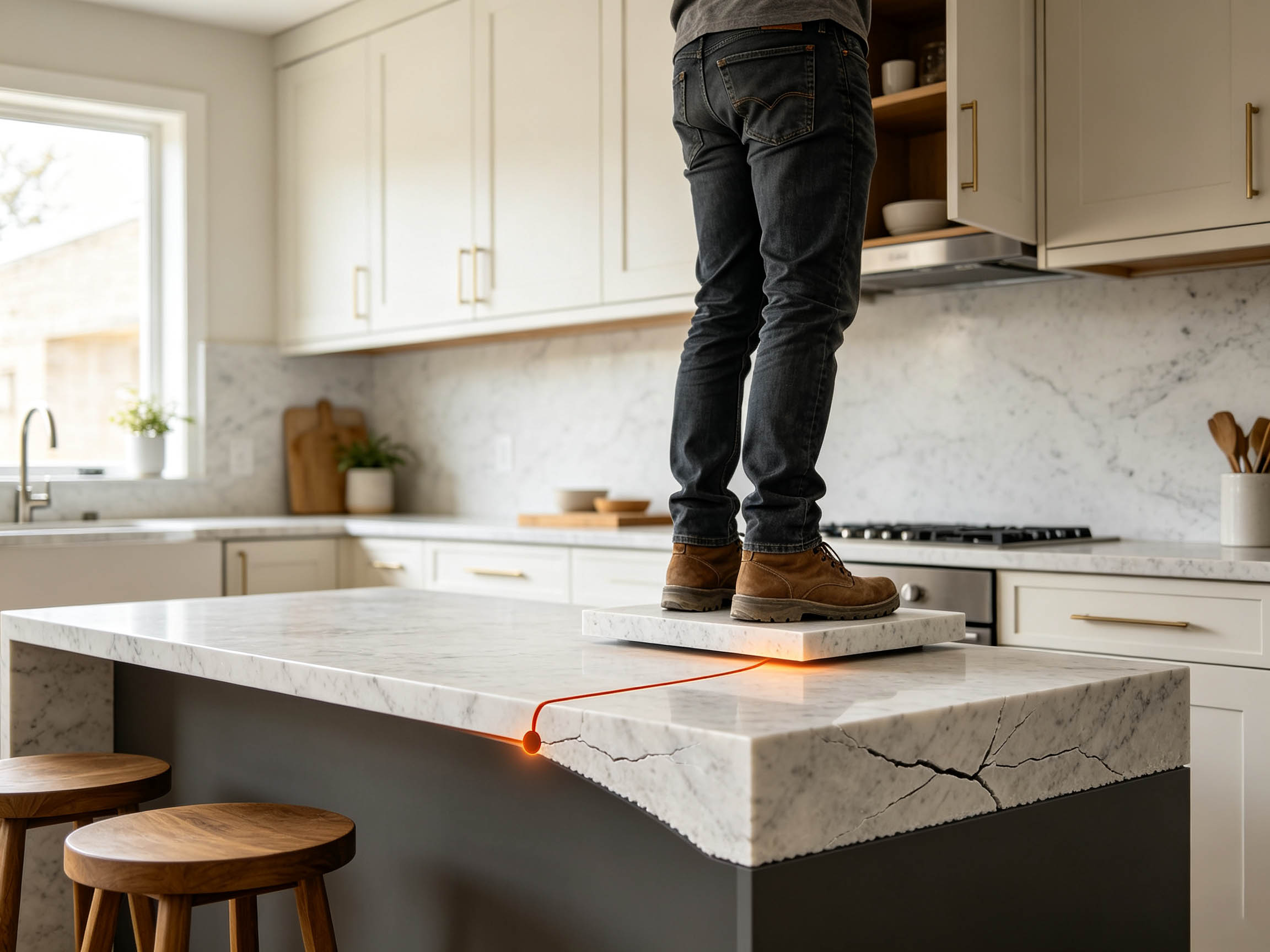
Point Loads. Concentrated weight on a small area, such as someone standing on a countertop to reach a high cabinet, can exceed the slab’s flexural strength. The weight of a human adult applied to a 10-square-centimeter area creates pressure far exceeding normal countertop use. Standing on quartz countertops is not recommended.
Building Settlement. New buildings undergo settlement as the foundation compresses over time. Differential settlement between foundation sections creates movement in the building frame that transfers to countertops. Cracks from building settlement typically appear at seams or corners and may grow over several months. Installing countertops after the building has settled reduces this risk.
How to Identify the Cause of a Crack
When a quartz crack occurs, identifying the cause helps determine responsibility and prevent recurrence.
| Crack Pattern | Likely Cause | Responsible Party |
|---|---|---|
| Hairline crack at sink corner cutout | Sharp cutout corner without radius | Fabricator |
| Straight crack from edge inward | Impact or overload at edge | Transport or installation |
| Spider-web crack in center of slab | Manufacturing defect or thermal shock | Manufacturer or user |
| Crack following seam line | Insufficient seam support | Installer |
| Multiple parallel cracks near overhang | Overhang exceeds support limit | Designer or installer |
| L-shaped crack at countertop corner | Building settlement or structure movement | Building-related |
Document the crack with photographs from multiple angles. Measure crack length and width at several points. Record the date of discovery and any recent events that may have contributed, such as heavy impact, hot cookware placement, or visible building changes. This information helps the responsible party diagnose the cause.
Preventive Measures Summary
For Buyers. Select slabs from manufacturers with documented quality control processes, verifiable testing data, and established track records. Request flexural strength test reports and ask about manufacturing process controls. The purchase price difference between premium and budget quartz is small relative to the cost of replacing a cracked countertop.
For Fabricators. Use proper cutting techniques with engineered-stone-rated blades. Maintain adequate water cooling during cutting. Ensure slabs are fully supported during all processing and transport. Round all cutout corners to minimum 10mm radius. Use experienced personnel for quartz handling and fabrication.
For Installers. Verify substrate is level before installation. Ensure continuous support for all slab sections. Provide additional support for overhangs exceeding 300mm. Use flexible adhesives for slab attachment. Allow proper expansion gaps at walls and fixed elements.
For Homeowners. Use trivets and hot pads for hot cookware. Do not stand on countertops. Clean spills immediately. Address any cracks as soon as they appear. Small cracks can sometimes be repaired before they grow. Browse our collection of premium quartz slabs manufactured with rigorous quality controls to minimize cracking risk.
Conclusion
Quartz slab cracking is preventable in most cases by selecting quality materials, working with experienced fabricators, ensuring proper installation, and using the surface correctly. Manufacturing defects, fabrication errors, installation problems, and post-installation stress each contribute to cracking risk in different ways. Understanding these causes helps every party in the supply chain take appropriate preventive measures. For importers and fabricators seeking reliable quartz slab supply with proven quality control, contact our sales team for product specifications and quality documentation.
Post time: Jul-10-2026