
You’ve likely fallen in love with the dramatic, sweeping veining of Italian marble…
But you’re probably terrified of the etching, staining, and high maintenance that comes with it.
I get it. You want the luxury aesthetic without the headache.
That is exactly why calacatta quartz countertops have become the undisputed top choice for modern, high-end kitchen renovations.
In this guide, we aren’t just looking at surface-level trends. We are diving deep into the engineering, the large slab quartz advantages, and the real cost-to-value ratio.
Whether you are a homeowner or a contractor, you’re about to learn exactly how to master the marble look with custom quartz countertop precision.
Let’s dive right in.
What Exactly is Calacatta Quartz?
When homeowners come to us looking for a luxurious white quartz countertop, they often confuse Calacatta with other styles. To set the record straight: calacatta quartz countertops are defined by their dramatic, bold veining set against a crisp, bright white background. Unlike the soft, feathery, and often greyish background of Carrara styles, Calacatta is designed to make a statement. We engineer these surfaces to mimic the exclusive look of high-end Italian marble, offering a striking contrast that serves as the focal point of any kitchen.
Composition: The Science Behind the Stone
We create these engineered stone surfaces through a rigorous manufacturing process that combines nature with technology. This isn’t just a slab of plastic; it is a rock-hard surface built for performance.
- 90-93% Natural Quartz: We use crushed natural quartz aggregates to ensure the slab is harder than granite.
- Resins and Polymers: The remaining 7-10% consists of high-quality binders that make the surface non-porous and flexible enough to prevent cracking.
- Pigments: UV-stable pigments are used to draw the intricate veins that run through the slab.
Visual Appeal: Mimicking Natural Depth
The goal of a high-quality natural stone alternative is to replicate the depth and translucency of real marble. Through advanced vibro-compression technology, we eliminate air pockets, resulting in a dense material that reflects light just like a natural stone. The result is a custom quartz countertop that offers the sophisticated aesthetic of marble without the inherent fragility or maintenance headaches.
Popular Calacatta Quartz Variations
When selecting calacatta quartz countertops, you aren’t limited to a single design. We offer a diverse range of engineered stone surfaces that replicate the specific characteristics of high-end Italian marble. Choosing the right variation is critical because the veining intensity and color temperature will dictate the entire vibe of your kitchen remodeling project.
Calacatta Gold Quartz
This is currently one of the most sought-after styles in the United States. Calacatta Gold quartz features a stark white background accented by thick grey veins and distinct ribbons of gold or brass.
- Aesthetic: Adds warmth to the room, preventing the “sterile” look sometimes associated with white kitchens.
- Pairing: Looks incredible with brass fixtures, warm wood flooring, or navy blue cabinetry.
- Trend: A staple in modern luxury designs.
Calacatta Classic and Nuvo
If you want a bold statement, the Classic and Nuvo styles deliver high contrast. These slabs typically feature wide, dramatic grey veining that cuts aggressively across the surface. This look mimics the heavy breccia found in natural stone alternatives. It is an ideal choice for a waterfall island design where you want the stone to be the undisputed focal point of the room.
Calacatta Laza
For a softer approach, Calacatta Laza provides a sophisticated mix of soft brown and grey movement. The “milky” background gives the stone depth, while the veins float gently rather than striking hard lines. This variation is versatile, fitting easily into transitional homes that blend traditional and modern elements.
Bookmatched Quartz Slabs
When covering a massive island or a full-height backsplash, standard slabs might not cover the span without a visible seam interrupting the pattern. This is where bookmatched quartz slabs come into play. We use vein-matching technology to ensure two adjoining slabs mirror each other, creating a continuous, seamless flow.
- Seamless Flow: The veins line up perfectly at the seam, creating a butterfly or kaleidoscope effect.
- High-End Finish: Essential for large slab quartz installations to maintain visual integrity.
- Application: Best used on large center islands and feature walls.
Calacatta Quartz vs. Natural Marble
It is the classic kitchen debate: the timeless beauty of natural stone versus the practical engineering of modern surfaces. While I appreciate the authenticity of marble, calacatta quartz countertops have become the go-to recommendation for busy households that refuse to compromise on style. As a superior natural stone alternative, quartz solves the functional drawbacks of marble while perfectly mimicking its luxurious aesthetic.
Durability: Hardness Matters
Real marble is a metamorphic rock composed mostly of calcium carbonate, making it relatively soft and prone to scratching or “etching” from acidic foods like lemon juice or tomato sauce. In contrast, our engineered quartz is composed of over 90% ground quartz mineral—one of the hardest substances on earth—mixed with high-quality polymers. This makes the surface incredibly resistant to scratches, chips, and cracks that often plague natural stone installations.
Maintenance and Hygiene
The biggest selling point for my clients is the “set it and forget it” nature of quartz. We are talking about low maintenance countertops that fit a real lifestyle.
- Sealing: Natural marble is porous and requires regular sealing (often every 6-12 months) to prevent permanent staining. Quartz requires absolutely no sealing, ever.
- Stain Resistance: Because they are stain-resistant countertops, liquids like red wine, coffee, and oil sit on the surface rather than soaking in.
- Hygiene: We market these as non-porous kitchen countertops for a reason. Since there are no microscopic pores for bacteria, mold, or mildew to hide in, quartz is significantly more sanitary for food preparation than natural stone.
Visual Consistency
When buying natural marble, you are at the mercy of the mountain. You might love a sample piece but receive a slab with heavy, unwanted dark patches. Calacatta quartz countertops offer controlled consistency. While we use technology to ensure the veining looks organic and flows naturally, the background whiteness and pattern density are predictable. This makes matching seams and planning layouts much easier than dealing with the wild, random variation of quarried stone.
Technical Specifications & Customization for Calacatta Quartz
When planning a kitchen renovation, understanding the technical specs of calacatta quartz countertops is just as important as selecting the pattern. We offer various customization options to ensure the material fits your specific layout and design goals perfectly.
Jumbo Quartz Slabs for Seamless Design
In many modern American homes, the kitchen island is the hub of the house, often requiring substantial surface area. Standard slabs can sometimes fall short, leading to unsightly seams that break up the beautiful vein patterns. To solve this, we utilize Jumbo quartz slabs and large slab quartz options.
- Standard Size: Typically around 120″ x 55″.
- Jumbo Size: Can reach up to 130″ x 65″.
Using jumbo slabs allows us to cover large islands without a single seam, preserving the visual continuity of the bold Calacatta veining.
Thickness Options: 2cm vs. 3cm
Choosing the right thickness affects both the structural integrity and the visual weight of your custom quartz countertop.
- 2cm (Approx. 3/4″): Generally used for bathroom vanities, backsplashes, or vertical wall cladding. In a kitchen setting, this thickness usually requires a plywood subtop for support and a laminated edge to make it look thicker.
- 3cm (Approx. 1 1/4″): The preferred choice for kitchen countertops in the US market. It installs directly onto the cabinets without a subtop, offering superior durability and a substantial, luxurious feel.
| Feature | 2cm Thickness | 3cm Thickness |
|---|---|---|
| Best Application | Backsplashes, Vertical Cladding | Kitchen Countertops, Islands |
| Installation | Requires Plywood Subtop | Direct on Cabinets |
| Durability | Standard | High Impact Resistance |
| Visual Weight | Sleek, Modern | Bold, Substantial |
Surface Finishes
The finish you choose for your white quartz countertop dramatically changes how the stone interacts with light.
- Polished: The most common finish. It seals the pores tightly, making it highly stain-resistant. The glossy surface reflects light, adding depth to the grey or gold veining and making the kitchen feel brighter.
- Honed (Matte): A satin-like finish that offers a softer, more natural stone appearance. While aesthetically pleasing, honed surfaces can hold onto fingerprints and oils more than polished ones, requiring slightly more frequent wiping.
Edge Profiles and Waterfall Designs
Customizing the edge profile is the final touch that defines the style of your countertop.
- Mitered Edge Profile: We cut the edge at a 45-degree angle to join a second piece of quartz, creating the illusion of a much thicker slab (e.g., 2 to 3 inches) without the added weight. This is ideal for contemporary designs.
- Waterfall Island Design: This is a premium trend where the quartz continues down the side of the cabinet to the floor. We meticulously match the veins so the pattern flows seamlessly from the horizontal surface down the vertical leg, turning your island into a piece of art.
Cost Analysis: Is Calacatta Quartz Worth It?
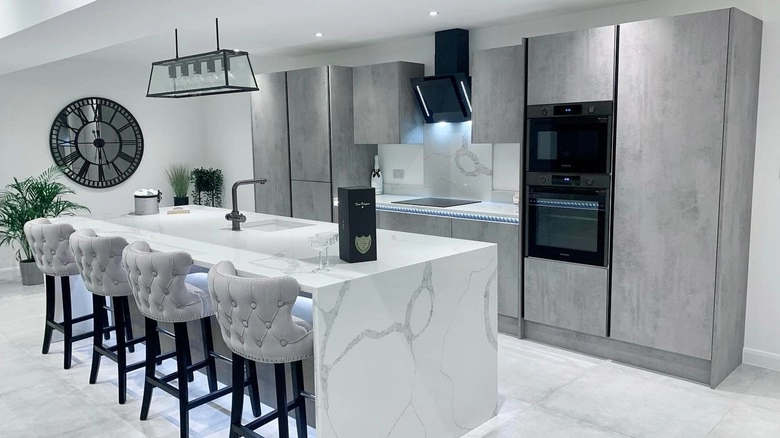
When we look at the numbers, calacatta quartz countertops generally sit at the premium end of the engineered stone market. You aren’t just paying for a slab; you are paying for the advanced technology required to replicate the dramatic, organic flow of natural stone. The price tag is heavily influenced by veining complexity. A background that looks like pure white marble with crisp, through-body veining costs more to produce than standard, speckled quartz.
Here is what typically drives the cost:
- Design Intricacy: The more realistic and “bookmatched” the veins, the higher the manufacturing cost.
- Background Whiteness: Achieving a pure, bright white backdrop requires higher purity raw materials compared to off-white options.
- Brand Reputation: Established brands with proprietary technology often charge more for their specific designs and warranty backing.
ROI and Resale Value
In my experience with the US market, installing a white quartz countertop is one of the safest bets for Return on Investment (ROI). Kitchens are the focal point for homebuyers, and the clean, high-end look of Calacatta is universally appealing. It signals a modern, updated space without the “fixer-upper” vibe of old laminate or tile. You are essentially future-proofing your kitchen’s aesthetic, which translates to better resale value when you decide to sell.
Quartz vs. Marble Cost Comparison
When we compare the financials, the value becomes obvious. Grade A natural Calacatta marble is rare, quarried in Italy, and comes with a massive price tag. Calacatta quartz countertops offer a natural stone alternative that captures that same luxury for a more predictable price. While high-end quartz isn’t “cheap,” it is cost-effective because you eliminate the lifetime costs of sealing, polishing, and potential stain remediation associated with real marble. You get the millionaire look without the high-maintenance liability.
Installation and Fabrication Best Practices
Installing calacatta quartz countertops requires a higher level of precision than standard uniform quartz because of the dramatic veining. We treat the quartz fabrication process as an art form to ensure the final look mimics high-end natural stone perfectly. Here is how we handle the technical details to guarantee a flawless installation in your home.
Seam Placement and Vein Matching
The most critical aspect of installing Calacatta is managing the seams. Unlike speckled granite where seams disappear, a bad cut on a bold vein stands out immediately.
- Strategic Layouts: We use digital templating to place seams in low-visibility areas, like around the sink or cooktop cutouts, rather than in the middle of an open run.
- Vein-Matching Technology: To maintain the flow of the pattern, we utilize vein-matching technology. This ensures that when two slabs meet, the grey or gold veins line up continuously.
- Bookmatching: For large islands requiring more than one slab, we often use bookmatched quartz slabs. This creates a mirrored effect at the seam, turning a necessary joint into a stunning focal point.
Structural Support for Overhangs
Modern American kitchens often feature large islands with seating, requiring significant overhangs. While engineered stone surfaces are durable, they are heavy and rigid.
- Standard Overhangs: Up to 12 inches of overhang usually works with standard cabinet support (depending on the thickness, 2cm vs 3cm).
- Extended Overhangs: Any overhang exceeding 12 inches requires hidden steel brackets or corbels. Without proper support, the weight of a leaning person could snap the quartz.
- Waterfall Legs: A popular solution for support and style is the waterfall island design. By extending the quartz down to the floor on the sides, we add immense structural stability while showcasing the beautiful veining vertically.
Customization and Edge Profiles
To elevate the look of a custom quartz countertop, fabrication details matter.
- Mitered Edge Profile: To make the countertop look thicker than the standard slab, we use a mitered edge profile. We cut the edge at a 45-degree angle and join a strip of quartz to it. This makes the veins wrap seamlessly around the edge, giving the appearance of a solid, thick block of stone.
- Precise Cutouts: We use CNC machinery for exact cutouts for undermount sinks and slide-in ranges, ensuring tight tolerances that prevent grime build-up and ensure a clean, modern fit.
Care and Maintenance Guide
We designed our calacatta quartz countertops to be a low maintenance countertop solution for busy American homes. You shouldn’t have to stress about a spill ruining your kitchen’s aesthetic. Because this is a non-porous surface, you don’t need to worry about the rigorous sealing schedule required by natural stone.
Simple Daily Cleaning
Keeping these surfaces looking pristine is straightforward. You don’t need expensive, specialized cleaners to maintain that showroom shine.
- Routine Wiping: Use a soft cloth or sponge with warm water and a mild dish soap.
- Dried Spills: For stuck-on food, use a plastic putty knife to gently scrape it off before wiping.
- Grease: A non-abrasive degreaser helps remove cooking oils without dulling the polished finish.
What to Avoid
While calacatta quartz countertops are durable and highly stain-resistant countertops, they are not indestructible. To keep the surface shining and ensure longevity, steer clear of the following hazards:
- Excessive Heat: Sudden temperature changes can damage the resin binders. Always use trivets or hot pads under pots, pans, and slow cookers rather than placing them directly on the surface.
- Harsh Chemicals: Avoid bleach, drain cleaners, oven cleaners, or anything with a high pH level. These can break down the bonds in engineered stone surfaces.
- Abrasive Scrubbers: Steel wool or scouring pads can leave micro-scratches on the surface, diminishing the glossy look over time.
Frequently Asked Questions About Calacatta Quartz
Does engineered quartz look like real marble?
Yes, modern manufacturing has closed the gap significantly. High-quality engineered stone surfaces now mimic the depth, translucency, and organic veining of natural stone with incredible accuracy. Unless you are an expert inspecting the slab up close, it is often difficult to distinguish calacatta quartz countertops from actual marble. You get the luxurious, high-end aesthetic of Italian stone without the inherent fragility or unpredictability.
Is Calacatta quartz worth the investment?
Absolutely. For most US homeowners, this is one of the smartest kitchen remodeling trends to follow. While the upfront cost can be comparable to some natural stones, the long-term value is undeniable. You are investing in low maintenance countertops that do not require annual sealing or special cleaners. Because they are stain-resistant countertops, they maintain their pristine look for decades, which is a major selling point if you ever decide to put your home on the market.
How does it compare to granite for durability?
While granite is a hard stone, quartz often wins on practical livability and hygiene. Here is how they stack up:
- Maintenance: Granite requires regular sealing to prevent stains; quartz is non-porous and never needs sealing.
- Strength: Quartz is engineered with resin, giving it slight flexibility that makes it more resistant to cracking and chipping than rigid granite.
- Hygiene: As a superior natural stone alternative, the non-porous surface of quartz prevents bacteria and viruses from harboring in the countertop.
I always tell clients that if you want the look of stone without the “homework” of maintenance, quartz is the clear winner.
Post time: Jan-27-2026