
3D Printed Quartz Slab: Technical Specifications and Selection Guide
3D printed quartz slab represents a significant advancement in engineered stone manufacturing, combining traditional quartz composite materials with high-resolution digital printing to create decorative surfaces that replicate natural stone aesthetics. The global engineered stone market reached $28.5 billion in 2024, with 3D printed variants accounting for approximately 15% of new product introductions and growing at 12.3% CAGR.
The manufacturing process involves depositing UV-curable ceramic-based inks onto engineered quartz substrates using industrial inkjet systems at resolutions up to 360 dpi. This digital printing technology enables unprecedented design flexibility while maintaining the durability and performance characteristics of traditional engineered stone.
This comprehensive guide examines the technical characteristics, manufacturing standards, application parameters, and selection criteria of 3D printed quartz surfaces for architects, interior designers, specifiers, and procurement professionals.
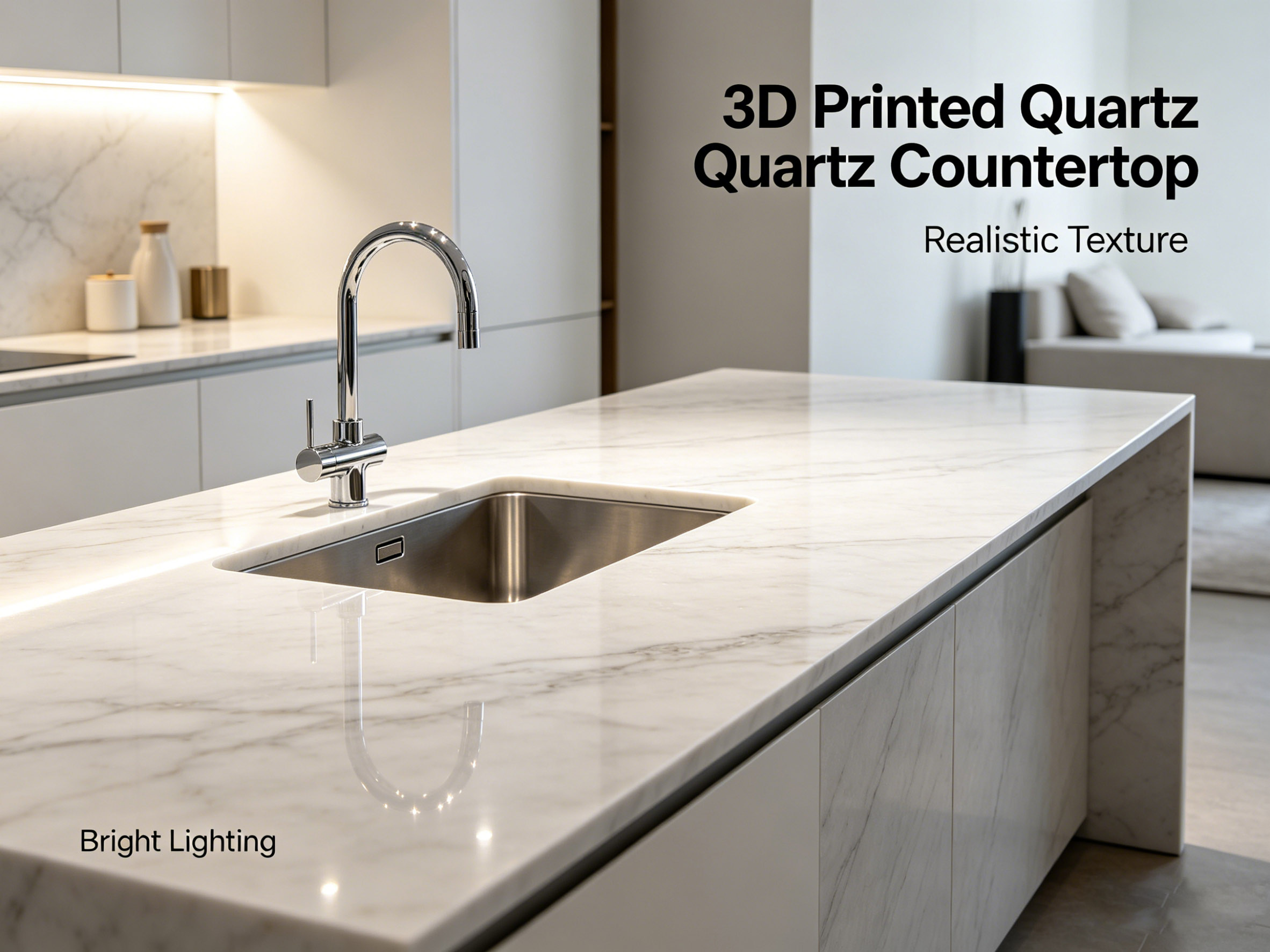
3D Printed Quartz Slab Manufacturing Process
The production of 3D printed quartz slab involves four distinct stages, with each stage affecting final product performance, aesthetic quality, and long-term durability.
Substrate Preparation
Engineered quartz substrates consist of approximately 93% natural quartz aggregate combined with 7% polymer resins. The base material undergoes precision surface treatment to achieve optimal ink adhesion and long-term bonding. Surface roughness parameters typically range between Ra 0.8-1.2 μm, providing the ideal topography for ink mechanical bonding and chemical adhesion.
Quality control at this stage includes:
- Substrate thickness verification (±0.5mm tolerance)
- Surface cleanliness assessment (no oils or contaminants)
- Moisture content testing (<0.1% required)
- Flatness evaluation (±1mm over 3000mm)
Digital Printing Stage
Industrial piezoelectric inkjet heads deposit ceramic-based UV-curable inks at resolutions up to 360 dpi, with advanced systems now achieving 720+ dpi for enhanced detail reproduction. Single-pass printing systems achieve production speeds of 25-40 meters per minute, enabling efficient large-volume manufacturing.
The digital printing process offers significant advantages:
- Unlimited color and pattern variations
- Rapid design iteration without tooling changes
- Consistent pattern reproduction across production runs
- Custom design capabilities for specific projects
UV-LED curing systems solidify ink layers immediately after deposition, creating a durable, scratch-resistant surface that bonds permanently with the quartz substrate.
Surface Finishing
Post-printing treatments include protective coating application, surface calibration, and quality inspection. The final finish determines both aesthetic appearance and functional performance, with gloss levels measured in gloss units (GU) at 60° incidence angle.
Standard finish options:
- Matte finish: 10-20 GU (low reflection, contemporary aesthetic)
- Satin finish: 30-50 GU (balanced sheen, versatile applications)
- High-gloss finish: 80-90 GU (maximum reflection, luxury appearance)
3D Printed Quartz Slab Technical Specifications
Performance parameters for 3D printed quartz surfaces follow established ASTM and EN standards, ensuring consistent quality and predictable performance in various applications.
Physical Properties:
- Density: 2.3-2.5 g/cm³ (ASTM C97)
- Water Absorption: <0.05% (ASTM C97)
- Mohs Hardness: 6-7 (ASTM C1895)
- Flexural Strength: 25-35 MPa (ASTM C880)
- Stain Resistance: Class 5 (EN 14617-11)
- Standard Slab Dimensions: 3200×1600 mm (ISO 13006)
- Thickness Options: 12mm, 15mm, 18mm, 20mm, 30mm
Surface Performance:
- Scratch Resistance: Excellent (protected by UV-cured coating)
- Heat Resistance: Up to 150°C sustained, 200°C short-term
- Chemical Resistance: Resistant to common household acids and bases
- UV Stability: Interior grade (color stable under indoor lighting)
- Abrasion Resistance: Class 4-5 (EN 14617-4)
Source: ASTM International Standards, EN 14617 Series
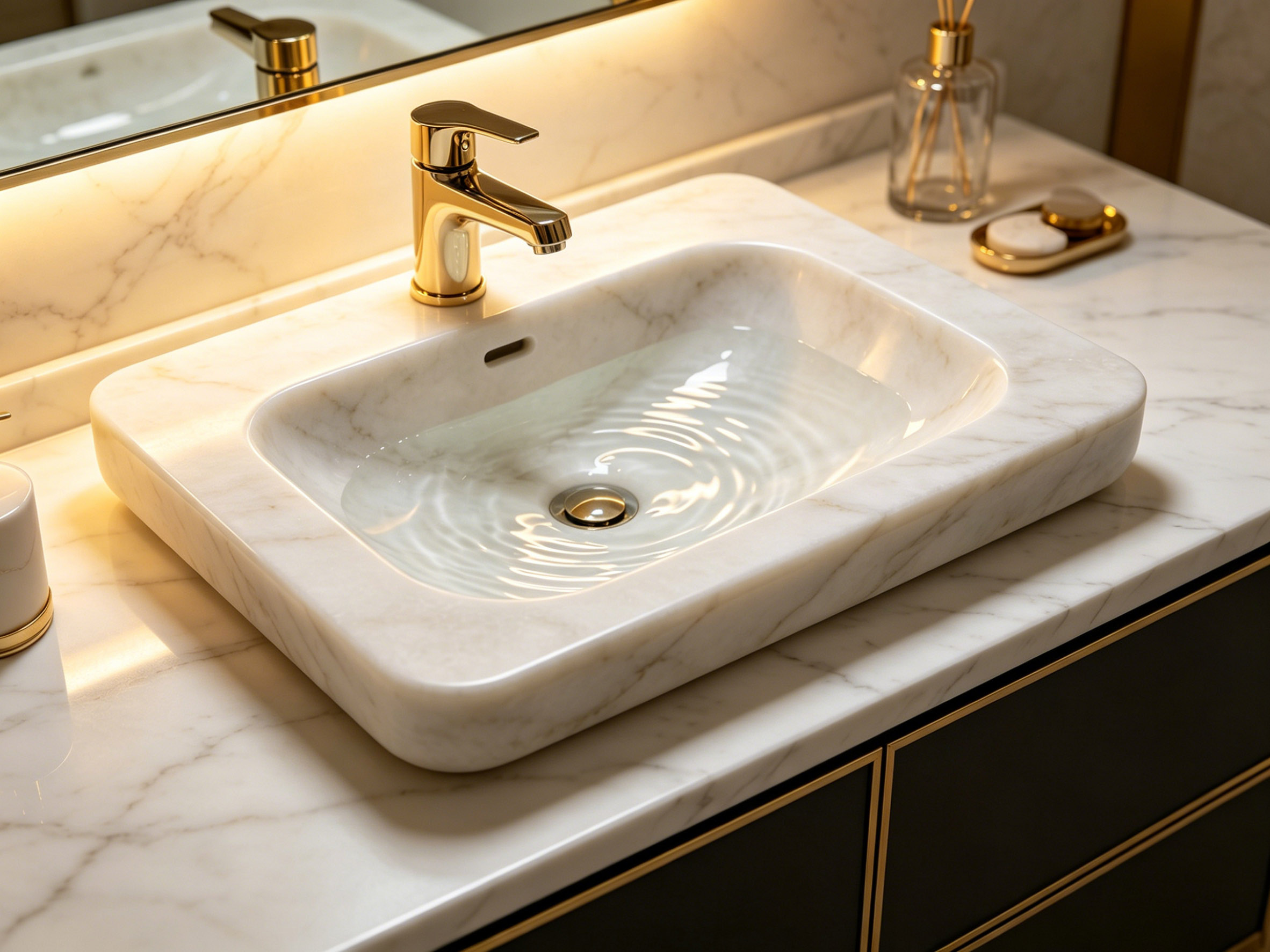
3D Printed Quartz vs. Traditional Engineered Stone
Comparative analysis reveals distinct differences between 3D printed quartz surfaces and conventional engineered stone. Understanding these differences enables informed specification decisions based on project requirements, budget parameters, and aesthetic preferences.
Design Flexibility:
- 3D printed: Unlimited pattern customization, rapid design changes, photorealistic natural stone reproduction
- Traditional: Limited to pre-designed patterns, batch consistency variations, restricted color palette
Pattern Consistency:
- 3D printed: Digitally controlled consistency across slabs and production runs
- Traditional: Variable patterns due to mixing and casting processes
Production Lead Time:
- 3D printed: 2-3 weeks from order to delivery
- Traditional: 4-6 weeks for standard patterns, longer for custom designs
Cost Structure:
- 3D printed: Moderate material cost with lower fabrication cost for custom designs
- Traditional: Lower material cost but higher cost for pattern development
Performance Characteristics:
- Both offer comparable durability, stain resistance, and maintenance requirements
- 3D printed surfaces have additional protective coating layer
- Traditional surfaces have through-body color consistency
Applications for 3D Printed Quartz Surfaces
3D printed quartz slab applications span residential, commercial, and institutional sectors. The material performs effectively in high-traffic environments due to its exceptional durability, stain resistance, and aesthetic versatility.
Residential Applications:
- Kitchen countertops and islands (primary application)
- Bathroom vanities and shower walls
- Fireplace surrounds and feature walls
- Tabletops and desk surfaces
- Window sills and thresholds
Commercial Applications:
- Hotel reception desks and lobby surfaces
- Restaurant bars and dining surfaces
- Corporate office reception areas
- Retail display counters
- Healthcare facility surfaces (non-sterile areas)
Not Recommended For:
- Outdoor applications (without UV-stable formulation)
- High-heat industrial environments
- Areas requiring through-body color (edges visible)
Selection Criteria for 3D Printed Quartz Slab
Specifying 3D printed quartz surfaces requires systematic evaluation of multiple factors. The following criteria guide material selection for optimal project outcomes and long-term satisfaction.
Performance Requirements
Traffic levels and usage patterns determine thickness requirements. Standard residential applications use 20mm thickness. Commercial high-traffic areas require 30mm thickness for structural integrity.
Aesthetic Specifications
Pattern selection should coordinate with overall design intent. Apex Quartz Stone 3D printed collection includes options ranging from Calacatta marble reproductions to contemporary abstract designs.
Budget Parameters
Material costs for 3D printed quartz typically range between $45-85 per square foot, depending on pattern complexity and order volume. Installation costs remain comparable to traditional engineered stone.
Installation Guidelines for 3D Printed Quartz
Proper installation ensures optimal performance and longevity. The following procedures apply specifically to 3D printed quartz surfaces.
Substrate Preparation
Cabinetry must provide level support across the entire surface area. Maximum allowable deviation is 3mm over 3000mm length. Inadequate support risks cracking under load.
Seaming and Joinery
Seam placement requires strategic planning to minimize visual impact. Pattern matching at seams demands precise cutting. Professional fabricators use CNC equipment for accuracy within 0.5mm tolerance.
Maintenance Protocols for 3D Printed Quartz Surfaces
Routine maintenance preserves surface appearance and extends service life. 3D printed quartz requires minimal maintenance compared to natural stone alternatives.
Daily cleaning: Mild soap and warm water with non-abrasive cloth
Spill management: Immediate wiping prevents staining from acidic substances
Heat protection: Use trivets for cookware exceeding 150°C
Avoid: Abrasive cleaners, scouring pads, and harsh chemicals
Industry Trends in Digital Stone Printing
The engineered stone industry continues evolving toward digital manufacturing. Several trends shape the future of 3D printed quartz slab production.
Resolution improvements: Print heads now achieve 720+ dpi for enhanced detail
Sustainable inks: Water-based and bio-derived ink formulations reduce environmental impact
Texture replication: Advanced printing creates tactile surface variations matching natural stone
Market analysis from Freedonia Group projects 8.2% annual growth in digital stone printing through 2028.
Frequently Asked Questions
What is the difference between 3D printed quartz and regular quartz?
3D printed quartz uses digital inkjet technology to apply surface patterns, while regular quartz has pigmented patterns mixed throughout the material. 3D printing enables greater design flexibility and faster production of new patterns.
How durable is the printed surface on 3D quartz slabs?
The printed layer is protected by a clear UV-cured coating that provides scratch and wear resistance. With proper maintenance, the surface retains its appearance for 15-20 years under normal residential use conditions.
Can 3D printed quartz be used for outdoor applications?
3D printed quartz is designed for interior applications. Prolonged UV exposure may cause color fading over time. For outdoor use, consult manufacturers regarding UV-stable formulations specifically engineered for exterior conditions.
What thickness options are available for 3D printed quartz slabs?
Standard thicknesses include 12mm, 15mm, 18mm, 20mm, and 30mm. Residential countertops typically use 20mm or 30mm thickness. Vertical applications like wall cladding may use 12mm or 15mm for reduced weight.
How do I select the right 3D printed quartz pattern for my project?
Pattern selection depends on design style, lighting conditions, and surrounding materials. Apex Quartz Stone product range offers samples for evaluation before specification.
Conclusion
3D printed quartz slab technology offers specification professionals an engineered stone solution combining design flexibility with proven performance characteristics. Understanding manufacturing processes, technical specifications, and application parameters enables informed material selection.
The technology continues advancing, with improvements in print resolution, ink formulations, and production efficiency. As digital manufacturing becomes standard in the stone industry, 3D printed quartz represents a mature, reliable specification choice for residential and commercial projects.
Post time: May-09-2026